
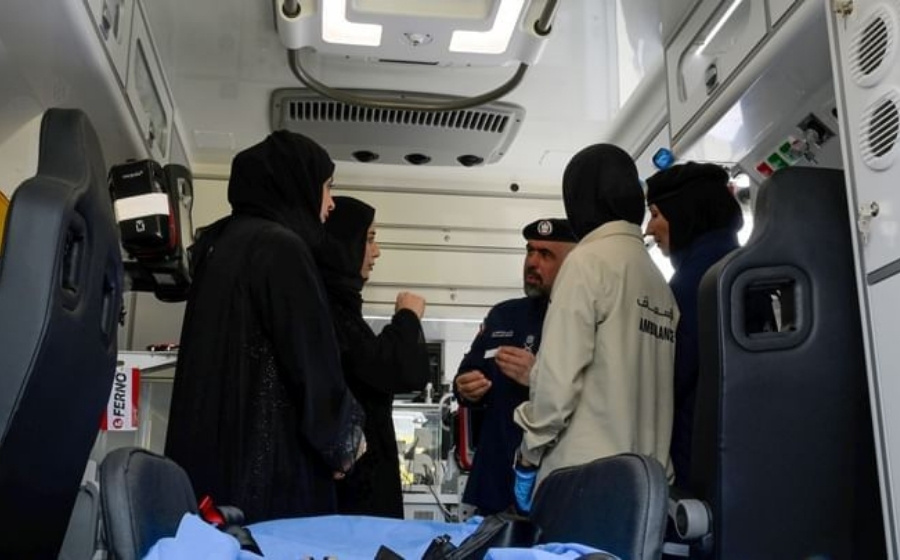
Dubai, UAE — August 2026 — The Department of Health – Abu Dhabi and the Abu Dhabi Civil Defence Authority today held a launch ceremony at the Department’s headquarters for a new generation of smart, specialized ambulances, integrating them into the Unified Medical Operations Centre system to help speed up and improve the efficiency of emergency response and provide specialized medical care to patients from the very first moments.
The new fleet comprises 18 ambulances divided into three categories, with six vehicles per category: mobile units to enhance advanced care for critical cases, specialized vehicles to support response to cases involving mothers and newborns, and vehicles equipped to handle the needs of patients with severe obesity — ensuring the medical capabilities and equipment required are matched to the nature of each case during field response.
In his keynote address, Dr. Rashed Al Suwaidi, Director-General of the Abu Dhabi Public Health Centre, affirmed that readiness, proactiveness and integration among the components of the response system are fundamental pillars for protecting community health and safety. He explained that the efficiency of the emergency system is not limited to how quickly an ambulance arrives, but also involves unifying the efforts of relevant entities, making the right decisions, and acting efficiently and in a timely manner.
He said the development of the emergency system is moving toward enabling response teams to reach patients with care suited to their condition from the first few minutes, speeding up intervention and reducing complications. He noted that the new ambulances are one outcome of this direction, offering specialized equipment and capabilities that meet the needs of different population groups and medical cases.
He added that the launch of these vehicles is part of an integrated vision to develop an interconnected response system that brings together infrastructure, expertise, competencies and technology, and strengthens coordination among partners in the Unified Medical Operations Centre — ensuring available resources are directed toward helping patients in a timely manner and giving them the best chance of recovery and return to normal life.
Major General Salem Abdullah bin Barak Al Zaabi, Director-General of the Abu Dhabi Civil Defence Authority, said in his remarks that effective emergency handling is not limited to reaching the scene, but also includes providing the necessary medical capabilities suited to the nature of the case. He affirmed that integrating emergency services, healthcare, advanced technology and specialized personnel strengthens field teams’ ability to deliver appropriate intervention from the moment of response until the patient is transferred to a healthcare facility.
He noted that the Abu Dhabi Civil Defence Authority continues to strengthen its cooperation with the Department of Health – Abu Dhabi to develop emergency response capabilities and leverage innovation and technology to raise operational efficiency, supporting the emirate’s readiness to handle various emergency situations and enhancing community safety and the protection of lives.
Major Dr. Mohammed Salem Al Kaabi, an emergency medicine specialist at the Abu Dhabi Civil Defence Authority, told the Emirates News Agency that the intensive care ambulances are advanced medical units equipped with the latest technology, including ultrasound devices, intravenous medication pumps, and ventilators — enabling paramedic teams to provide critical, comprehensive care to patients requiring intensive attention during transport.
He added that the maternal and newborn ambulances are equipped with integrated incubators and ventilators, along with the medical equipment needed for safe transport. Meanwhile, the vehicles designated for patients with severe obesity were designed according to their specific needs, featuring a specialized loading platform and stretcher with a maximum capacity of up to 350 kilograms, ensuring their safe transport and supporting the handling of weight- and mobility-related challenges.
He affirmed that the design and equipping of each vehicle category was based on specific, complex emergency needs, enhancing the flexibility of ambulance response and its ability to deliver specialized care to different segments of society according to their needs — reinforcing emergency services’ readiness to efficiently handle cases requiring advanced care during transport.