Based on animal-based toxicity data
A new study has raised concerns over indoor air quality after researchers found that common airborne fungi may cause respiratory harm even at concentrations considered safe under current international guidelines.
Led by Professor Wonsuck Yoon of Korea University, the study is the first to propose species-specific exposure thresholds for indoor airborne microbes using animal-based toxicity data.
Published in the Journal of Hazardous Materials in September 2025, the research examined the effects of airborne fungi and bacteria collected from over 500 crowded locations across South Korea, including restaurants, shopping centres, and transport hubs.
Using four dominant microbial species, the team conducted a controlled four-week experiment in mice. The animals were exposed to inactivated doses through the airways, simulating indoor inhalation. Results showed significant lung inflammation and tissue damage from fungal exposure.
Inflammatory markers and immune responses were notably elevated, even at microbial concentrations below those permitted under existing guidelines from the World Health Organization and South Korea.
Unlike chemical pollutants, which are subject to strict regulatory limits in most countries, microbial contaminants in indoor air remain largely unregulated. This is particularly relevant in the Gulf and broader Middle East, where high temperatures and energy-efficient sealed buildings often lead to poor indoor air circulation.
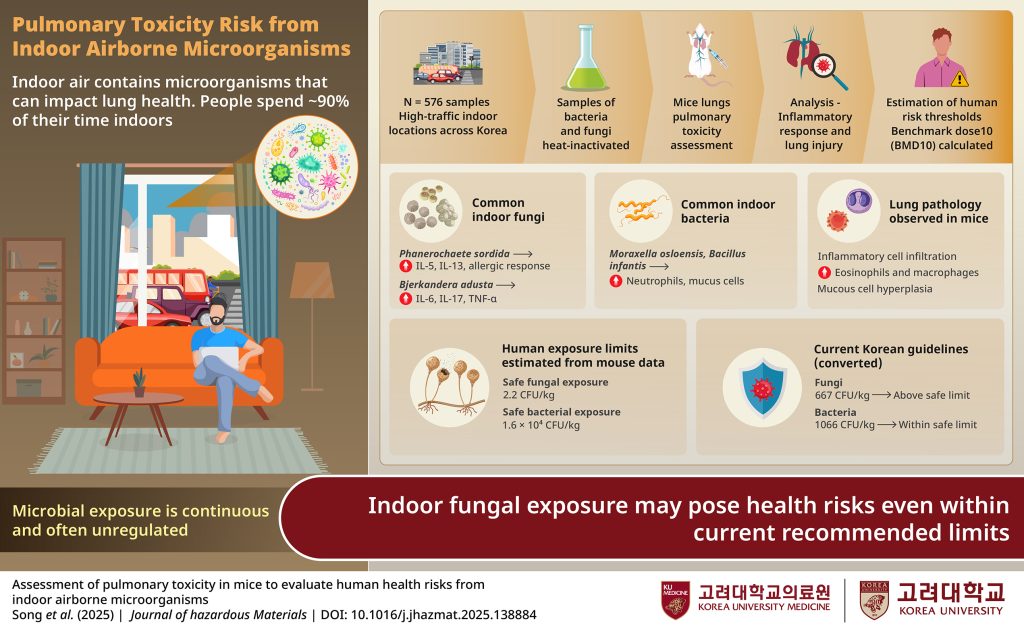
The study found that while bacteria-related exposure limits matched existing standards, fungi appeared to present a much greater health risk. Researchers caution that relying solely on total microbial counts to assess air quality may be misleading. Instead, health impacts appear to differ sharply depending on microbial species.
The findings could have widespread implications for regulatory agencies, building design standards, and air purification technologies. For Arabian Gulf nations and other rapidly urbanising regions, the research highlights the need for a more detailed framework for indoor air monitoring, especially in densely populated or high-turnover public spaces such as malls, mosques, hospitals, and airports.
Professor Yoon described the current regulatory gap as “significant,” noting that toxicological assessments have historically focused on chemicals rather than biological agents. He said the study provides a starting point for setting science-based microbial thresholds, particularly for fungi.
However, the authors acknowledge limitations in their work. The study utilised inactivated microbes and focused solely on strains that can be cultivated in laboratory cultures. Further research involving viable microorganisms and more diverse environments is necessary to gain a deeper understanding of the full spectrum of exposure in real-world indoor spaces.
With respiratory illness remaining a public health priority—especially in arid and air-conditioned environments like those in the Middle East—the findings offer new direction for indoor air quality standards. If adopted more widely, the species-specific approach could reshape how air safety is measured, regulated, and maintained across the region.
Hero image: The findings could have widespread implications for regulatory agencies, building design standards, and air purification technologies. Credit: Berna T.