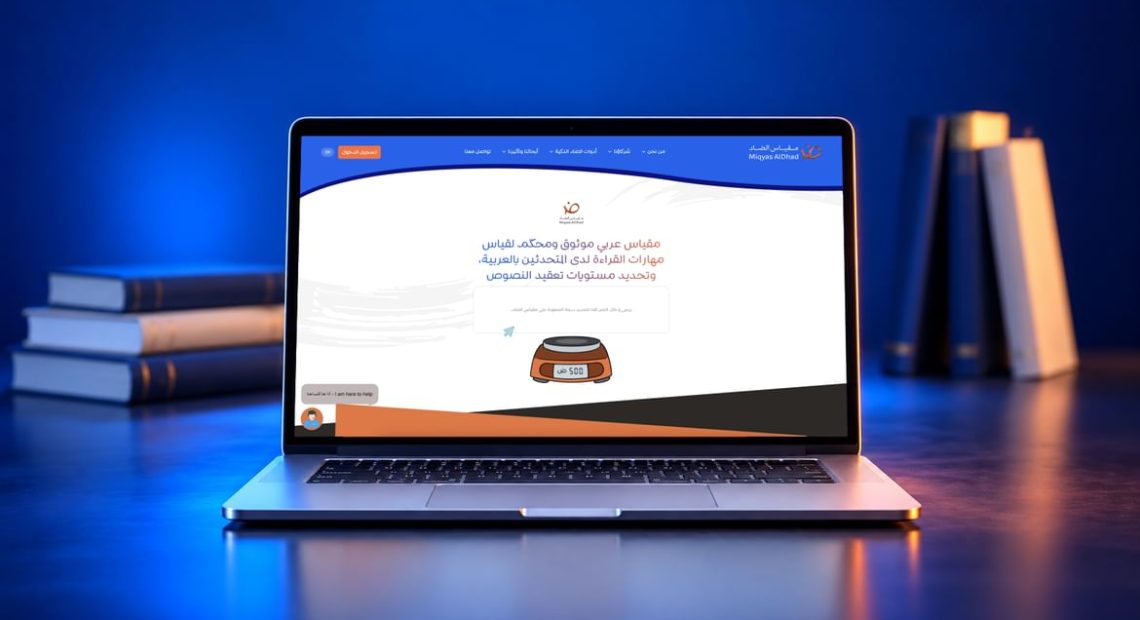
Alef Education, a leading provider of AI-powered educational solutions, has partnered with MetaMetrics, the developer of the globally recognised Lexile Framework for Reading, to introduce Miqyas Al Dhad, a unified scale designed to measure Arabic reading proficiency and text complexity.
The initiative aims to support personalised Arabic language learning by providing educators, governments, publishers and educational institutions with a standardised approach to assessing reading abilities and monitoring student progress.
Miqyas Al Dhad uses a research-based methodology combining Arabic linguistic analysis, expert evaluations, student performance data and artificial intelligence to deliver consistent and scalable reading assessments.
The scale was developed with contributions from more than 450 Arabic language specialists and performance data collected from approximately 110,000 students across nine Arab countries. Its development also involved analysing a linguistic database containing over 70 million words and structures extracted from more than 8,000 Arabic texts.
AI-powered tools support Arabic literacy development
Miqyas Al Dhad features an integrated collection of digital tools designed to strengthen Arabic literacy and improve access to appropriate reading materials.
The Dhad Reading Proficiency Test evaluates students’ reading abilities and tracks their development over time. An AI-powered Text Analyser assesses the complexity of Arabic texts and matches them with corresponding proficiency levels.
Additional resources include the Find-a-Book hub, which helps educators and learners discover suitable reading materials, and Dhad Academy, which provides support for Arabic language development.
Together, these tools aim to help educational institutions deliver more personalised learning experiences while enabling publishers and content developers to produce materials suited to different reading abilities.
Supporting national literacy strategies
The new scale is designed to assist governments and education authorities in evaluating Arabic reading proficiency across education systems and developing evidence-based literacy strategies.
Teachers and assessment providers can use the framework to monitor student progress, identify learning needs and align instructional materials with individual reading levels.
Publishers, educational technology companies and content creators can also use the scale to assess text difficulty and develop more accessible Arabic learning resources.
Eyad Darawsheh, General Manager of Miqyas Al Dhad, said the initiative offers stakeholders a more objective method of understanding Arabic reading abilities and measuring progress.
“Miqyas Al Dhad gives educators, governments, publishers and other stakeholders a more objective way to understand Arabic reading proficiency, measure development and ensure that content is appropriately matched to learners’ needs,” he said.
Darawsheh added that the long-term ambition is to establish Miqyas Al Dhad as a trusted reference for Arabic reading assessment, contributing to stronger literacy outcomes across the UAE and the wider Arab world.
The initiative represents a step towards using artificial intelligence, educational research and data-driven assessment to support Arabic literacy development across the region.