
According to Gallup data
Americans remain sharply split over whether artificial intelligence (AI) represents a natural progression in technological innovation or a fundamental risk to society. According to new survey data by Gallup, 49% view AI as a positive tool that humans will learn to use to improve life, while an equal share see it as a unique threat with the potential to harm people and social systems.
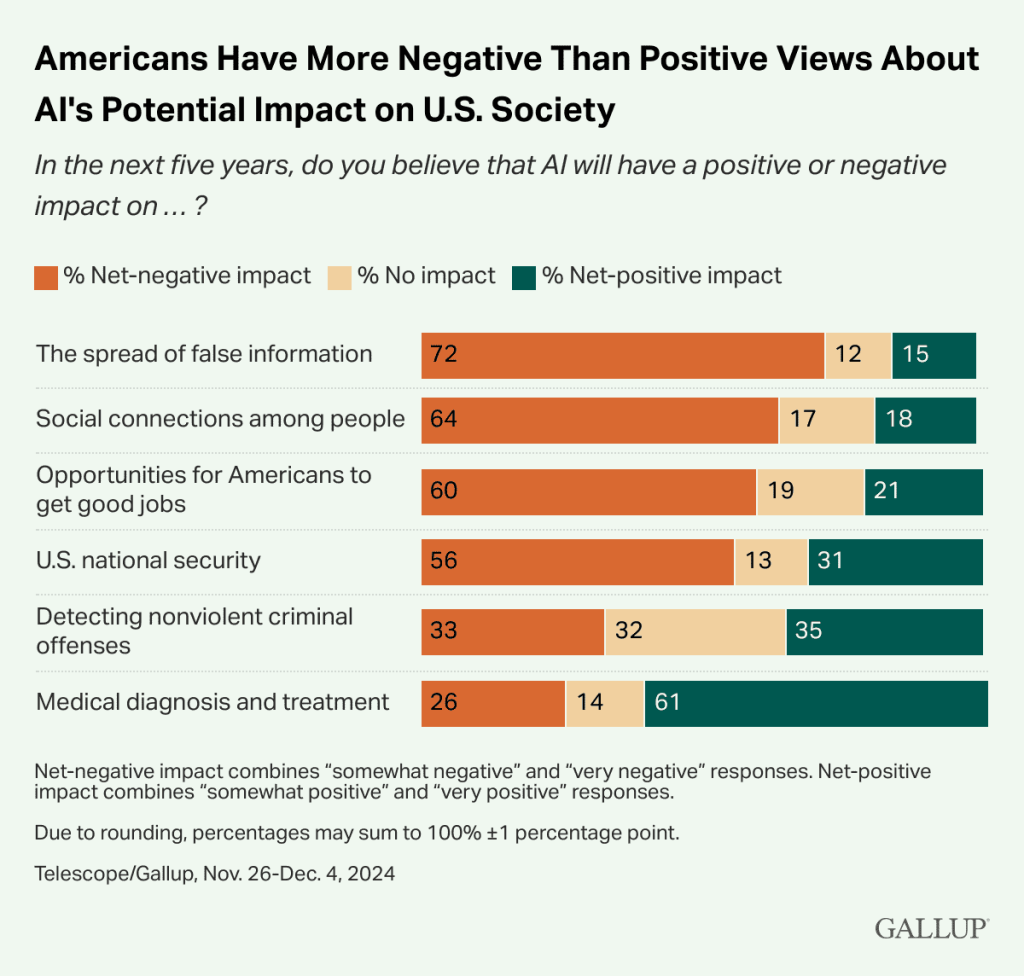
The findings underscore deep public uncertainty in the United States about the societal impact of AI. Most Americans anticipate that AI will disrupt employment, national security, and social relationships, with only limited optimism concentrated around its potential in healthcare.
Concerns about misinformation topped the list of negative expectations. Seventy-two per cent said they expect AI to worsen the spread of false information in the next five years. Sixty-four per cent believe it will negatively affect social interactions. Sixty per cent foresee damage to job opportunities, and 56% fear it could weaken national security.
In contrast, medical applications are the only area where Americans expect AI to bring more benefit than harm. A majority say AI will improve medical diagnosis and treatment outcomes, a view shared by health authorities in the Middle East and elsewhere, where AI is increasingly being tested for radiology and patient triage.
Most Americans believe AI will soon take over tasks that are currently considered essential or creative. Fifty-nine per cent say it will reduce the need for human input in such work, while only 38% believe it will handle repetitive tasks and allow humans to focus on high-value efforts.
Social impact
Despite the scale of past innovations, such as the internet or robotics, 66% of Americans say AI will surpass previous technologies in terms of social impact. Fifty-nine per cent say its impact will exceed that of the smartphone, while 56% compare it to the internet and 52% to the telephone.

However, resistance to adoption remains high. About two-thirds of Americans say they plan to avoid using AI tools in their personal lives for as long as possible, citing concerns about its role in diminishing human agency. Only 35% say they are ready to embrace it.
Generative AI tools like ChatGPT, which became the fastest-growing consumer application ever after its 2022 release, remain underused by most Americans. Only around one in three adults report using generative AI regularly. Usage is highest among adults aged 18 to 29 (43%) and lowest among those over 60 (19%). Men report higher usage rates than women, although the gender gap is more significant among older age groups.
Unaware public
Many users remain unaware that they are already interacting with AI. While only 36% say they used an AI-powered product in the past week, a breakdown of standard tools — including navigation apps, weather forecasts, streaming platforms, and virtual assistants — shows 99% used at least one AI-enabled service. Eighty-three per cent used at least four, suggesting widespread, passive adoption.


In the workplace, AI use has nearly doubled over the past two years. Forty per cent of US workers now say they use AI at least a few times annually, up from 21% in 2023. Frequent use — defined as weekly or more often — has risen from 11% to 19%. Daily usage doubled from 4% to 8% over the past year alone.
Adoption is concentrated in white-collar sectors. Technology workers report the highest rates of frequent AI use at 50%, followed by professional services (34%) and finance (32%). Use remains flat among front-line and production workers, with just 9% saying they use AI regularly.
Corporate leadership also shows higher engagement. About 33% of senior managers say they use AI frequently, compared to only 16% of non-management staff. Yet organisational guidance lags behind the pace of adoption. Fewer than one in four workers say their employers have provided a clear AI integration strategy. Only 30% report having any AI-related policies or guidelines in place.
The lack of formal structure is notable, especially as workers who report influencing technology decisions are twice as likely to say they are satisfied with their jobs. According to Gallup’s American Job Quality Study, influence over workplace technology correlates strongly with employee morale.
Despite growing use, fears of job displacement remain limited. Only 15% of US workers believe AI or automation is likely to eliminate their job in the next five years — a figure unchanged since 2023. The belief is more common in sectors such as technology (21%), retail (21%), and finance (20%).
Still, broader concerns about the future remain. The percentage of workers who worry that technology may render their job obsolete has grown in recent years, mainly driven by college-educated professionals. A decline in employee benefits remains the most frequently cited concern.
In the Middle East and Africa, where governments are investing in AI to diversify economies and reduce dependency on hydrocarbons, these trends are closely watched. While adoption rates differ across regions, concerns around labour disruption and disinformation are shared globally. The UAE has launched several national strategies to guide AI development, positioning itself as a leader in ethical AI frameworks.
As the technology continues to evolve, the divergence between active users and sceptics in the US offers insight into the road ahead. For now, the future of AI will likely depend not just on its capabilities but on public trust and institutional readiness to manage its risks.
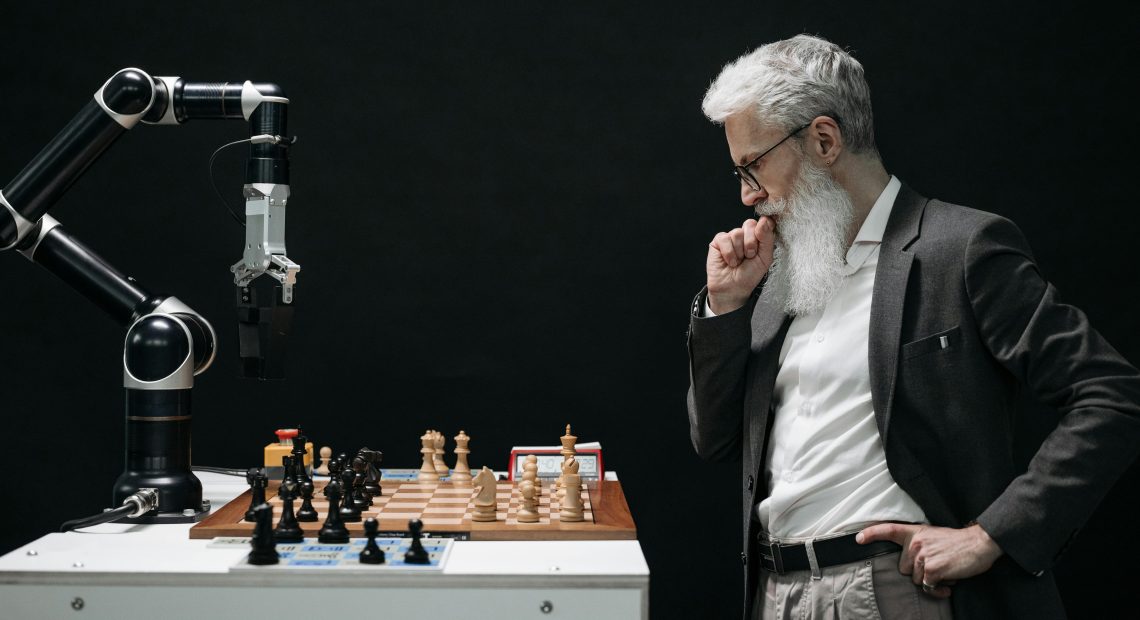
Hero image: Most Americans anticipate that AI will disrupt employment, national security, and social relationships. Credit: Pavel Danilyu