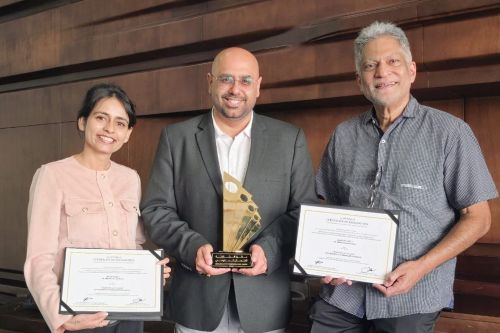
As the World Meteorological Organization’s October 2026 outlook warns of shifting rainfall patterns and increased flood risks in some regions, research from American University of Sharjah (AUS) highlights a less-examined part of flood resilience: how residents’ confidence in public institutions relates to the steps they take at home. The study received the Sharjah Government Communication Award for Best Research in Communication Sciences.
Prompted by the unprecedented rainfall and flooding in the UAE in April 2024, researchers surveyed 900 residents in Dubai and Sharjah. They examined residents’ experiences with flooding and service disruptions, their views of future flood risks, their confidence in governmental ability to manage floods and the precautions they had taken at home.
Although 97 percent of respondents expressed some confidence in local government institutions, household preparations varied. Forty percent said they had stored at least a four-day supply of drinking water, 49 percent had an alternative source of light, and 48 percent had a first-aid kit or extra medical supplies. The analysis found a negative relationship between confidence in government flood management and household preparedness. The researchers call this the “trust–preparedness paradox.” The findings show an association; they do not establish that confidence itself caused lower preparedness.
The study forms part of broader research into household flood preparedness in the UAE. Led by Dr. Himanshu Grover, it was inspired by questions raised after the April 2024 floods about how residents assess risk, understand institutional responsibilities and prepare for emergencies. The research also differs from much earlier work, which has often focused on Western democracies or countries with lower institutional capacity. It examines the UAE context and considers trust, past experience, risk awareness and household actions together.
The research team comprised Dr. Grover, Associate Professor and Program Coordinator of the Master of Urban Planning program at AUS’ College of Architecture, Art and Design (CAAD); Dr. Neeharika Kushwaha, Postdoctoral Researcher at CAAD; Dr. Varkki Pallathucheril, Professor of Architecture at CAAD; and Nihla Shirin, an AUS Master of Urban Planning alumna and Urban Planner at Abu Dhabi’s Department of Municipalities and Transport.
“Our starting point was a question that became especially important after the April 2024 floods: can strong confidence in public response coexist with gaps in household preparedness? The findings suggest that trust remains a vital asset, but it should be matched with practical guidance so residents know how they can protect themselves,” said Dr. Grover.
Rather than examining trust, risk awareness and past flood experience separately, the study considered how they relate to the precautions residents reported taking.
“Looking at these factors together allowed us to move beyond asking whether residents trust government. We could also examine how that confidence relates to the actions they take at home and how past experience and views of future risk fit into that relationship,” said Dr. Kushwaha.
The findings have practical implications for government agencies, communicators, urban planners and emergency-management authorities. The researchers recommend that public guidance explain both what authorities will do during emergencies and what residents can do to prepare. They also advise communicating the operational limits of infrastructure and emergency services responsibly, and making preparedness part of ongoing community engagement, urban planning and climate adaptation.
“Flood resilience depends on more than infrastructure and emergency response. Planning and communication need to connect what public agencies can provide with specific steps households can take before an emergency,” said Dr. Pallathucheril.
Government agencies can work with neighborhood organizations, community representatives and service providers to make preparedness part of everyday community life.
“Preparedness becomes meaningful when residents can turn information into practical action at home. The next phase of our work will bring expert perspectives together with information on service restoration and urban vulnerability, helping connect research findings with strategies communities can use,” said Shirin.
The research was funded by AUS through institutional research grant PD2501. The team is conducting expert workshops to address gaps between institutional capacity, public communication and household preparedness. Future publications will integrate survey findings with infrastructure performance data, service-restoration timelines, urban vulnerability assessments and community-level engagement to build a more comprehensive understanding of urban resilience.
The article, “The Trust–Preparedness Paradox: Institutional Confidence and Household Flood Risk Readiness in the United Arab Emirates (UAE),” was published in Sustainability, 18(12), 6370, on June 22, 2026.
Research at AUS addresses challenges affecting communities, industries and the environment, including climate resilience, sustainable urban development, healthcare, energy and emerging technologies. Through interdisciplinary research and collaboration, AUS scholars contribute knowledge and practical approaches to issues facing the UAE, the region and the world. To learn more about research at AUS, visit www.aus.edu/research.