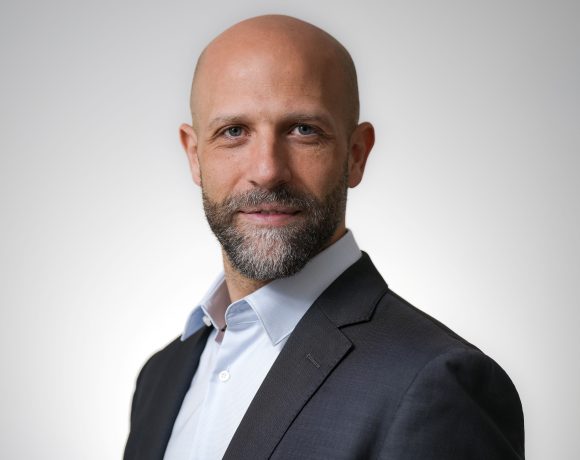

By Hamza Dweik, Head of Trading, Saxo Bank MENA
As the global economy braces for a period of realignment, investors must now re-evaluate how to build resilient, growth-focused portfolios which can withstand today’s uncertainty. This perspective is gaining ground especially in the Middle East, where diversification is emerging as a key strategy for navigating volatility and supporting long-term value creation.
Rethinking portfolio construction: The case for multi-asset allocation
A well-diversified portfolio should include multiple asset classes, such as equities, bonds, commodities, and real estate, to help mitigate concentrated risk. In the Middle East, where market cycles often track oil price fluctuations, geopolitical developments, and policy reform, spreading investments across different asset types is crucial.
Saudi Arabia offers a compelling example. In recent times, the Kingdom has faced heavy volatility in oil prices, which constitutes a large part of its revenue. To reduce its dependency on oil, Saudi Arabia’s sovereign wealth fund, the Public Investment Fund (PIF), has been actively expanding its global investment presence to encompass equities, bonds, and commodities, with a particular focus on the technology and tourism sectors. This forward-looking diversification has enabled the country to cushion external shocks and chart a stable growth trajectory.
This is not surprising or new; private and institutional investors who maintain exposure to both equities and bonds are better positioned during downturns. Bonds often serve as a stabilising counterweight when equity markets decline, supporting overall portfolio performance during turbulent periods. If given the chance and access to various investment instruments, there is no reason not to diversify one’s portfolio.
Geographic diversification: Reducing home bias and capturing global growth
Limiting investments to a single geography can further lead to concentrated risk. Geographic diversification enables investors to spread their exposure across markets with varying economic dynamics, currency movements, and market behaviours.
Investors in the Middle East have always looked beyond their borders. Further west, mature markets in the US and Europe offer stability and well-established industries. Looking east, emerging economies in Asia and Africa offer growth opportunities at affordable valuations. In 2023 alone, investors from the region funnelled over $24 billion into European acquisitions, drawn by attractive valuations and prospects in infrastructure projects.
Similarly, there has been a surge in investments in Africa, with the UAE investing over $97 billion between 2022 and 2023, with a focus on sectors such as technology, logistics, and renewable energy.
Taking a global view towards portfolio construction can help investors insulate themselves from region-specific risks—such as geopolitical shifts or commodity price swings—while positioning them to benefit from a broader set of opportunities.
Building the “all-seasons” portfolio
A resilient portfolio is one designed to adapt—not react. The “all-seasons” approach aims to ensure performance across different market environments by blending assets that respond differently to economic changes. It’s not about timing cycles, but about preparing for them.
During periods of inflation, for example, commodities and inflation-linked bonds have historically offered substantial upside. Gold, in particular, has reaffirmed its role as a safe-haven asset—recently reaching a record high of $3,500 per ounce amid escalating trade tensions and market volatility triggered by new US tariffs. In contrast, slower-growth periods often reward exposure to government bonds and high-quality dividend stocks.
This dynamic was evident in 2015, when the UAE’s equity markets experienced significant volatility due to declining oil prices and global economic uncertainties. The Dubai Financial Market General Index dropped by 16.5%, while the Abu Dhabi Securities Exchange fell by 4.9%. During this period, investors who had diversified their portfolios with alternative assets, such as gold, bonds, and private equity, were more effectively equipped to weather the downturn. Gold prices remained notably stable and even gained value, acting as a traditional hedge against declining equity markets.
Middle Eastern investors can incorporate such strategies by combining regional equities with global fixed-income instruments, commodity exposure, and real estate investment trusts (REITs).
From defensive play to growth strategy
For all investors, the goal should be sustainable wealth creation. With that in mind, diversification should be viewed as a strategic necessity, not an optional defensive tactic.
If you are an investor based in the MENA region, here are some approaches that will allow diversification.
- Blend traditional and alternative assets: In addition to equities and bonds, consider infrastructure projects, private equity, or sukuk (Islamic bonds), which are gaining traction across the Gulf.
- Invest across economic sectors: Investing across diverse economic sectors can be a wise strategy to create a balanced portfolio. By broadening your investments beyond oil and gas, you can capitalise on the potential of thriving industries such as healthcare, technology, logistics, and tourism. These sectors not only offer promising growth opportunities but also provide a sustainable foundation for long-term returns.
- Review and rebalance periodically: Regular assessment ensures the portfolio remains aligned with long-term goals and risk tolerance, particularly as market conditions shift.
Across the Gulf, economic transformation is reshaping the investment landscape. As governments promote greater engagement with capital markets and sovereign wealth funds pursue globally diversified strategies, the region is increasingly embracing a more dynamic approach to wealth creation. In the UAE, for example, financial literacy initiatives are equipping individuals with the knowledge and tools to move beyond traditional savings models and participate more actively in long-term investment planning. The time for change is now, and becoming a more mature investor includes embracing the necessity of diversification.
In such an environment, where both opportunity and uncertainty coexist, investors are well-positioned to adopt the same principles that have guided institutional success. Thoughtful diversification remains a cornerstone of resilience, enabling portfolios to absorb shocks, adapt to evolving conditions, and pursue growth with greater confidence.
By allocating across asset classes, sectors, and geographies, investors can build portfolios that are not only more balanced but also more future-ready. In doing so, they lay the foundation for enduring wealth that can weather cycles, respond to change, and contribute to the region’s broader economic vision.
Image: Hamza Dweik, Head of Trading, Saxo Bank MENA. Credit: Saxo Bank MENA