Photo Credit: WAM
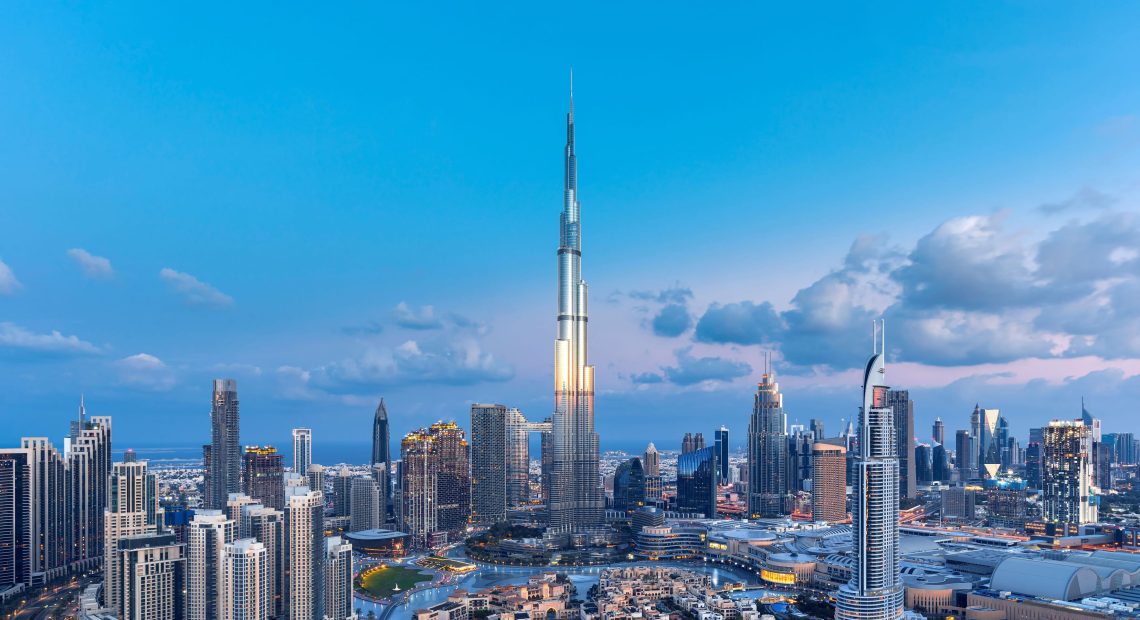
Dubai, UAE — July 2026 — Dubai’s economy continued its upward trajectory in the first quarter of 2026, with the emirate’s gross domestic product reaching AED 232 billion, a 2.4 percent increase compared to the same period last year, according to official figures released by Dubai’s Department of Economy and Tourism.
Officials attributed the growth to the diversity and integration of Dubai’s economic activities, along with the success of development policies designed to boost the emirate’s competitiveness and its ability to adapt to shifting global economic conditions.
Since the start of 2026, the GDP series has also been updated to reflect the latest economic survey results and administrative records, in line with international statistical standards, officials said.
Healthcare, utilities and construction lead growth
The human health and social work sector recorded the fastest growth of any activity, expanding 17.5 percent year-on-year to reach AED 3.6 billion in added value, contributing 1.5 percent of Dubai’s total GDP, up from AED 4.3 billion and a 1.9 percent share in the same quarter of 2025.
Other strong performers included:
- Electricity, gas, water supply and waste management, up 8.4 percent, reaching AED 4.6 billion and a 2 percent share of GDP.
- Construction, up 8.2 percent, with added value of roughly AED 18.7 billion, representing 8.1 percent of GDP.
- Real estate, up 3.1 percent, contributing AED 26 billion, or 11.2 percent of GDP.
Wholesale and retail trade remained the largest single contributor to the economy, growing 2.6 percent to AED 50.9 billion in real added value. The sector accounts for close to 22 percent of the emirate’s total economy and drove about 0.57 percentage points of overall growth, roughly a quarter of the growth recorded in the quarter.
Information and communications technology grew 2.7 percent to AED 12.1 billion, representing about 5.2 percent of the economy, contributing 0.14 percentage points to overall GDP growth.
Meanwhile a broader financial and business services grouping, cited in the report at AED 32.4 billion and a 14 percent GDP share, grew 6.5 percent year-on-year, contributing 0.88 percentage points, or roughly 37 percent of total growth in the quarter, the single largest driver of the emirate’s expansion.
Administrative and support services activities contributed 4.5 percent of GDP, worth AED 10.5 billion, up 3.6 percent from AED 10.1 billion a year earlier.
Officials point to strategic vision
Director-General of Dubai’s Department of Economy and Tourism, Hilal Saeed Al Marri, said the emirate’s economic path is guided by the vision of Dubai’s Ruler, Sheikh Mohammed bin Rashid Al Maktoum, with oversight from Crown Prince Sheikh Hamdan bin Mohammed bin Rashid Al Maktoum.
He said the first-quarter results reflect strong performance that supports growth and establishes a foundation of stability, positioning Dubai to accelerate its growth pace through the rest of the year and into 2027, in line with the goals of the Dubai Economic Agenda D33.
Director-General of Dubai Digital, Hamad Obaid Al Mansoori, said the results underscore the strength and resilience of Dubai’s economy amid a fast-changing global environment, and reflect the emirate’s diversified, innovation-driven economic model, part of D33’s ambition to place Dubai among the world’s top three city economies.
Yousuf Al Nasser, CEO of the Dubai Statistics Center, said the growing value of data as a driver of growth and decision-making underscores the return on continued investment in Dubai’s data infrastructure, which he said helps shape investment flows, improve policy efficiency and support evidence-based planning.
Executive Director of the Dubai Economic Development Corporation, Hadi Badri, said the emirate has taken swift, effective steps in recent months to preserve the foundations underpinning long-term growth, from initiatives supporting small and mid-sized businesses to global partnerships reinforcing investor confidence.
On another note, the UAE’s inbound foreign direct investment reached a record $48.3 billion in 2025, a fourth consecutive year of historic highs, propelling the country to 9th place globally among FDI destinations, Minister of Investment Mohammed Hassan Al Suwaidi said at the launch of the Ministry of Investment’s UAE Foreign Direct Investment Report 2026.
Al Suwaidi said the National Investment Strategy 2031 aims to raise annual inbound FDI flows to AED 240 billion and grow the FDI stock to AED 2.2 trillion by 2031.
The 2025 results mean the UAE has already achieved roughly 74 percent of its annual flow target and 53% of its cumulative stock target, comfortably surpassing 2025’s interim goal of $37 billion, he said.
By sector, automotive manufacturing drew the largest share of greenfield FDI capital spending, at more than 30 percent, followed by telecommunications, driven largely by data centers and AI infrastructure, at 29 percent.
Real estate capital expenditure rose 71 percent year-on-year to $1.9 billion, while transport and storage ranked fourth, reflecting the UAE’s role as a global logistics and trade hub.
Al Suwaidi estimated domestic direct investment at $100–119 billion, about 2.5 times annual inbound FDI flows, reflecting confidence among investors closely familiar with the UAE’s policy landscape.
On artificial intelligence, Al Suwaidi said AI is projected to contribute nearly 14 percent of UAE GDP by 2030, the largest relative and fastest-growing contribution in the Middle East.
The telecoms sector, encompassing data centers and AI infrastructure, captured about 29 percent of greenfield FDI capital spending in 2025, becoming the second-largest recipient sector, backed by cloud regions from all three of the world’s largest cloud computing providers and more than 250 megawatts of data-center capacity, with another 500 megawatts under development.
Flagship projects include Stargate UAE, the first international expansion of OpenAI’s Stargate AI infrastructure platform, and a previously announced $15.2 billion Microsoft investment in the UAE spanning 2023 to 2029 for AI infrastructure, cloud computing and local talent development.
The UAE’s outbound FDI reached $63.4 billion in 2025, with outbound FDI stock hitting $402.7 billion by year-end, exceeding inbound stock and placing the UAE among a small group of net capital-exporting economies globally. UAE-based companies completed a record $18.2 billion in outbound mergers and acquisitions across 117 deals during the year.
New initiatives cited include the “Atlas” geospatial platform, launched in 2025 to give investors real-time access to investment insights across the UAE; the National Investment Fund, established in November 2025 with initial capital of AED 36.7 billion to offer incentive packages supporting the 2031 strategy; and the Emirates Growth Fund, launched in 2025 with about $272 million in capital to provide growth financing of $2.7–13.6 million per company to small and medium enterprises.
Al Suwaidi said greenfield FDI created more than 65,000 jobs in 2025, up 31.6 percent year-on-year, with a growing share in R&D, regional headquarters and IT roles. The UAE also ranked first globally in the growth of AI talent concentration, according to the 2026 Stanford AI Index.
Looking ahead, Al Suwaidi said the first phase of Stargate UAE is expected to be completed in the third quarter of 2026, alongside the rollout of incentive packages under the National Investment Fund, as the UAE aims to rank among the world’s leading investment destinations by 2031. The country already ranks second globally in the number of greenfield FDI projects for a third consecutive year.