The massive shock the COVID-19 pandemic had on global trade has created supply chains that are more resilient and flexible, largely thanks to accelerated technological innovation, according to experts speaking during the Annual Meeting of the Global Future Councils 2023 on Wednesday.
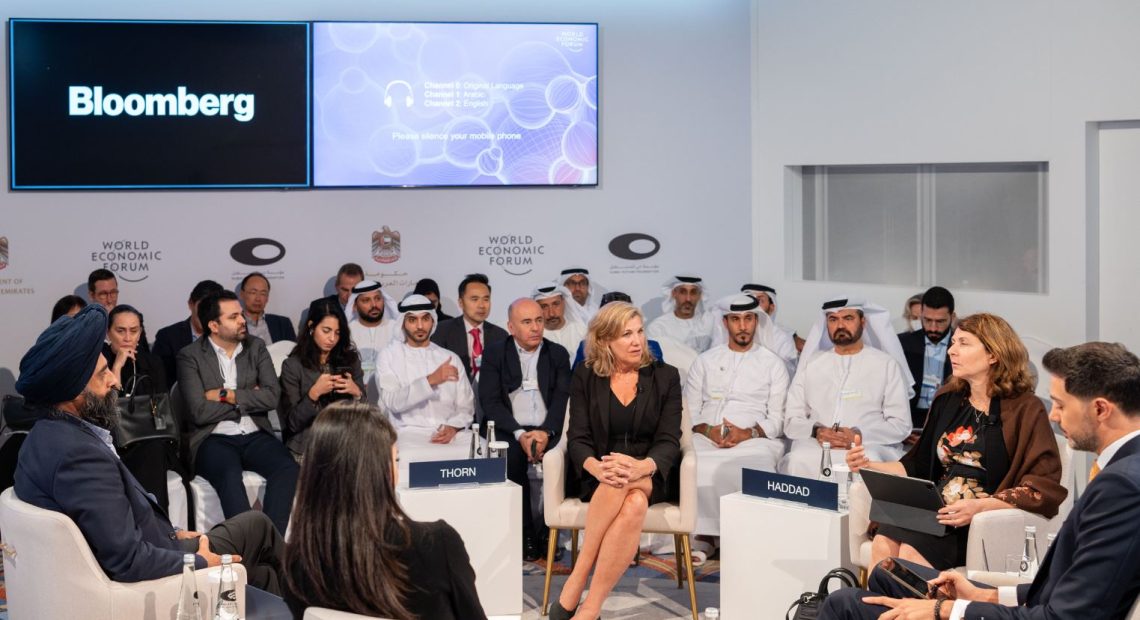
In a session titled ‘Trade in the Fourth Industrial Revolution’, the World Bank’s Global Director for Trade, Investment and Competitiveness, Mona Haddad, said shocks such as COVID-19 and recent geopolitical tensions have highlighted “vulnerabilities in being too dependent on few countries for key commodities”.
Describing the poly-crisis supply chains have faced in the last three years due to pandemics and global geopolitical tensions, supply chain technology has experienced “a mini revolution”, said an expert from the University of Cambridge.
Jagjit Singh Srai, Director, Research; Head, Centre for International Manufacturing, Institute for Manufacturing, said: “Our ability to respond to events is unprecedented. The ability for supply chains to flex in the event of a series of disruptions is something that has been well practiced over last 2-3 years, so we’re in good shape.”
Sarah Thorn, Senior Director, Global Government Affairs, Walmart Inc., rejected the narrative that “supply chains broke” during COVID: “What we saw during the pandemic was a failure to prepare. Yes, they bent. Yes, there were dislocations.”
Singh Srai warned that while global supply chains are stronger today, countries and organizations without access to technologies remain vulnerable. Haddad echoed these concerns citing: “Although 84 percent of people in Sub-Saharan Africa have access to 3G and 54 percent to 4G, only 22 percent use mobile internet for productive purposes.”
She added: “We don’t want to leave behind the developing countries. We need to keep opening the door for these countries to take advantage of new technologies.”
Speaking more broadly about global trade systems, Lynn Kuok, Shangri-La Dialogue Senior Fellow, Asia-Pacific Security, International Institute for Strategic Studies (Asia) Ltd, expressed concerns over the shift towards government-driven onshoring.
She said that “geopolitical alignment and security prevail” over trade efficiency.
Urging countries to “safeguard the multilateral trading system”, Haddad said: “Geopolitics are now so intertwined with trade policy that it’s not all economic rationale driving decisions.
Singh Srai agreed that “supply chains are extremely intertwined with trade policy and industrial strategy” but added that strategies can be developed to “nurture supply chains and give you resilience in key product categories”.
The World Economic Forum’s (WEF) Annual Meeting of the Global Future Councils 2023, taking place from the 16-18 October in Dubai, is a critical opportunity for experts from around the world to meet and collaborate on solutions that will improve economic growth and human development.