By the year 2030
Google has signed a global commercial partnership with Italy-based Energy Dome to deploy its long-duration CO₂ battery technology, aiming to accelerate efforts to power its operations entirely with carbon-free energy by 2030.
The agreement marks Google’s first commercial deal involving long-duration energy storage. It also includes a strategic investment in Energy Dome as the company scales up its operations. The move comes as demand for electricity rises worldwide, driven by the expansion of data centres and artificial intelligence workloads.
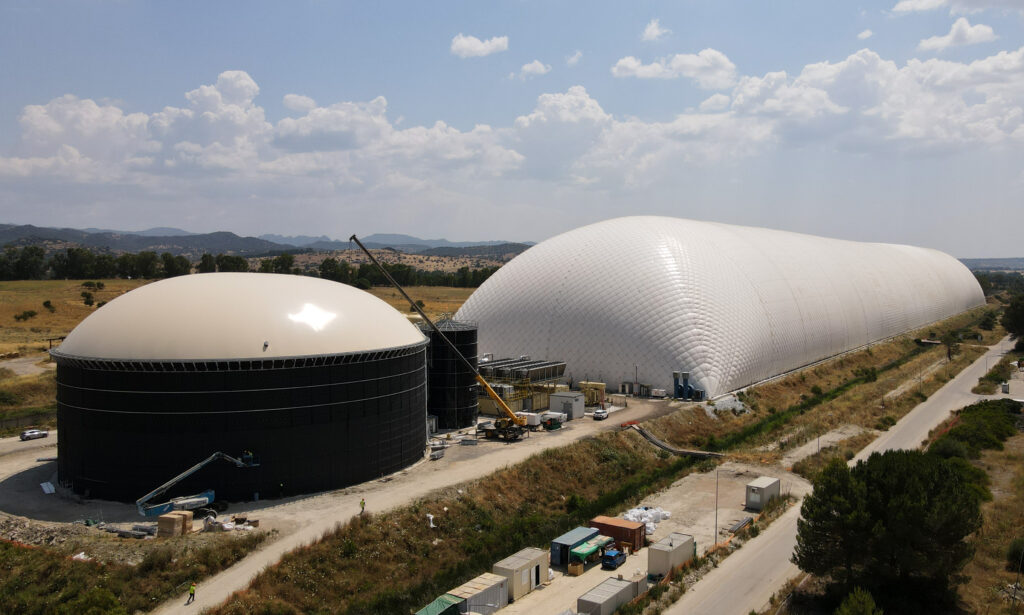
Energy Dome’s CO₂ battery system uses a mechanical system that compresses and stores carbon dioxide, then releases it to generate electricity when needed. It is designed to store renewable energy for eight to 24 hours — significantly longer than most lithium-ion batteries — and can help balance intermittent supplies from solar and wind power.
The system does not rely on lithium or rare earth elements, using instead widely available industrial equipment. According to Energy Dome, this enables faster manufacturing and deployment while avoiding typical supply chain constraints associated with battery minerals.
Google’s investment in the Milan-based firm underscores its growing focus on alternative energy storage technologies to support its goal of running all data centres and offices on carbon-free electricity around the clock by the end of the decade.
The companies said the technology will be rolled out across several key regions, including Europe, North America and Asia-Pacific. Several projects are already in development, although specific locations have not been disclosed.
Energy Dome has previously signed agreements with utilities in the United States, Italy and India. The partnership with Google is expected to speed up commercial deployment and expand the company’s global footprint.
While the technology is being rolled out globally, it may also have implications for the Middle East and Africa. The region is experiencing rapid growth in solar and wind energy projects, but struggles to integrate these sources into the grid due to their intermittent nature. Long-duration storage could play a role in stabilising power supplies and supporting national energy transition plans.
In the Gulf, countries such as the UAE and Saudi Arabia are targeting net-zero emissions and expanding their renewable energy capacity, making battery storage solutions a central part of their planning.
Unlike pumped hydro, which is limited by geography, the CO₂ battery’s modular design allows it to be installed at a wide range of sites, making it more viable for desert regions with limited water resources.
Google said the deployment of reliable, firm clean energy was not only crucial for its operations but could help build resilience in power grids more broadly. In regions where fossil-fuel plants are being phased out, the loss of so-called grid inertia — the stabilising effect of heavy rotating machinery — has become a growing concern. Mechanical systems, such as the CO₂ battery, can replicate some of this stabilisation.
Claudio Spadacini, CEO of Energy Dome, said the collaboration would demonstrate that carbon-free electricity is achievable through targeted investment and the right technical model. He added that Google’s support would help push the CO₂ battery toward mainstream commercial adoption.
The agreement also signals a shift among major technology companies towards next-generation storage options that go beyond traditional lithium-ion solutions. With global electricity use projected to increase significantly over the next decade, particularly from cloud computing and AI, reliable energy storage is viewed as crucial to preventing supply bottlenecks and achieving decarbonization goals.
Energy Dome’s technology offers one of several emerging approaches to solving the long-duration storage challenge. As nations increase their reliance on renewable power, securing firm capacity during hours without sun or wind has become a top concern for grid operators and investors alike.
In regions across the Middle East and Africa, where utility-scale renewable energy is expanding rapidly, partnerships like this may offer insight into future energy models that combine clean generation with stable, on-demand storage.
Image: Energy Dome’s CO₂ battery system uses a mechanical system that compresses and stores carbon dioxide, then releases it to generate electricity when needed. Credit: Energy Dome