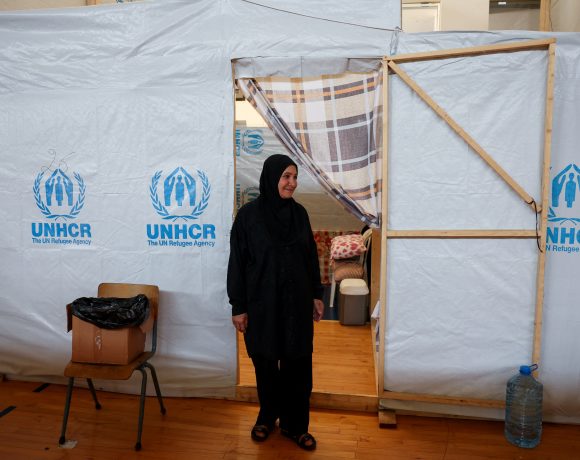

Families displaced by conflict from southern Lebanon seek refuge at a school transformed into a shelter in Sidon on March 3, 2026. Israel on March 3 ordered the military to take control of more positions in Lebanon, where the army pulled back some of its forces after Hezbollah attacked Israeli bases in support of its backer, Iran. (Photo by MAHMOUD ZAYYAT / AFP)
Dubai, UAE — March 2026 — At least 30,000 displaced people have sought refuge in shelters across Lebanon following a dramatic escalation in hostilities between Israel and Hezbollah this week, the UN refugee agency reported on Tuesday, warning that the number is expected to rise significantly.
The Israeli military has intensified its air campaign across Lebanon since Monday, responding to rocket fire from Hezbollah late Sunday, which itself was launched in reaction to the killing of Iran’s Supreme Leader Ali Khamenei by a US-Israeli strike on Tehran.
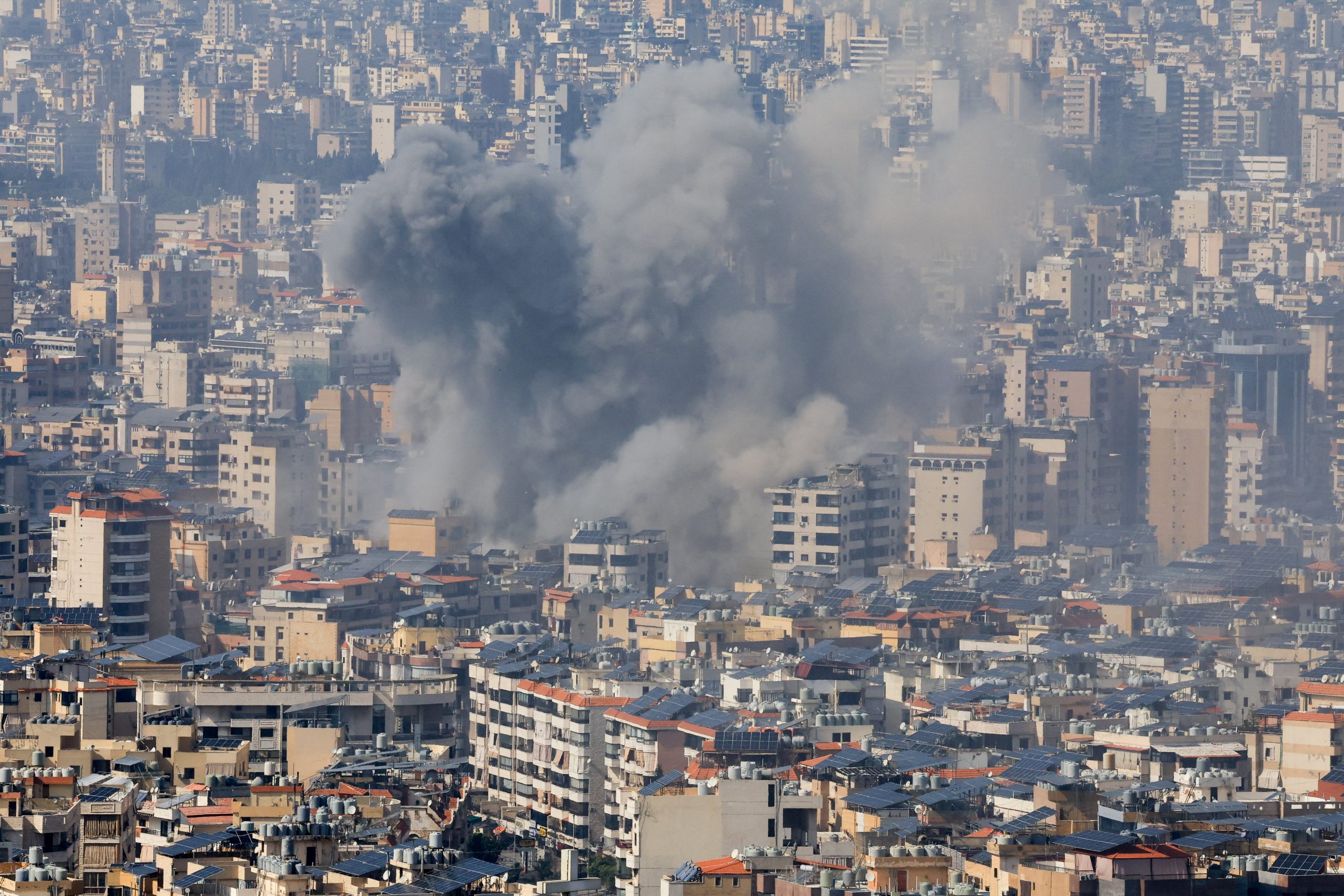
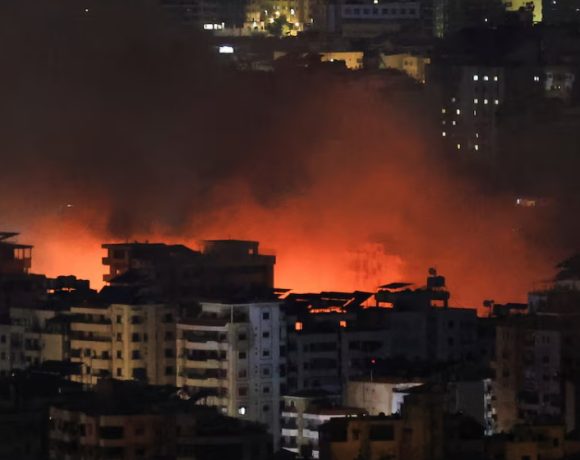
Smoke rises after an Israeli strike on Beirut’s southern suburbs, following an escalation between Hezbollah and Israel amid the U.S.-Israeli conflict with Iran, Lebanon, March 3, 2026. REUTERS/Mohamed Azakir
Babar Baloch, spokesperson for the UNHCR said that “conservative estimates suggest that nearly 30,000 people were hosted and registered at collective shelters.” He noted that the official figures do not capture the full scope of the crisis. “Many more slept in their cars on the side of roads or were still stuck in traffic jams.”
The Lebanese Minister of Social Affairs Haneen Sayyed announced on Monday the opening of 171 shelters across Lebanon, accommodating around 29,000 displaced individuals.
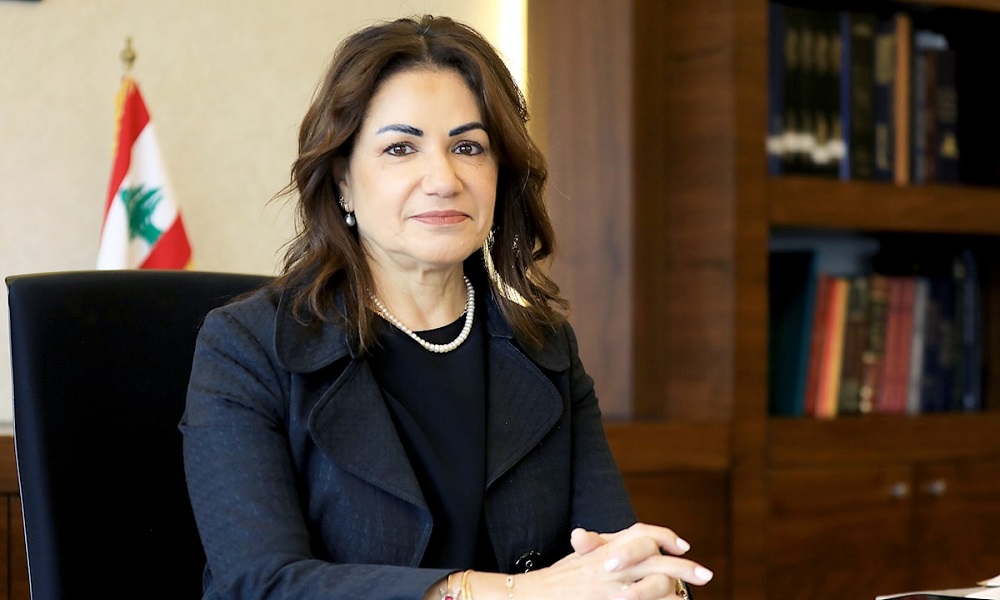
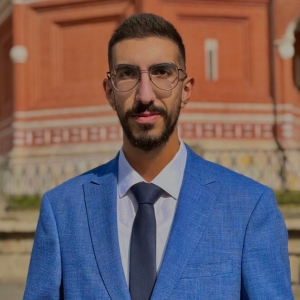
Lebanese Minister of Social Affairs Haneen Sayyed. X/@ObserveLebanon
The UN World Food Programme said in a statement that it has “already activated contingency plans in coordination with local authorities, providing food assistance and support for those who have already been displaced by the violence.”
The WFP added that at least $200 million would be needed to sustain an initial three-month emergency response if the crisis escalates further across the Middle East.
The UNHCR also reported an increase in Syrian refugees moving from Lebanon back into Syria, prompting the agency to activate contingency plans in case of further influxes.
Lebanon already hosts the world’s highest concentration of refugees per capita, with approximately 1.5 million Syrians living alongside a local population of about 4 million Lebanese.
Children are among the most vulnerable victims of the escalating conflict. The UN children’s agency UNICEF confirmed that seven children have been killed and 38 injured since Monday.
Despite the intensifying conflict, Lebanon’s national carrier Middle East Airlines continues to operate, remaining the country’s only active airline. Lebanon’s airspace stayed open after several Israeli strikes hit the southern suburbs of Beirut, though the airport which is 5 kilometers away has remained intact.
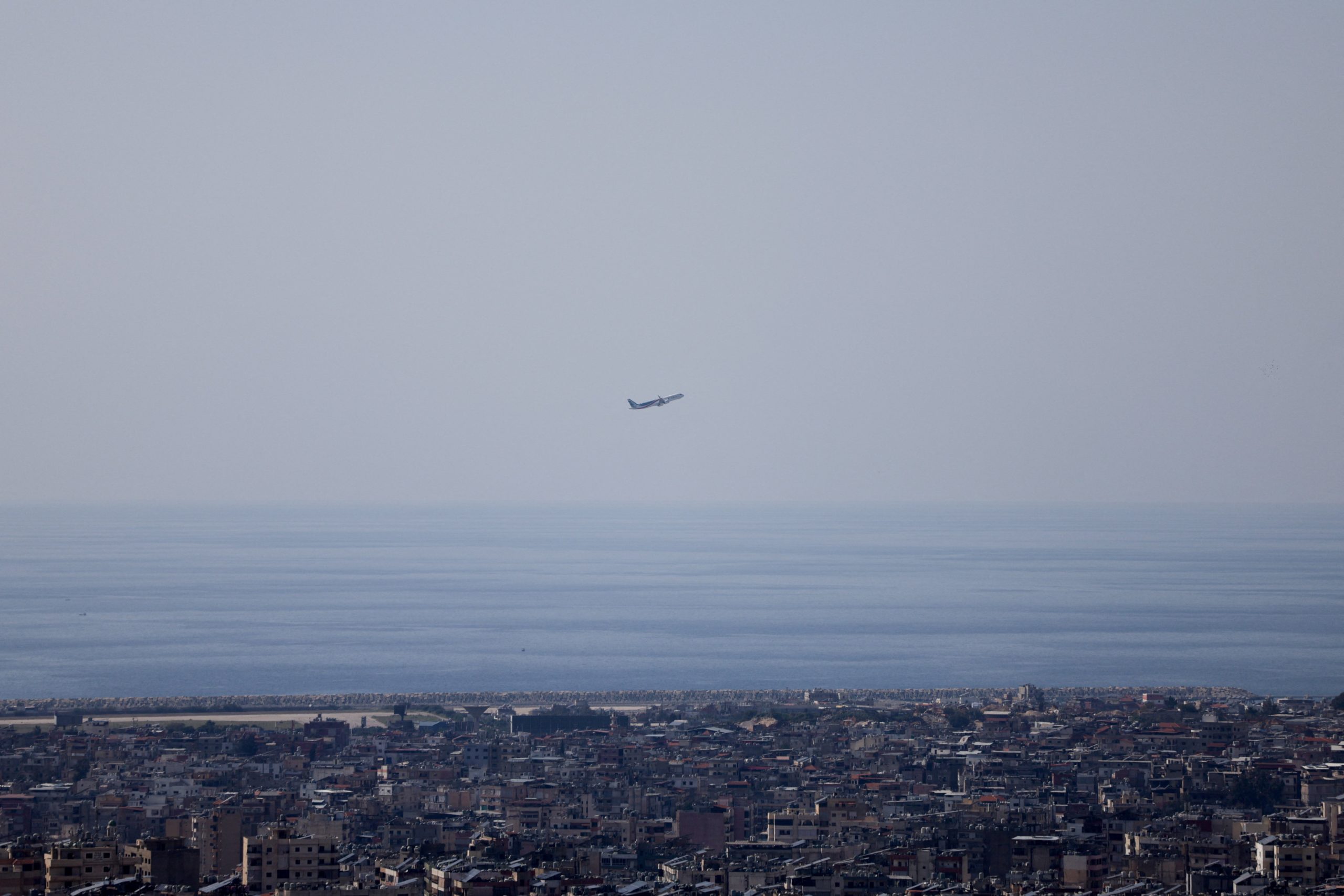
A plane takes off from Rafik Hariri Airport, following an escalation between Hezbollah and Israel amid the U.S.-Israeli conflict with Iran, in Beirut, Lebanon March 3, 2026. REUTERS/Khalil Ashawi
An emergency Cabinet meeting was held on Monday morning in response to the crisis. Prime Minister Nawaf Salam condemned rocket fire from southern Lebanon as an “irresponsible act” that endangers Lebanon and announced the banning of military activities of Hezbollah.