To cut freight emissions
Nissan has opened the United Kingdom’s first on-site shared charging station for electric heavy goods vehicles (eHGVs), marking a significant step in efforts to reduce emissions across the automotive supply chain.
The £1.4 million facility, located at Nissan’s Sunderland manufacturing plant in northeast England, will support a fleet of 25 electric trucks. It is part of a broader initiative to electrify logistics operations and could help save approximately 1,500 tonnes of carbon dioxide emissions per year.
The project, a first for the UK’s automotive sector, brings together carmaker Nissan and haulage partners Fergusons Transport, Yusen Logistics, and BCA. Gridserve leads it and forms part of the Electric Freightway consortium. The initiative is funded through the UK Government’s Zero Emission HGV and Infrastructure Demonstrator programme, which Innovate UK delivers.
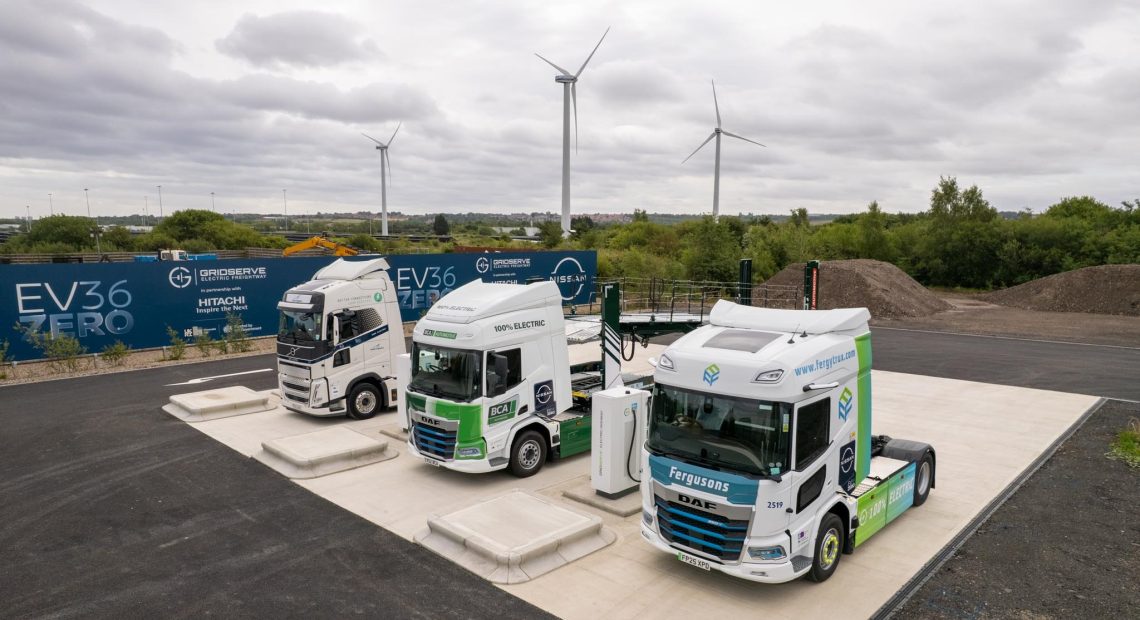
The charging station features seven high-power chargers, capable of serving up to 10 eHGVs simultaneously, each with a maximum capacity of 360kW. The trucks will be used to transport automotive components from suppliers across the UK, including those in Derby, to the Sunderland plant, and to deliver finished vehicles to and from the Port of Tyne. These vehicles are expected to travel over 2.4 million kilometres annually on fully electric power.
Nissan has described the project as a foundational step toward a fully electrified supply chain, stating that the station will support 60 deliveries to the plant each day. The company has not ruled out allowing other logistics firms to use the facility in future.
The new charging site supports Nissan’s wider EV36Zero programme, which aims to combine electric vehicle production, battery manufacturing and renewable energy at its Sunderland base. The plant, one of the largest car factories in the UK, produces electric vehicles, including the Nissan Leaf.
While the move is seen as a domestic development in the UK, its significance extends beyond British borders. Countries in the Middle East and Africa are closely monitoring developments in electric freight transport, particularly as Gulf states intensify their efforts to achieve net-zero initiatives.
The United Arab Emirates and Saudi Arabia, for instance, are investing heavily in sustainable transportation and logistics as part of their broader economic diversification strategies.
The success of large-scale electric truck deployment and charging infrastructure in the UK could serve as a model for regional logistics hubs in the Middle East. Key ports and industrial zones across the UAE, including Jebel Ali and Kizad, are actively exploring the integration of electric vehicles as part of their broader efforts to decarbonise.
Gridserve CEO Daniel Kunkel said that depot charging infrastructure was essential for the future of electric freight transport. He added that shared charging hubs, such as the one in Sunderland, would be necessary to meet both commercial and environmental objectives.
UK Minister for the Future of Roads, Lilian Greenwood, said the government’s £200 million funding initiative for zero-emission HGVs was designed to help businesses transition to cleaner logistics. She noted that the project in Sunderland would contribute to job creation while advancing the UK’s climate commitments.
The shared-use model of the charging station sets it apart from other facilities, which are typically exclusive to a single operator. By allowing multiple logistics firms to use the same infrastructure, the project aims to maximise efficiency and reduce the need for duplicated investment.
As the global automotive industry intensifies its shift toward electrification, infrastructure challenges remain a major barrier, particularly for heavy goods vehicles. Unlike passenger EVs, freight vehicles require much higher charging power and longer charging times, raising both technical and economic hurdles.
The Sunderland initiative is being closely observed by transport and energy planners across Europe, the Middle East and Africa. For regions seeking to reduce reliance on diesel-powered logistics, the project offers insights into the challenges and potential benefits of shared electric freight infrastructure.
Nissan’s move comes at a time when global carmakers face growing regulatory pressure to cut emissions across the supply chain, not just at the point of vehicle sale. The UK, EU and GCC countries have all announced net-zero targets that will require overhauls of existing transport systems in the coming decades.
Image: The new charging station features seven high-power chargers, capable of serving up to 10 eHGVs simultaneously, each with a maximum capacity of 360kW. Credit: Nissan