
UNCTAD: Time for reform
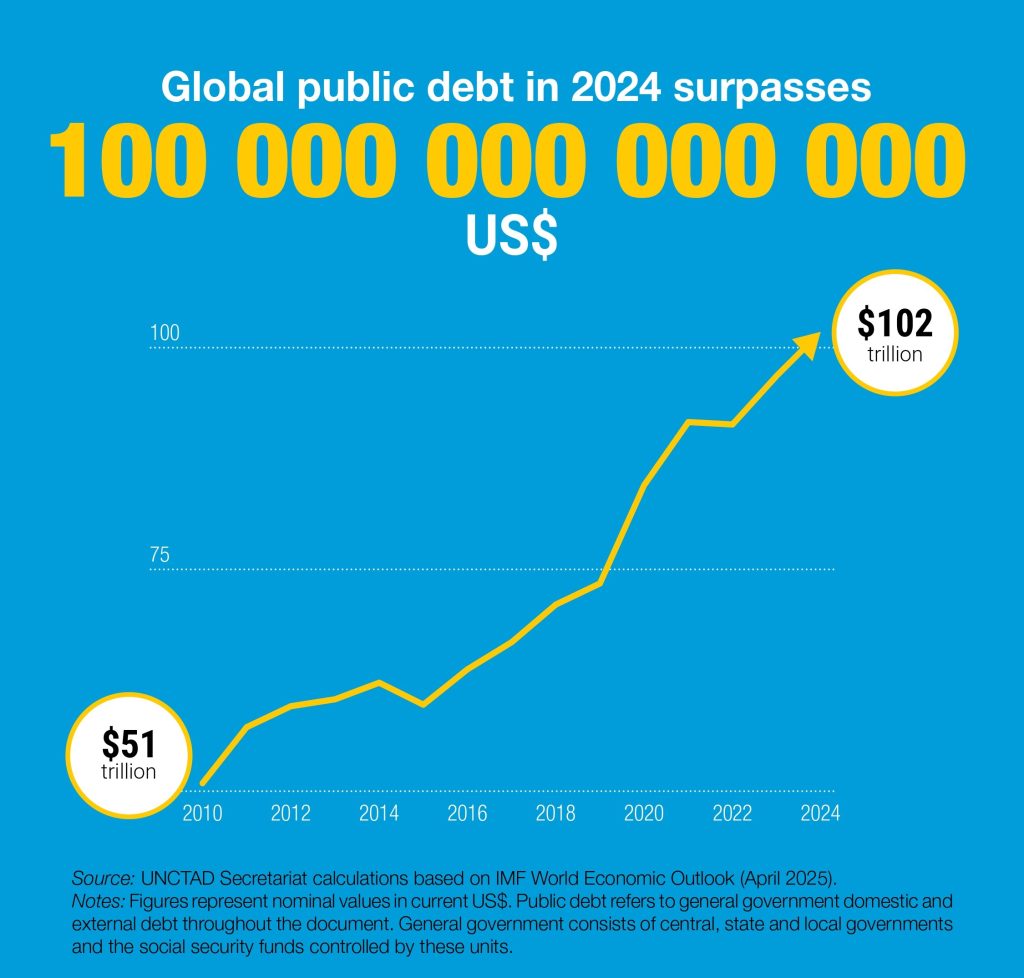
The global public debt burden reached an all-time high of $102 trillion in 2024, according to a new United Nations report titled ‘A world of debt’.
With developing countries carrying a disproportionate share of the financial strain, the UN Conference on Trade and Development (UNCTAD) has warned that unsustainable debt levels are exacerbating economic inequality and hindering development efforts.
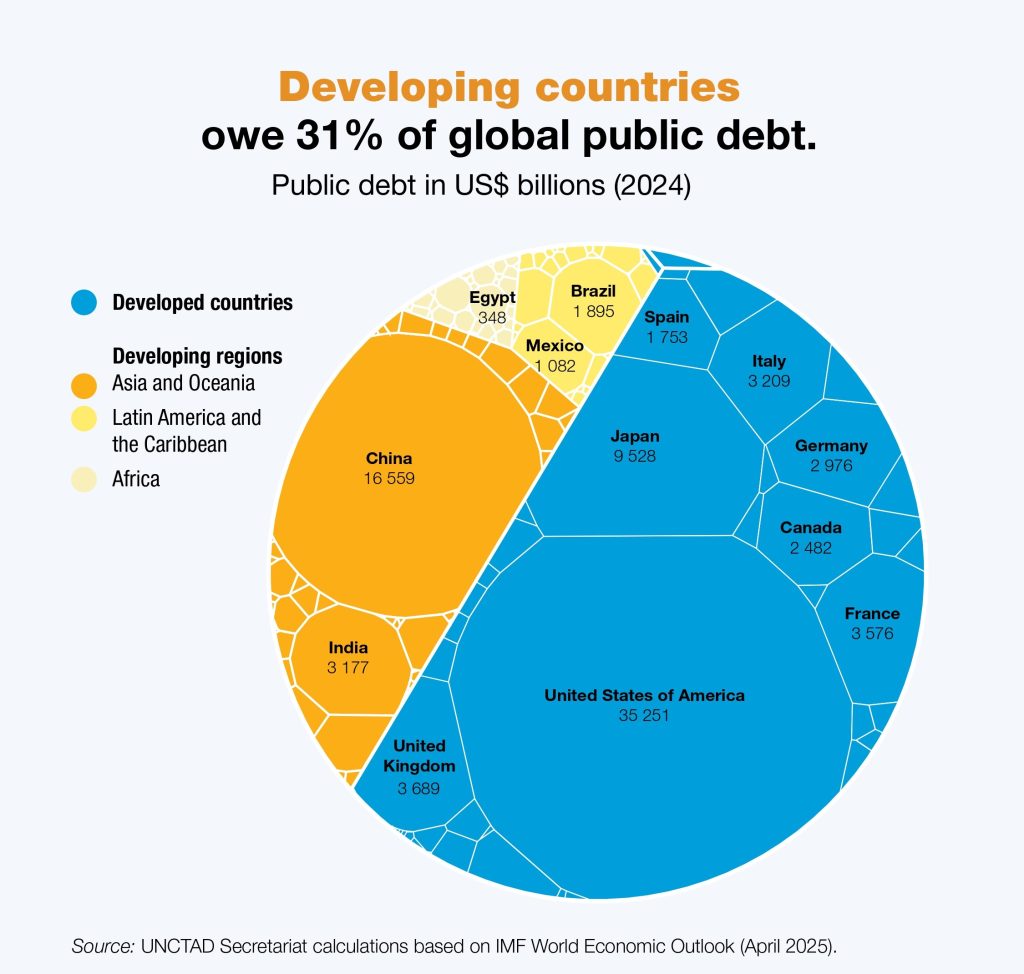
Developing nations now account for 31% of global public debt. The pace of debt accumulation in these regions has more than doubled that of developed countries since 2010. The report highlights that while global debt levels have increased significantly, the burden has not been distributed evenly.
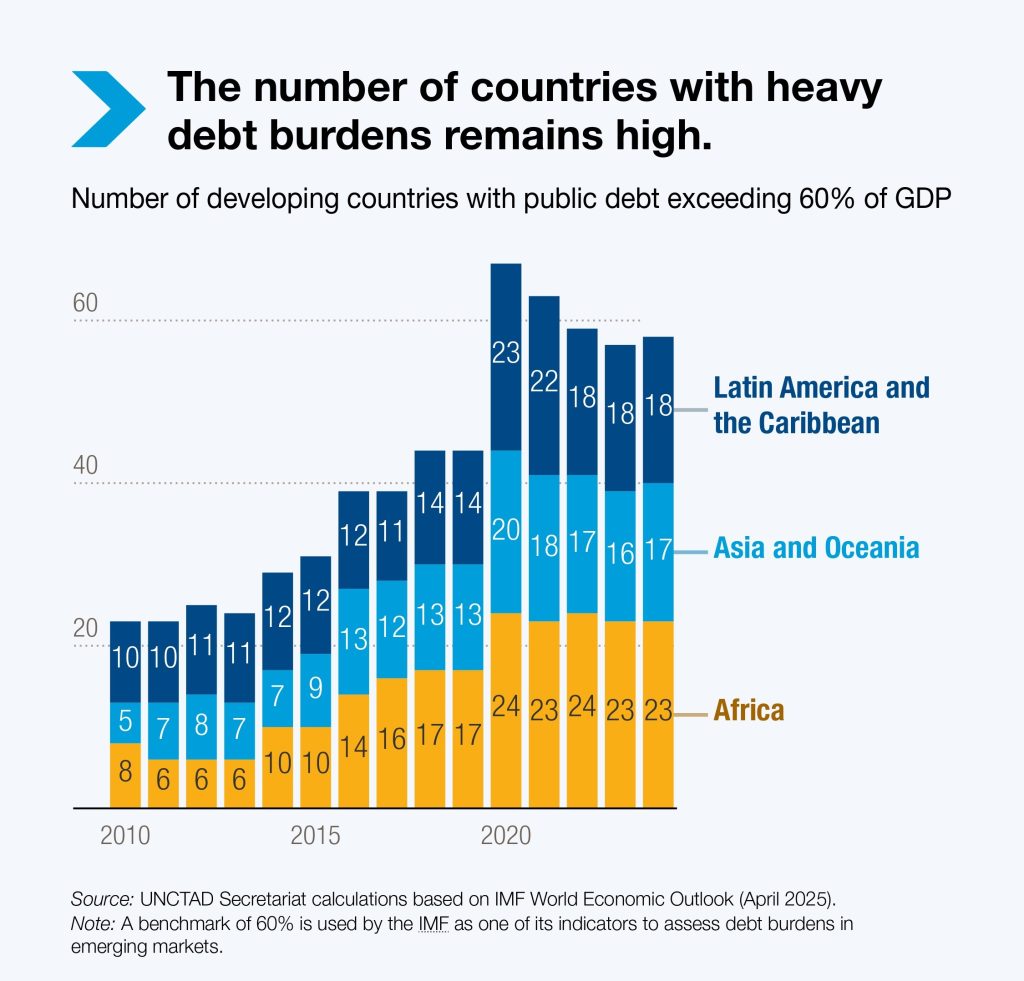
Africa, Asia, Latin America, and the Caribbean are among the regions hardest hit, with many governments spending more on interest payments than on health and education.
Africa is particularly exposed. By 2023, countries in the region will pay more per capita on interest than on basic services. Between 2021 and 2023, the average annual public spending on interest in Africa was $90 per person, compared to $63 for health and $133 for education.
The report estimates that 3.4 billion people globally now live in countries where governments allocate more funding to servicing debt than to essential social sectors.
External public debt service also remains a significant challenge. The number of developing countries spending more than 5 per cent of export revenues on servicing external debt has more than tripled since 2010.
Many Middle Eastern and African economies fall into this category, where high external debt repayments constrain fiscal space, leaving them with limited room for manoeuvre.
Egypt, one of the most indebted nations in the Middle East, owed $348 billion in 2024, according to the data. The country is among several in the region facing economic headwinds due to high borrowing costs and reduced access to concessional finance.
Rising yields on international bonds have pushed average borrowing costs for African countries to 9.8 per cent, compared to 2.8 per cent for the United States.
Private lenders
Private lenders have emerged as the largest group of external creditors to developing economies, accounting for over 60 per cent of external debt in Africa and Latin America. UNCTAD cautioned that this shift has made debt restructuring more complex.
Private creditors are less likely to participate in coordinated relief efforts, often demanding full repayment even during financial crises.
In 2023, private lenders withdrew a net $25 billion from developing countries. The number of countries facing net negative financial flows from external public debt more than doubled between 2010 and 2023, further straining already fragile economies.
The international financial system, shaped primarily by developed economies, has been criticised for failing to provide adequate support to nations in distress. The report calls for urgent reforms to ensure more inclusive governance and access to liquidity for developing countries.
Proposals include reforming the G20 Common Framework on debt restructuring, increasing the use of Special Drawing Rights, and strengthening regional financial cooperation mechanisms.
UNCTAD’s findings were released ahead of the 4th International Conference on Financing for Development, which will take place in Sevilla. The report urges global policymakers to move beyond declarations and enact reforms that prioritise long-term development over creditor interests.
In the Middle East, where several countries rely heavily on public borrowing to finance infrastructure and social spending, the risks are mounting. High debt service costs and limited fiscal buffers raise concerns about financial stability, particularly in nations already facing political and economic uncertainty.
The report also notes a shift in trends of official development assistance. Concessional loans now comprise a growing share of aid, displacing traditional grants. This has increased the financial burden on low-income countries, many of which are already struggling with climate-related shocks, food insecurity and sluggish economic growth.
The call for change is growing louder. Nearly 60 countries raised concerns over global debt architecture during the 79th United Nations General Assembly. Many emphasised the urgent need to create a fairer system that reflects the interests of all nations, particularly those facing systemic vulnerabilities.
As the world looks to meet the Sustainable Development Goals by 2030, the rising cost of debt threatens to derail progress. Without structural reforms, many developing countries, including those in the Middle East and Africa, risk being locked in a cycle of borrowing and repayment, with little left to invest in their people.
Image: Cover image of the UNCTAD’s newly released report titled ‘A world of debt’. Credit: UNCTAD