
With Snapdragon W5+ Gen 2 and W5 Gen 2
Qualcomm has introduced a new generation of smartwatch chips that enable direct satellite communication, marking a first in wearable technology and potentially reshaping how users stay connected in remote areas with no cellular coverage.
The Snapdragon W5+ Gen 2 and W5 Gen 2 platforms were unveiled during the Made by Google event in San Diego, alongside the launch of the Google Pixel Watch 4.
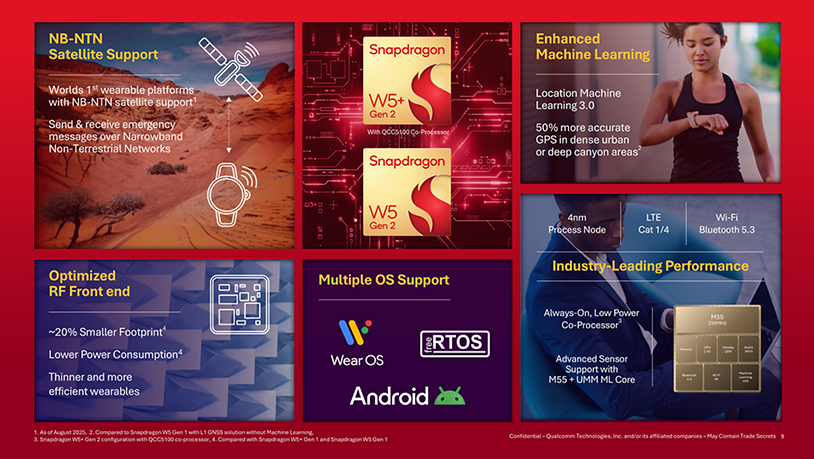
The new chips support two-way emergency messaging via satellite by integrating Skylo’s Narrowband Non-Terrestrial Network (NB-NTN), making them the first wearable platforms to support this feature natively.
According to Qualcomm, the platforms are designed to operate even where traditional mobile networks are unavailable. This could appeal to users such as hikers, climbers, or outdoor workers in isolated environments where network blackouts can have life-threatening consequences.
Expanded coverage
The UAE, Saudi Arabia, and other GCC countries have seen an increasing interest in emergency communication tools, particularly in the tourism, mining, and logistics sectors that operate in desert and mountainous terrains. Satellite connectivity in smartwatches could provide an added layer of safety in such remote regions.
With satellite support built into the chip, users can send SOS messages or emergency updates without needing to pair their device with a phone or rely on terrestrial networks. Qualcomm did not reveal specific partners in the Middle East.
Still, the technology could align with regional efforts to improve safety infrastructure, particularly in remote tourism destinations and during annual pilgrimages where network strain is common.
The new platforms are based on a 4-nanometre system-on-chip (SoC) architecture, offering up to 20% lower power usage and a smaller form factor compared to the previous generation. Qualcomm says this reduction enables wearable manufacturers to design smaller devices with longer battery life, a key feature for users in rugged or isolated settings.
The chips also feature machine learning-based location technology, which improves GPS accuracy by up to 50%. This could be particularly helpful in dense urban environments, such as central Cairo or Riyadh, where buildings often interfere with satellite signals.
Global push
GlobalData forecasts that the wearables market in the Middle East and Africa will grow at a compound annual rate of over 10% until 2028, driven by increased interest in health monitoring, sports, and security applications. Satellite-enabled smartwatches may help accelerate this trend by adding a new layer of resilience for users in regions with patchy cellular coverage.
The Pixel Watch 4 is the first device to feature the Snapdragon W5 Gen 2. It runs Wear OS 6 and is designed for seamless integration across multiple Google products. Though Google has not officially announced a release in the Middle East or Africa, previous versions of the Pixel Watch have been sold through grey market imports in the UAE and Saudi Arabia.
In a statement, Dino Bekis, head of Qualcomm’s wearable division, said the company aims to enhance user safety and communication reliability through the integration of satellite technology. Google’s Sandeep Waraich described the new platform as a major advance for smartwatch performance and safety.
Skylo, the satellite connectivity provider, stated that its collaboration with Qualcomm reflects a shift in how narrowband satellite services are being used beyond traditional markets such as maritime or emergency relief. Tarun Gupta, Skylo’s Chief Product Officer, said the feature ensures connectivity for smaller devices without significantly compromising power or size.
Regional relevance
In North Africa and the Sahel, where infrastructure gaps persist, especially in rural and conflict-affected areas, satellite-enabled consumer tech could bridge the communication divide. Aid workers, border patrols, and transport operators in areas with unstable coverage stand to benefit from such advances.
The addition of satellite messaging also comes as regulatory bodies across the region explore frameworks for integrating non-terrestrial networks into national telecom strategies. The UAE’s Telecommunications and Digital Government Regulatory Authority has shown a growing interest in hybrid solutions that combine terrestrial and satellite networks, notably to support emergency services and smart city initiatives.
While it remains unclear when devices powered by these new platforms will be widely available across the Middle East and Africa, analysts say the move signals the beginning of broader adoption of satellite communication in mainstream consumer electronics.
With the rising demand for safety features and increasing investment in digital infrastructure in the region, smartwatch satellite messaging could quickly transition from a niche to a necessity.
Hero image: The Snapdragon W5+ Gen 2 and W5 Gen 2 platforms are designed to operate even where traditional mobile networks are unavailable. Credit: Ketut Subiyanto