Amid a global airlift gap
Aerospace and energy firm Radia has begun building what is set to become the world’s largest cargo aircraft, aiming to address critical shortfalls in global oversized freight transport and expand the reach of clean energy projects.
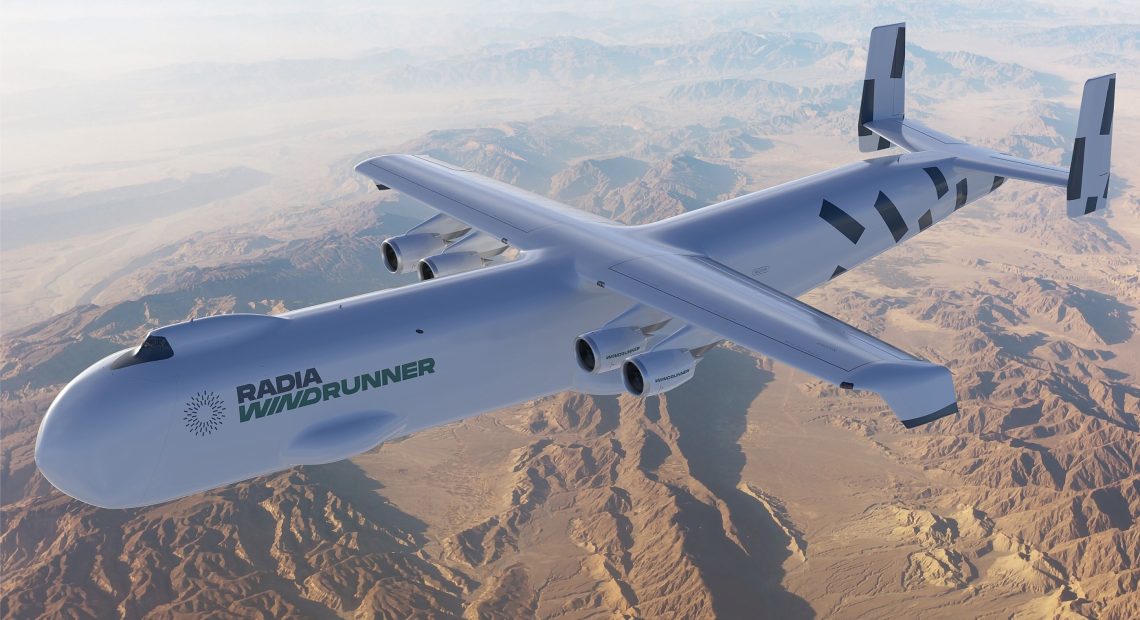
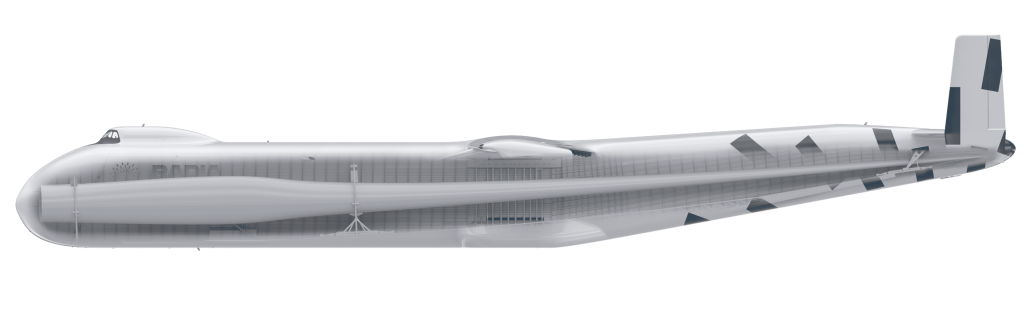
Known as the WindRunner, the aircraft is being designed to carry extremely large cargo volumes, with an internal capacity 12 times greater than a Boeing 747.
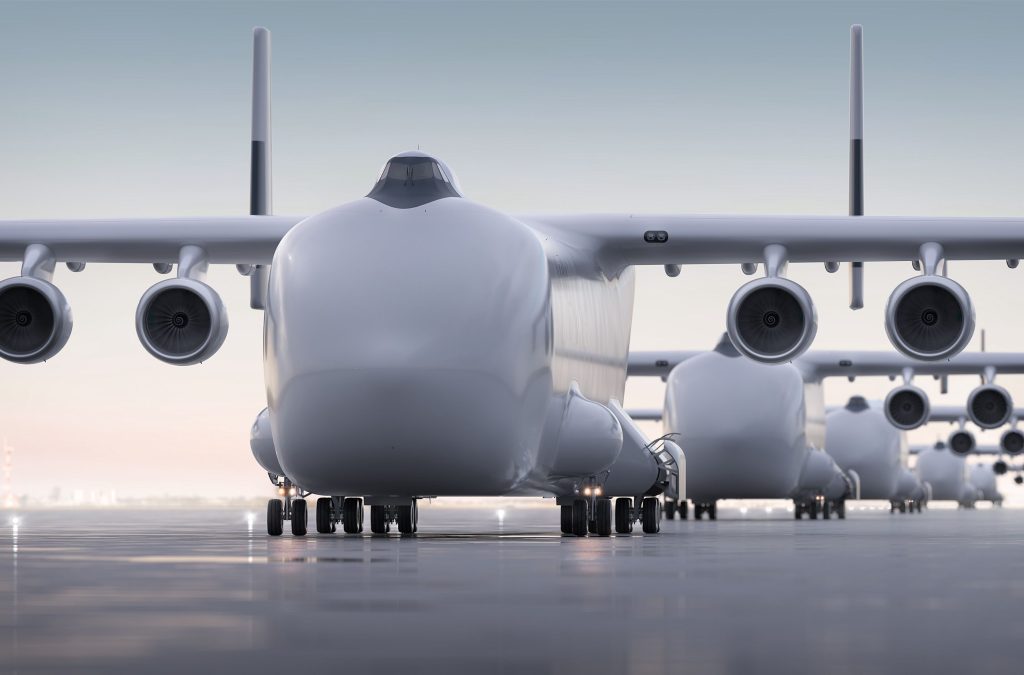
The Colorado-headquartered company says the aircraft will be capable of landing on semi-prepared dirt or gravel runways. This feature could make it particularly relevant for regions like North Africa and the Arabian Peninsula, where logistical infrastructure is often limited in remote energy-rich areas.
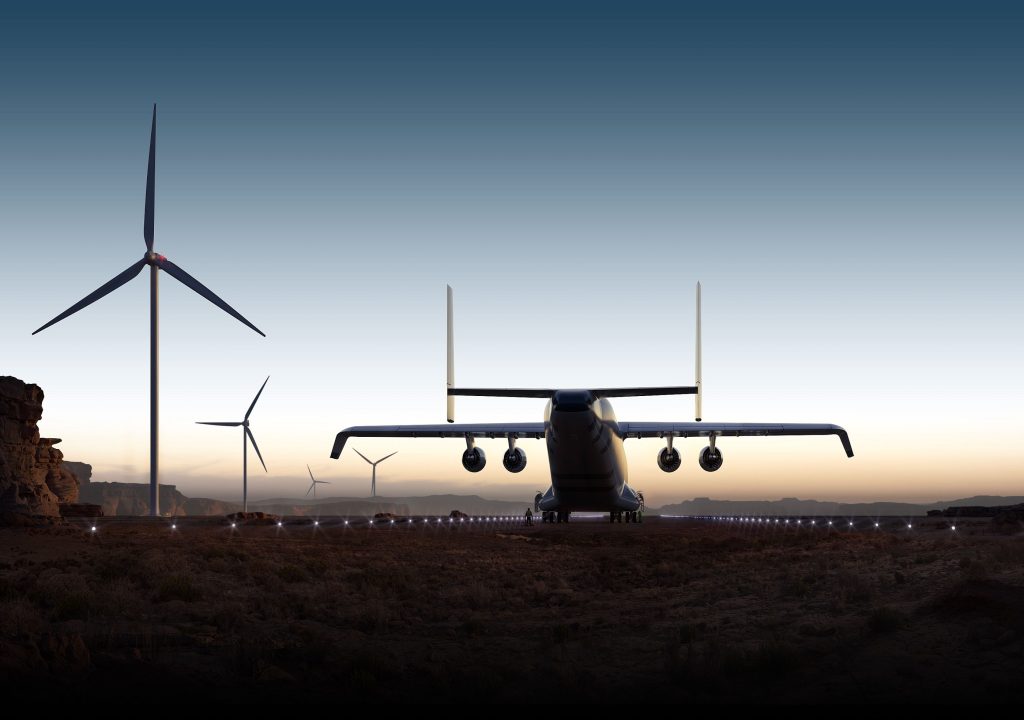
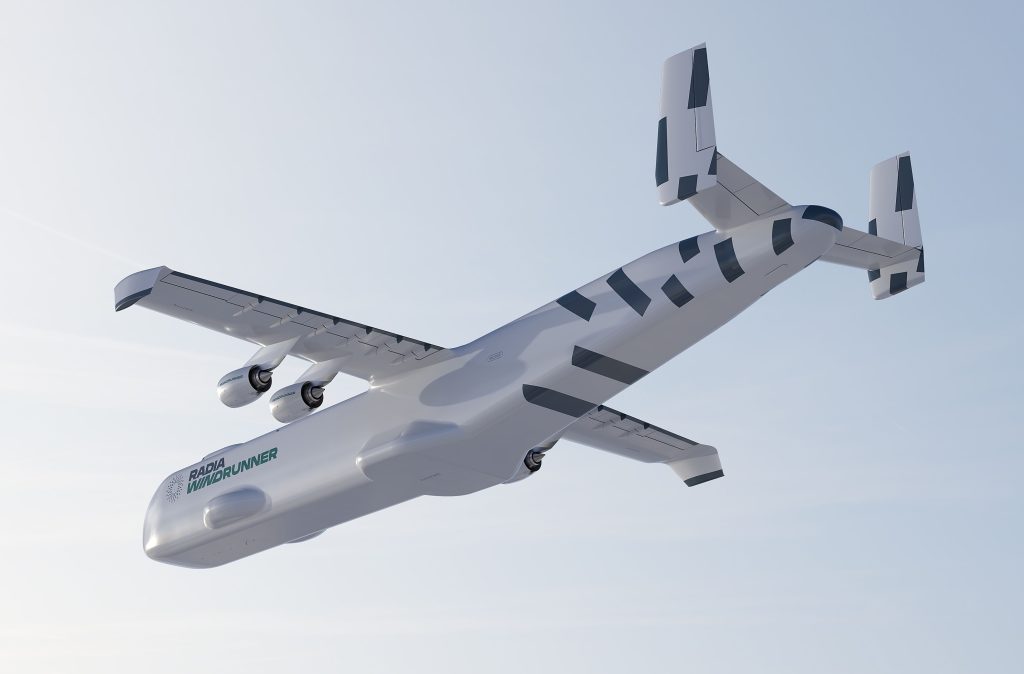
Rendering of a WindRunner at the taxi and takeoff stage (rear view). Credit: Radia
The project comes at a time when global capacity to transport outsized cargo by air is declining. No new large-scale airlifters are currently in production, and most of the existing heavy-lift fleets — including the US C-5 Galaxy and the Ukrainian-built Antonov An-124 — are ageing, with no clear replacements planned.
Radia says WindRunner is the only aircraft in development with the scale required to move ultra-large components over long distances, especially in rugged terrain.
According to specifications released by Radia, WindRunner will have a cargo bay volume of over 272,000 cubic feet. Its wingspan is expected to reach 261 feet, and it will be 356 feet long, making it larger in every dimension than today’s leading cargo planes.

The aircraft will use aviation-grade components and materials already in mass production, which the company says will speed up manufacturing and reduce certification risks.
WindRunner is being developed primarily to support the transport of onshore wind turbine components that are too large for road or rail.
These turbines, referred to by the company and its partners as “GigaWind,” are comparable in scale to offshore models but intended for land-based deployment. The larger size allows for higher energy output and lower cost per unit, but transporting such parts remains a major barrier.
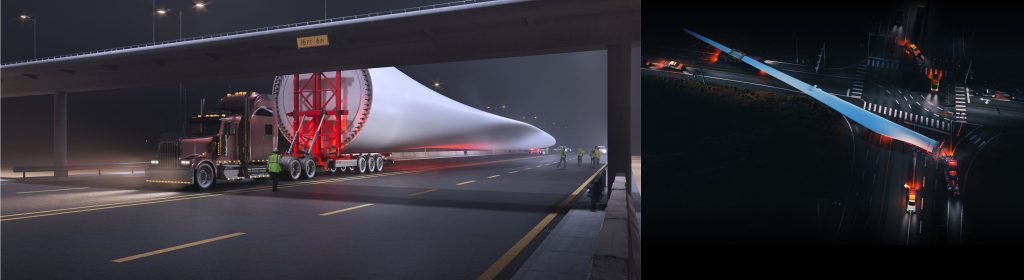
Radia plans to use the WindRunner aircraft to overcome those challenges, enabling wind farms to be built in new regions that were previously inaccessible or economically unviable due to transport restrictions.
Analysts say this could help reduce the cost of wind-generated electricity by as much as 30 per cent and support the production of green hydrogen and synthetic fuels — a goal shared by many Arabian Gulf states currently investing in low-emission energy.
The UAE, Saudi Arabia and Oman have all committed to expanding their clean energy capacity as part of national diversification strategies. The ability to transport larger turbines inland may allow these countries to exploit areas with high wind potential that are currently underserved by existing infrastructure. In regions like northern Saudi Arabia and southern Oman, large land areas remain underdeveloped but have consistent wind patterns ideal for large-scale generation.

Beyond clean energy, WindRunner is also being pitched as a solution to capacity gaps in defence and humanitarian logistics. Internal assessments suggest the WindRunner could transport 97 per cent of the payloads carried by the C-5 Galaxy. Its ability to land without major runway infrastructure may make it helpful in responding to natural disasters or conflict zones — an ongoing concern in parts of East Africa and the Sahel.
There is also potential use in sectors such as space launch logistics, mining, and oil and gas, all of which are active in the Middle East and Africa. These industries often require the movement of large, sensitive, or high-value equipment that cannot easily be broken down or transported by sea or land.
In the energy sector, Radia says it is working on a portfolio of wind power projects in the United States and internationally. The company is collaborating with turbine manufacturers and energy firms to co-develop sites that rely on the WindRunner to deploy large-scale turbines. Several projects totalling 4 GW are already under development in North America.

The company estimates that GigaWind technology, if widely deployed, could contribute up to 216 gigawatts of new capacity to the US grid by 2050. While no figures were provided for the Middle East or Africa, regional analysts note that similar capacity additions are theoretically possible in Algeria, Egypt, and Sudan — countries with significant land area and wind potential.
Radia claims that the combined use of WindRunner and GigaWind turbines can reduce the number of turbines required to produce the same amount of energy. Taller turbines with longer blades typically perform better due to higher and steadier wind speeds at greater altitudes. Fewer turbines also mean reduced environmental impact, lower visual obstruction, and potentially fewer planning challenges — a concern in densely populated regions or areas of ecological sensitivity.
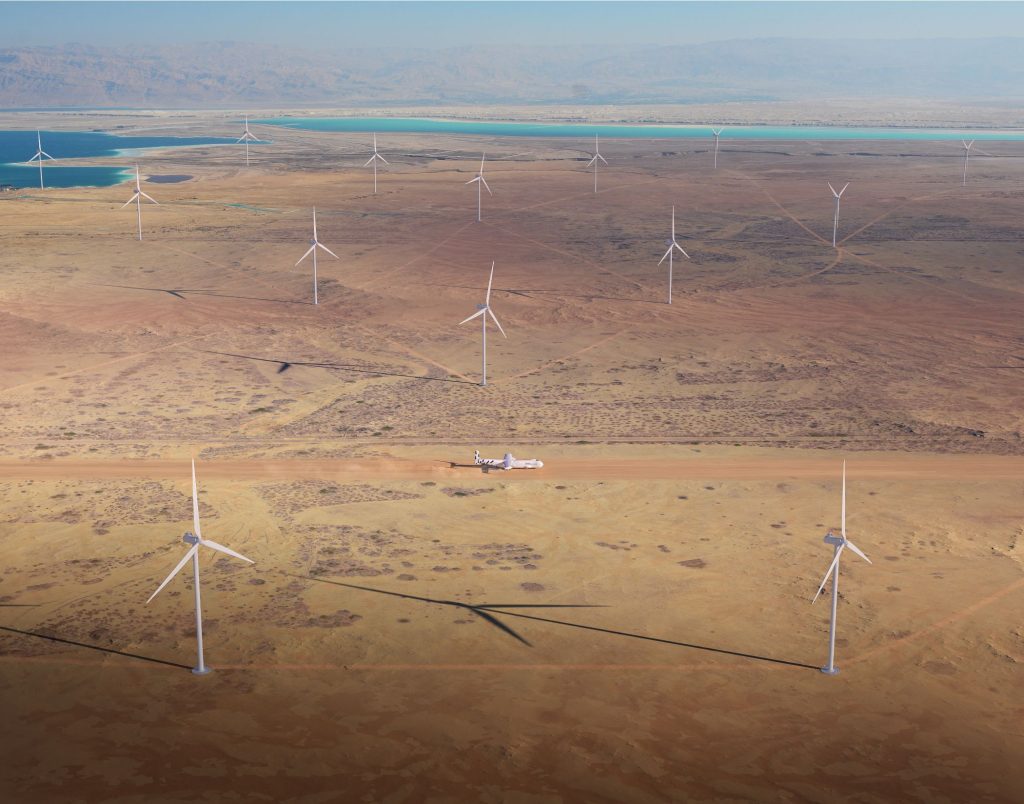
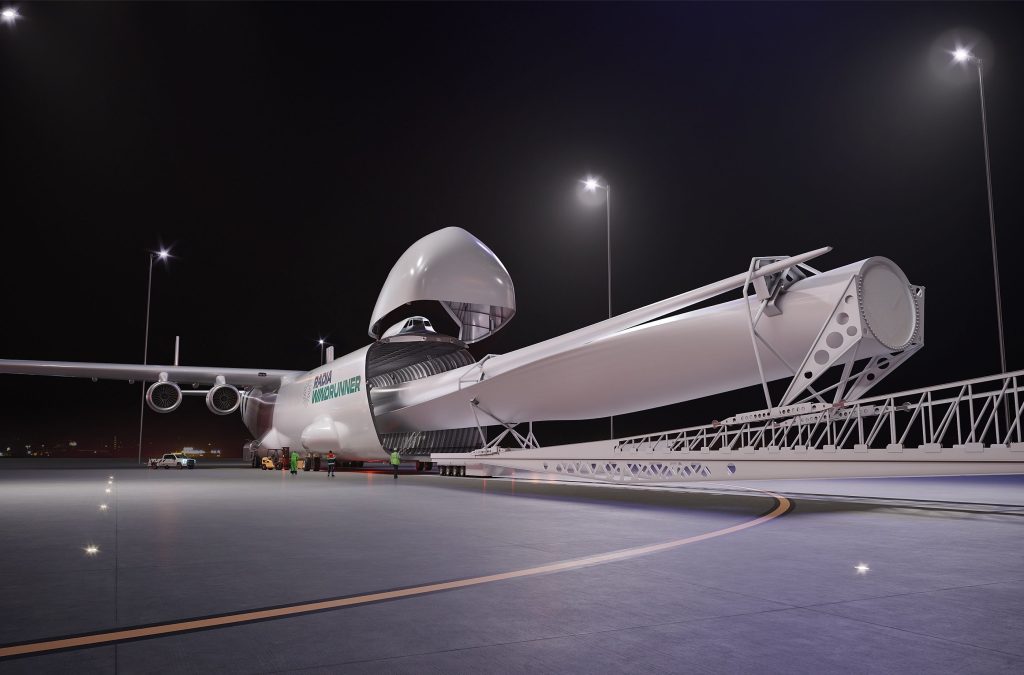
Transporting such equipment by air is one of the few options available, as existing roads, tunnels and bridges are generally not built to handle turbine blades exceeding 100 metres in length. Radia’s approach seeks to bypass these bottlenecks entirely, using the WindRunner to deliver blades and tower sections directly to the wind farm site.
While WindRunner will use sustainable aviation fuels where possible, Radia has not yet provided a projected emissions footprint. However, by enabling the deployment of more efficient wind farms, the company argues that the gigantic aircraft will support broader decarbonisation goals, including the production of green hydrogen, green ammonia and low-carbon aviation fuel. These are key focus areas for the UAE and other Gulf nations aiming to become exporters of green molecules.
Mark Lundstrom, Founder & CEO at Radia, has a background in cross-industry ventures and is leading the aircraft’s development. The Radia team includes experts from both the energy and aviation sectors. The firm has received recognition from international organisations such as the World Economic Forum, though it remains privately held and has not disclosed its financial backers.
Globally, the onshore wind sector is projected to see up to $10 trillion in investment through 2050, according to BloombergNEF. Much of that investment will depend on the ability to deploy increasingly large turbines in areas with strong wind resources. If the WindRunner is completed as planned and proves reliable in operation, it could help unlock hundreds of gigawatts of clean energy potential.
For now, Radia has not confirmed a launch date for the first WindRunner flight. It is also unclear where the initial fleet will be based or how many aircraft are planned. However, the company has stated that its operations will centre around regional hubs capable of supporting both manufacturing and import logistics, opening the door for possible collaboration with ports and logistics centres in the UAE or Saudi Arabia.
The success of WindRunner will depend not only on engineering execution but also on regulatory certification, operational costs and geopolitical alignment. Yet as military and commercial airlift capability continues to decline globally, the opportunity to fill a gap in strategic transport appears to be growing.
Whether WindRunner can reshape both the cargo and energy landscape remains to be seen. Still, its scale and multi-sector utility mark it as a development to watch, particularly for regions with both logistical challenges and energy ambitions.
Hero image: Rendering of WindRunner at cruising altitude. Credit: Radia