As part of global lunar push
The United Arab Emirates (UAE) is poised to send its second lunar rover to the far side of the Moon in 2026, under a new agreement with United States-based aerospace company Firefly Aerospace.
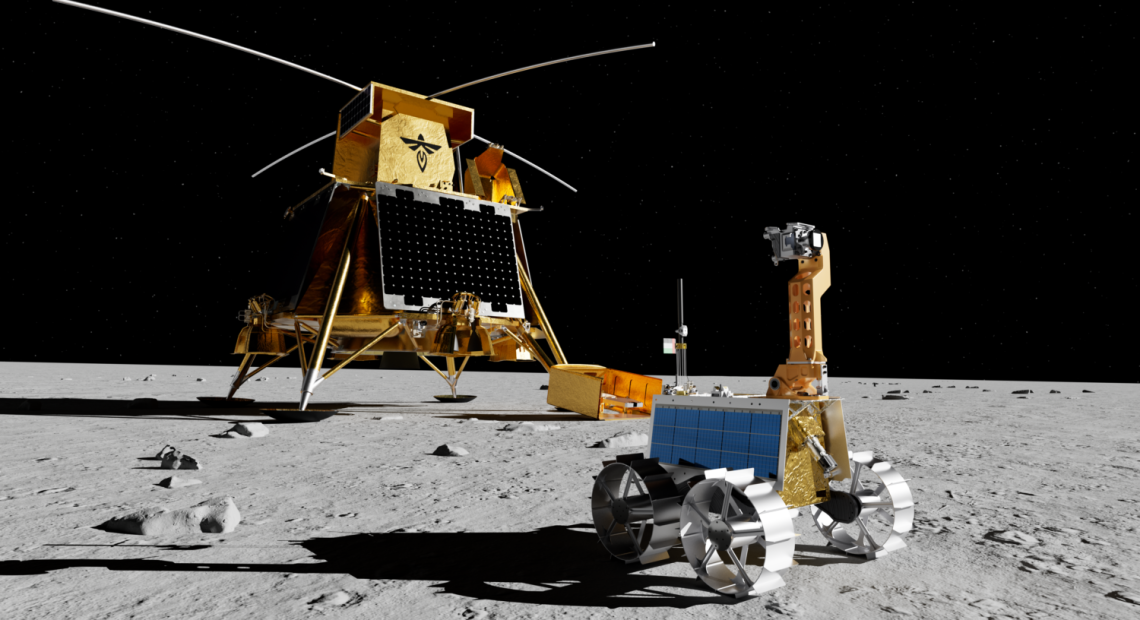
The mission will see the Rashid 2 rover delivered aboard the Blue Ghost lander, a spacecraft developed to support commercial and scientific operations on the Moon.
The agreement was signed between Firefly Aerospace and the Mohammed Bin Rashid Space Centre (MBRSC), the UAE’s primary space science and exploration agency. The launch is scheduled for 2026 and will include payloads from Nasa, the European Space Agency (ESA), and Australia’s Fleet Space Technologies.
The mission marks the UAE’s first attempt to explore the Moon’s far side, a region with limited previous exploration due to communication and landing challenges.
Firefly’s Blue Ghost Mission 2 will carry multiple international payloads and is part of Nasa’s Commercial Lunar Payload Services (CLPS) programme, which encourages private-sector involvement in lunar exploration.
According to MBRSC, Rashid 2 will collect data to support future Moon missions. The rover will test various materials on its wheels to assess how lunar dust impacts their durability. It will also study the Moon’s surface temperature, plasma environment, and geological composition using a set of scientific instruments. The data will help inform the design of lunar infrastructure, including habitats and mobility systems, for future missions.
The mission builds on the UAE’s growing space ambitions. Rashid 2 follows the country’s first lunar mission, which was launched in 2022 but failed to land successfully with the Rashid 1 rover. Despite that setback, the UAE has maintained its focus on long-term space research and aims to expand its participation in international missions.
Firefly’s Blue Ghost lander will touch down on the lunar surface after deploying the ESA’s Lunar Pathfinder satellite and other instruments in lunar orbit. The company’s Elytra spacecraft, which will remain in orbit around the Moon, is expected to handle communications for payloads operating on the far side, including Nasa’s LuSEE-Night radio telescope and the UAE’s rover.
The far side of the Moon is considered a high-priority target for scientific research. It is shielded from Earth’s radio interference, making it ideal for studying the early universe. However, the lack of a direct line of sight to Earth makes communication with landers and rovers on the far side technically challenging. The Elytra orbital vehicle is designed to overcome this by relaying data back to Earth-based stations.
Speaking on the significance of the mission, MBRSC Director General Salem Humaid AlMarri said the UAE remains committed to contributing to global lunar science and exploration. He said Rashid 2 would help generate new scientific knowledge while strengthening the UAE’s role in international space cooperation.
The UAE is one of several countries in the Middle East pursuing advanced space capabilities. Saudi Arabia, for example, has also announced plans to participate in future lunar and planetary missions. The regional interest in space is driven in part by long-term strategies to diversify economies and develop advanced science and technology sectors.
Firefly Aerospace recently completed its first successful lunar mission in March 2025, with its Blue Ghost lander operating on the Moon’s surface for 14 days. The upcoming 2026 mission aims to build on that milestone and deliver more complex scientific and technical payloads.
Preparations for the 2026 launch are underway, with flight hardware already in development. Firefly stated that integration and testing of mission components will continue through 2025.
With Rashid 2, the UAE will become one of the few nations to operate on the far side of the Moon, a milestone that could pave the way for deeper space exploration by countries in the region. The mission reflects a broader international trend of increased public-private cooperation in space exploration and scientific research beyond Earth orbit.
Image: CGI of the UAE’s Rashid 2 rover alongside Firefly Aerospace’s Blue Ghost lander on the lunar surface. Credit: Firefly Aerospace