
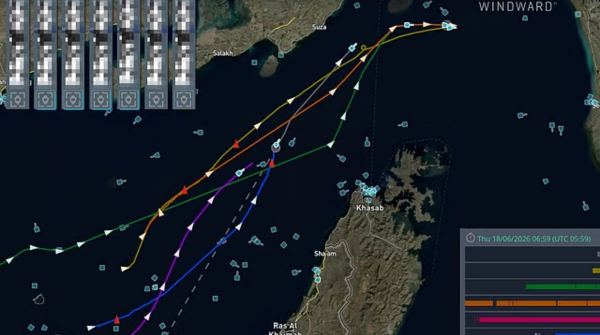
Photo Credit : Windward | X
Commercial shipping activity through the strategic Strait of Hormuz is showing signs of recovery after the United States and Iran signed a peace agreement in France, prompting several vessels stranded for months to resume their journeys.
According to maritime intelligence firm Windward, at least seven previously immobilised ships have begun moving through the vital waterway. Among the first to depart were five Chinese-affiliated vessels, followed by several European-operated ships, including a French liquefied natural gas carrier and an Italian vehicle transport vessel.
The renewed movement is being viewed as an early indication of confidence in the fragile ceasefire agreement and the gradual reopening of one of the world’s most important maritime trade routes. The Strait of Hormuz carries roughly 20 percent of global oil shipments, making its stability crucial to international energy markets.
The breakthrough follows a memorandum of understanding reached between the US and Iran aimed at ending months of hostilities that disrupted regional trade and shipping operations. The agreement includes measures to reopen the strait, ease certain maritime restrictions, and facilitate the safe passage of commercial vessels.
The conflict had left numerous ships stranded and created significant uncertainty across global energy and logistics sectors. Under the new framework, both sides have committed to mine-clearing operations and enhanced maritime safety measures, while further negotiations are expected to address broader issues, including Iran’s nuclear programme and regional security concerns.
Industry observers say the swift return of Chinese-linked vessels highlights how major trading nations are moving quickly to restore supply chains and recover assets affected by the crisis.
Despite the positive developments, maritime experts remain cautious. They note that long-term stability will depend on continued compliance with the agreement, successful demining efforts, and the implementation of the broader 60-day roadmap agreed upon by both sides.
The easing of tensions has already helped lower oil prices, although elevated insurance costs and ongoing risk assessments continue to influence shipping decisions across the region.