
For some patients with the most common type of lung cancer, known as lung adenocarcinoma, there’s new hope. In a new study published in Cell Reports, Mayo Clinic researchers have found several previously unknown genetic and cellular processes that occur in lung adenocarcinoma tumors that
Mayo Clinic
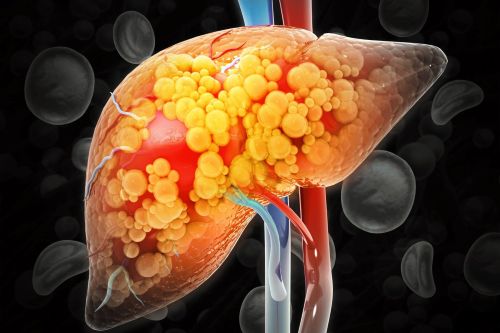
Mayo Clinic researchers have uncovered how aging “zombie cells” trigger harmful inflammation that accelerates a severe and increasingly common form of fatty liver disease called metabolic dysfunction-associated steatohepatitis (MASH). As obesity rates rise worldwide, MASH is projected to increase and is already one of the leading causes of liver
A highly targeted, noninvasive form of radiation therapy reduced episodes of a life-threatening heart rhythm disorder by nearly 80% in a first-in-human early feasibility study of patients with few remaining treatment options Mayo Clinic researchers report. The findings, presented as late-breaking research at the Heart Rhythm Society conference and published in the
Mayo Clinic research identified a powerful new way to improve the prediction of a patient’s long-term cardiovascular disease risk by enhancing a routinely performed imaging test with artificial intelligence (AI). Heart disease develops over time and remains the leading cause of death worldwide, so identifying risk early is critical to preventing heart attack, stroke
A medication commonly used to treat overactive bladder significantly reduced hot flashes in men receiving hormone therapy for prostate cancer, according to a study published in the Journal of Clinical Oncology that included several Mayo Clinic researchers. The phase 2 study found that oxybutynin, a medication commonly prescribed to treat overactive bladder, worked
Mayo Clinic researchers have developed a promising gene-editing therapy that directly corrects a genetic mutation responsible for autosomal dominant polycystic kidney disease (ADPKD), the most common inherited kidney disorder. A single treatment of the gene therapy slowed kidney cyst growth, improved heart and liver health, and extended survival in preclinical
Dehydration can affect much more than your thirst. It also can place extra stress on your heart and cardiovascular system, explains Brodie Marthaler, M.D., a cardiologist at Mayo Clinic Health System in Eau Claire. “Think of the heart as a pump. For it to work properly, enough blood needs to return to it with every heartbeat,” Dr. […]
Mayo Clinic researchers have discovered a key reason why certain breast cancers might not respond to an important new class of therapeutics called antibody drug conjugates (ADCs). These treatments pair an antibody that targets cancer cells with a strong chemotherapy drug. For many patients with human epidermal growth factor receptor 2-positive (HER2+) breast cancers, ADCs
A new international study led by Mayo Clinic researchers has identified a genetic factor that may explain why some patients with colorectal cancer that has spread to the liver experience more severe liver damage after chemotherapy. For patients with colorectal liver metastases, surgery offers the best chance of long-term survival. To improve outcomes, many […]
Mayo Clinic and Stanford Medicine researchers have developed the first blood test to map the complex ecosystem surrounding cancer cells, offering a more accurate way to predict which patients will benefit from immunotherapy. Their study’s findings, published in Nature, represent a major advance in precision oncology and could help guide treatment decisions across
The same lifestyle choices that reduce your risk of heart disease, diabetes and cancer also can reduce your risk of cognitive decline. Bryan Woodruff, M.D., a cognitive neurologist at Mayo Clinic in Arizona, explains the brain-body connection, lifestyle changes to foster brain health and why work to make earlier detection of Alzheimer’s disease and other […]
When Mayo Clinic researchers sequenced the genomes of 484 seemingly healthy adults, they found that about 13% carried a serious, previously unrecognized genomic risk — conditions those patients did not know about and that standard care would likely miss. Nearly all participants, 98.6%, had at least one genetic finding, and for most, the results […]
Mayo Clinic researchers and collaborators have shown that an artificial intelligence (AI) tool can analyze routine pathology slides to help clinicians classify meningiomas, the most common primary brain tumor in adults, and better understand a patient’s risk of tumor recurrence. The study, published in The Lancet Digital Health, demonstrates that deep learning
Mayo Clinic researchers have developed a blood-based method that may help detect germ cell tumors, the most common type of testicular cancer, including cases that do not show up on standard blood tests, according to a study published in Nature Communications. Testicular cancer most often affects adolescents and young adults, and it is highly treatable, especially
When healthy people donate one of their kidneys for transplant, they give others a much-needed second chance at life. Mayo Clinic experts are helping to dispel some of the most common myths surrounding living kidney donation. “For people with kidney failure, receiving a kidney from a living donor is the best possible option. When […]
A new Mayo Clinic study published in the New England Journal of Medicine has uncovered that an off-the-shelf, dual-antibody therapy can generate deep and durable responses in extramedullary multiple myeloma — one of the most aggressive and treatment-resistant forms of the disease. “We are seeing powerful responses in a disease that historically has resisted
Subtle biological changes linked to Alzheimer’s disease may begin as early as the late 50s — decades before memory loss or other symptoms appear — according to new research from Mayo Clinic. The study, published in Alzheimer’s & Dementia: The Journal of the Alzheimer’s Association, maps when key brain and blood-based changes tend to accelerate […]
A new multicenter study led by Mayo Clinic researchers has established a practical, evidence-based definition for rapidly progressive dementia (RPD), a rare but devastating form of cognitive decline that develops over months instead of years. The findings, published in Neurology, the medical journal of the American Academy of Neurology, may help clinicians recognize and
In a study published in Nature Communications, Mayo Clinic researchers have identified specific DNA-level changes in the brains of people with Alzheimer’s disease (AD). Using advanced biological analysis, the team mapped alterations in the brain’s regulatory landscape that may help explain why Alzheimer’s presents and progresses differently from person to
Alzheimer’s-related brain changes progressed up to 20 times faster in women who also had abnormal levels of a Parkinson’s-related protein, according to a Mayo Clinic study published in JAMA Network Open. The same pattern was not observed in men. The findings suggest that when alpha-synuclein — a protein linked to Parkinson’s disease — accumulates