Dubai, UAE – Nov. 2026 – The UAE plans to invest between AED 150 billion and AED 200 billion in its energy sector by 2030 to meet rising demand, the country’s energy minister said on Tuesday, as the Gulf state moves to shore up supply security amid geopolitical volatility.
Suhail bin Mohammed Al Mazrouei, minister of energy and infrastructure, said energy security is a national priority for the UAE, driven by growing global demand and the needs of advanced industries, artificial intelligence and data centers.
The investment will go toward power generation projects, grid development and storage systems, as well as improving operational integration across the energy system, he said.
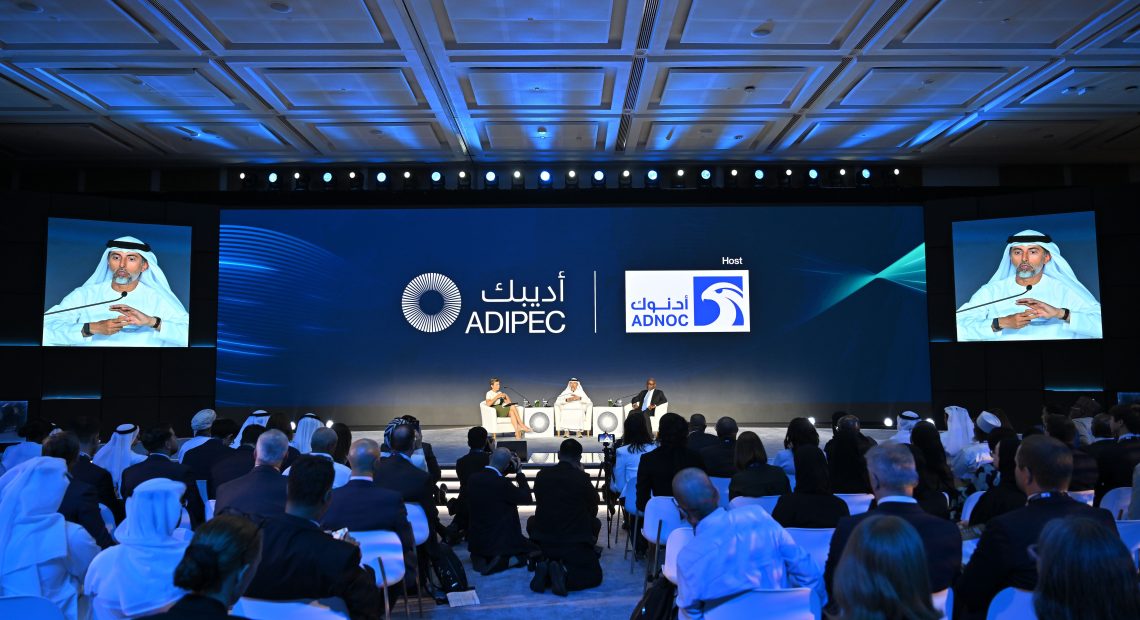
Al Mazrouei was speaking at a high-level ministerial panel at the Abu Dhabi International Petroleum Exhibition and Conference. The session was titled “Energy Security is National Security: Building Resilient Supplies in an Uncertain World.”
“Energy security is not limited to ensuring sufficient supplies,” he said. It requires building an integrated, resilient and competitive energy system able to support economic growth, keep essential services running and respond efficiently to future challenges, he added.
“Our priority is to make energy a sustainable competitive advantage for the UAE by aligning investments with industrial development, technological progress and long-term sustainability,” he said.
Diversifying energy sources is a core pillar of the UAE’s approach, with renewables, nuclear power and natural gas each playing a role in providing reliable supply at competitive cost, the minister said.
Clean energy accounted for 32.4 percent of the UAE’s total electricity generation in 2025, he said, putting the country on track toward its national target of 35 percent by 2031.
Al Mazrouei stressed the need to strengthen the readiness of energy infrastructure, taking into account physical security, cybersecurity, climate risks and business continuity. He highlighted the importance of coordination between government entities and operating companies on emergency preparedness.
He also pointed to the need to develop local manufacturing capabilities, secure essential equipment and technologies, and train specialized national talent.
Flexibility on both the supply and demand sides is essential, the minister said, noting that integrating generation, storage, power grids and demand management helps meet rising consumption and limits exposure to supply disruptions and price swings.
He also underscored the importance of strategic partnerships among governments, energy companies, technology developers, investors and industrial sectors to accelerate innovation, attract investment and strengthen supply chain resilience. Clear national priorities and regulatory frameworks play a key role in advancing energy projects and adopting advanced technologies, he said.