For domestic flights within the US
The United States will no longer require domestic air travellers to remove their shoes during security screening, following a policy change announced by Homeland Security Secretary Kristi Noem. The move is expected to reduce passenger wait times and ease congestion at airport security checkpoints.
The change applies only to domestic flights within the US.
International screening procedures, including for travellers arriving from or departing to the Middle East and Africa, remain unchanged.
Speaking in Washington, Noem said the updated rule reflects the Department of Homeland Security’s ongoing efforts to modernise US airport operations through technology and multi-layered security systems. She said enhanced detection capabilities now allow for more streamlined procedures without compromising safety standards.
The decision ends one of the most visible security requirements introduced after the 2001 terrorist attacks, when US authorities began instructing passengers to remove their shoes to screen for explosives. The practice had remained a point of frustration for many travellers.
Under the new policy, shoe removal will no longer be required for most passengers; however, other security measures will still be in effect. Travellers must continue to undergo identity verification and Secure Flight screening and carry the appropriate identification required under the REAL ID Act, which was rolled out earlier this year.
The Transportation Security Administration (TSA) says the policy is part of a broader series of changes aimed at improving efficiency while maintaining a high level of vigilance. TSA officials have reported a 94 per cent compliance rate with the REAL ID requirement, which they say has contributed to faster and more reliable screening.
The announcement follows other changes introduced under the Trump administration. On July 2, 2025, the TSA launched a new initiative offering expedited screening to uniformed US service members and their families. The programme includes discounted TSA PreCheck enrollment and access to dedicated lanes at select airports.
While the updated procedures affect only US domestic air travel, aviation industry experts say they could influence aviation security practices elsewhere if the new approach proves effective.
Some Arabian Gulf airlines operating in the US may closely monitor the rollout, particularly as they coordinate with TSA protocols for pre-clearance facilities in key international hubs.
Analysts note that the relaxation of security procedures in the US does not signal a reduction in overall airport vigilance. Instead, it reflects growing reliance on risk-based analysis and biometric verification.
In the Middle East, where airport security remains a priority due to regional instability, officials are also investing heavily in automation and facial recognition technologies.
Aviation authorities in the UAE, Qatar, and Saudi Arabia have been exploring ways to modernise security while managing the surge in post-pandemic air travel. Any perceived success in the US approach could encourage further debate about striking a balance between convenience and control at checkpoints across the Gulf region.
US officials have stated that any changes will be closely monitored, and procedures may be revised if risks escalate. For now, DHS says it remains confident in the effectiveness of its layered system, which includes behavioural detection, advanced imaging, and real-time threat analysis.
The end of the shoes-off rule is expected to be implemented nationwide over the coming weeks. DHS has not yet indicated whether the rule change will be extended to US-bound international travellers, who are still subject to stricter screening.
Middle East carriers and passengers flying to the US are advised to monitor updates from the TSA and local airport authorities regarding any future changes that may affect international flight protocols.
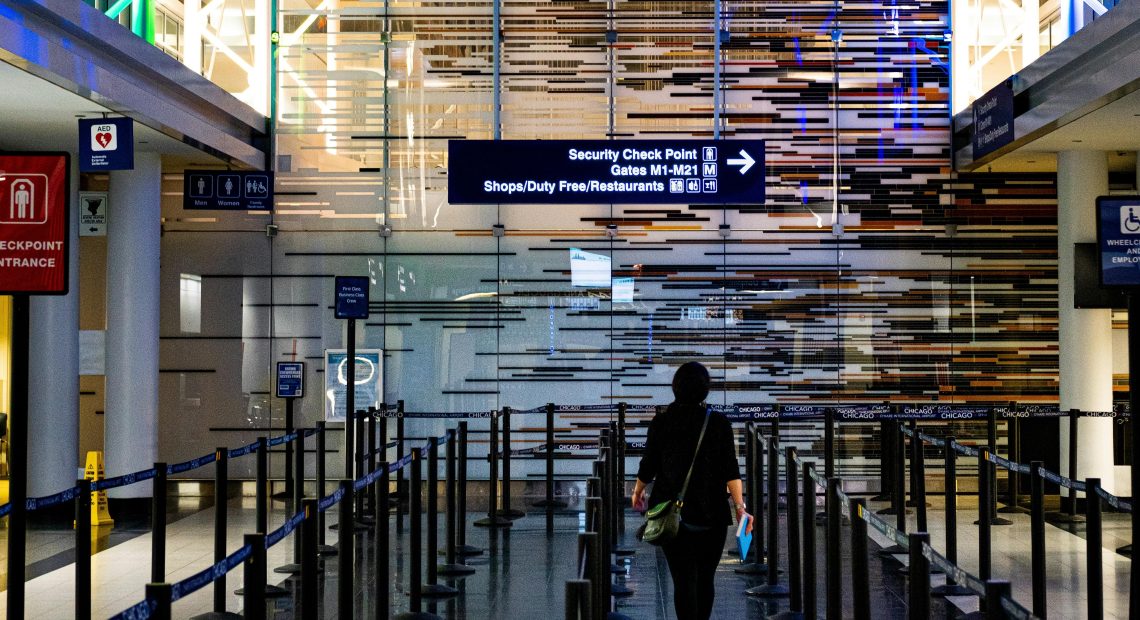
Image: The end of the shoes-off rule is expected to be implemented across the US over the coming weeks. Credit: Matthew Turner