According to Pentagon officials
A United States airstrike on Iran’s Fordow Fuel Enrichment Plant has reportedly destroyed a key part of the country’s nuclear infrastructure and prompted a ceasefire in the 12-day conflict between Iran and Israel.
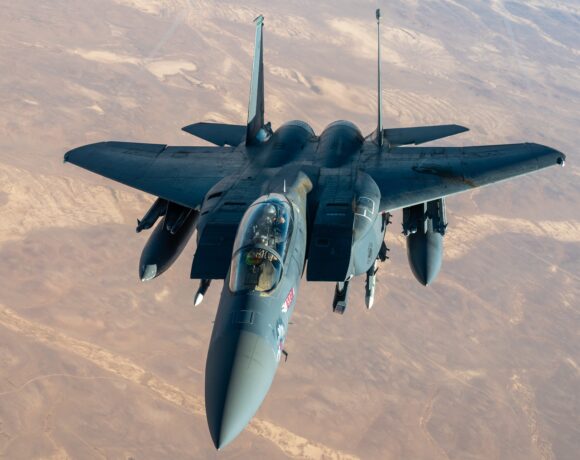
‘Operation Midnight Hammer’, which was carried out by US B-2 Spirit bombers, is being described by American defence officials as one of the most complex military missions in recent history.
The strike occurred in the early hours of Sunday, June 22, 2025, local time in Iran. It involved the use of GBU-57 bombs, also known as “massive ordnance penetrators”, each weighing nearly 14 tonnes. These weapons were explicitly designed to destroy hardened underground facilities like Fordow, located about 100km south of Tehran.
US Defence Secretary Pete Hegseth, said: “This was an historically successful attack, and we should celebrate it as Americans,” the secretary said. “It gives us a chance to have peace, a chance to have a deal, an opportunity to prevent a nuclear Iran — which is something President Trump talked about for 20 years, and no other president had the courage to actually do so.”
Fordow has long been considered one of Iran’s most fortified nuclear sites, deeply embedded in a mountain to protect against airstrikes. According to US officials, the plant was used to enrich uranium and was central to Tehran’s nuclear ambitions.
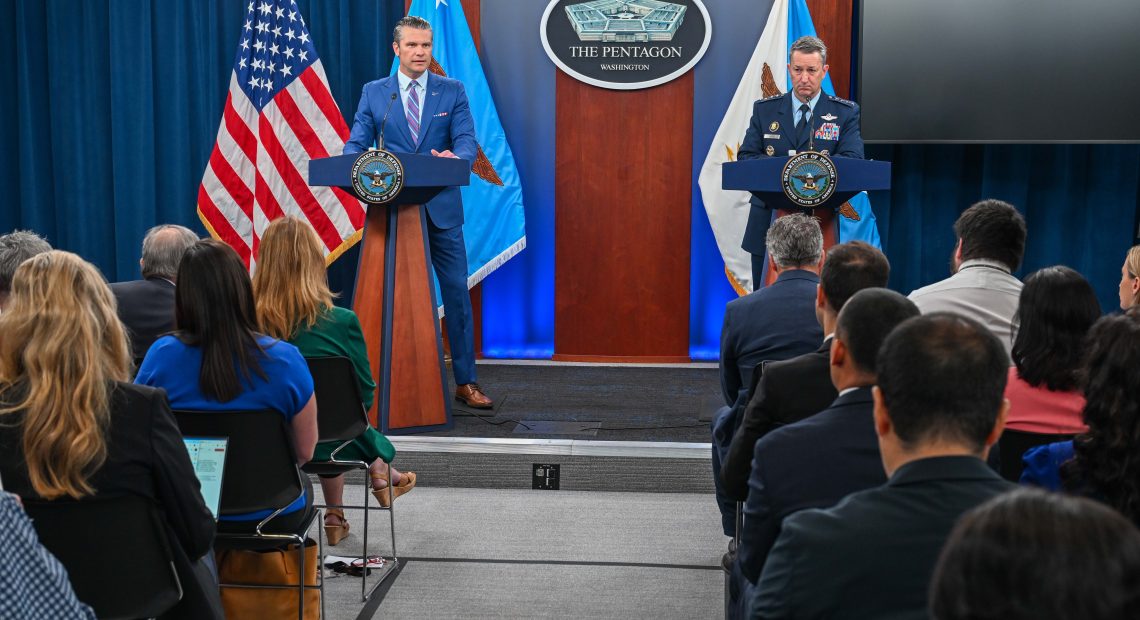
Addressing a news briefing at the Pentagon on June 26, 2025, alongside Hegseth, General Dan Caine, Chairman of the US Joint Chiefs of Staff, said two analysts at the Defence Threat Reduction Agency (DTRA) began studying the site in 2009 after US intelligence identified unusual construction activity.
Initial assessment
The American agency, which specialises in countering threats from weapons of mass destruction, concluded early on that no existing US weapon could reach the depth of Fordow.
Caine stated that the GBU-57 bomb was developed in response, through over a decade of testing and refinement in cooperation with US private industry and military planners. The development process involved hundreds of test shots against mock-up targets that replicated the characteristics of Fordow.
Watch the video here:
The 36-hour mission to strike Fordow began on the evening of June 21, 2025, from Whiteman Air Force Base in Missouri. US bombers flew more than 21,000km round-trip without landing. Twelve GBU-57 bombs were released on the target. US intelligence has not yet released a complete assessment of the damage, but early indications suggest the site was successfully destroyed.
Pilots involved in the operation reported bright, intense explosions at the point of impact. Officials said all bombs hit their intended targets and functioned as expected.
Following the strike, US military installations in the Middle East came under retaliatory fire. Al Udeid Air Base in Qatar, which hosts US Central Command’s forward headquarters, was targeted by Iranian missile fire on June 23, 2025.
General Caine said around 44 US soldiers remained at the base to operate two Patriot missile defence batteries, while other personnel had been moved off-site as a precaution.
Patriot systems
Patriot systems were activated during the attack and reportedly intercepted multiple incoming missiles. US officials believe the engagement was the largest single deployment of Patriot missiles in US military history. Qatari air defence units also participated in the interception.
According to Caine, the missile defence systems were able to neutralise the threat, though debris from both interceptors and incoming missiles created hazardous conditions on the ground. No casualties have been confirmed.
Hegseth, speaking at the Pentagon news conference alongside General Caine, said the US operation brought an end to hostilities between Iran and Israel. He credited the success of the airstrike with creating the conditions for a ceasefire, though no formal agreement between the two countries has been publicly announced.
The United States has not confirmed whether it coordinated the strike with Israel, nor has it disclosed whether other regional partners were consulted in advance of the strike.
Iranian officials have long insisted that their nuclear programme is for peaceful purposes. However, the International Atomic Energy Agency has repeatedly raised concerns about Iran’s uranium enrichment levels and transparency regarding its nuclear activities.
While US officials have hailed the mission’s technical success, the long-term consequences for regional security and diplomatic efforts to curb Iran’s nuclear ambitions remain uncertain.
With tensions still high, regional governments are likely to increase security around key infrastructure, including oil facilities and military bases. The possibility of cyberattacks or asymmetric retaliation by Iranian proxies in countries such as Iraq, Syria, or Lebanon also remains a concern.
The strike on Fordow marks a significant moment in the decades-long standoff over Iran’s nuclear capabilities. It also presents a new test for diplomatic efforts to stabilise the region and revive stalled negotiations over Iran’s nuclear programme.
Image: (L-R) US Defence Secretary Pete Hegseth and US Air Force Gen. Dan Caine, Chairman of the Joint Chiefs of Staff, conduct a news briefing at the Pentagon, on June 26, 2025. Credit: Pentagon