
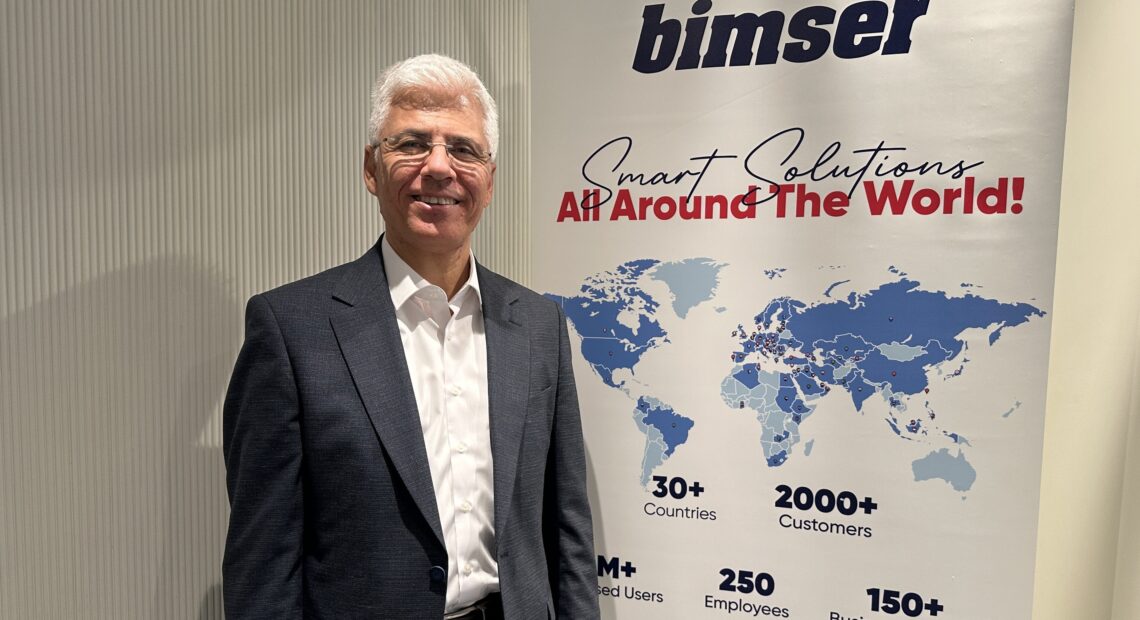
Exclusive interview with Murat Atıcı, CEO of Bimser
Bimser is a rapidly growing digital transformation and quality management platform, offering over 140 integrated modules for managing quality, health, safety, and environmental (QHSE) processes. Headquartered in Istanbul, Turkey, with a new Middle East and North Africa (MENA) regional office in Dubai, UAE, Bimser helps companies transition from paper-based or fragmented systems to a fully digitised, efficient, and compliant operational framework.
With its strong foundation in R&D, university collaboration, and cost-effective tech talent in Turkey, combined with its forward-looking expansion into Dubai and the broader GCC region, Bimser has begun a growth trajectory. As sectors like construction, energy, and healthcare rapidly digitise, platforms like Bimser offer precisely what is needed: centralised, secure, and scalable quality management systems.
In this exclusive interview in Dubai Media City, Murat Atıcı, the CEO of Bimser, discusses the company’s strategic expansion into the MENA region, industry trends, digital transformation in quality management, and cybersecurity concerns.
Excerpts from the interview:
Why choose Dubai for the company’s new MENA regional office?
Before our move, we conducted extensive research and analysis, followed by targeted investments. It was not about market data—we established a dedicated growth team within our organisation. This team, comprising inside sales and marketing experts, began engaging potential clients across different regions.
The MENA region—particularly Dubai—stood out from our data. We tracked response rates to our outreach activities, including digital marketing and direct calls, and the region had the highest engagement. That kind of responsiveness told us something important: this region listens, responds, and is open to new technology solutions.
What specifically made Dubai attractive as a regional base of operations?
Good question! Dubai is a global business hub. Its location efficiently allows companies to reach key markets across the Middle East, Asia, and Europe. For a company like Bimser, which offers digital solutions for quality management and operations, it is invaluable to be in a city where decisions are made quickly and opportunities come from startups and enterprises.
Also, as a Turkish company, we found a cultural and business alignment with the region. The entry barriers are lower compared to other parts of the world, and more importantly, when we knock on a customer’s door here, they open it and genuinely listen. That openness gives new players like us equal footing with established competitors.
We started our global expansion more than five years ago. The MENA region—especially the UAE—is seeing rapid growth across sectors, and the business environment is incredibly open. What sets this region apart is the ease of doing business and the welcoming multicultural environment.
Unlike some markets where you need years to understand the culture and earn trust, here [Dubai] we felt like “locals” from the beginning. It is a very inclusive environment, making it an exciting place for a tech company like us to grow.
Which industries show the most demand for your platform in the MENA region?
The energy sector is number one, which is unsurprising given the region’s economic structure. Right after that, we are seeing high demand in construction and facility management, and more recently, a dramatic rise in healthcare inquiries.
We are also excited to see growing interest in fintech and industrial tech sectors. Dubai is pushing hard toward becoming a smart city, and with that comes demand for digitally integrated solutions across various verticals.
What makes Bimser’s solutions particularly attractive to companies in these sectors?
We offer a modular, end-to-end QMS platform—more than 140 ready-to-use modules that help organisations digitalise their quality, health, safety, and environment processes. Our key differentiator is our ability to offer tailored, centralised, and scalable solutions that precisely meet the needs of the GCC market.
Most of our clients initially come to us because they are still managing quality processes manually—on paper or across disconnected systems. That makes compliance, tracking, and auditing inefficient and error-prone. With Bismer, they get one digital platform that covers all their QHSE needs, improves traceability, and ensures regulatory compliance.
What pain points do customers typically come to Bimser with?
Great question! The most common pain point is that organisations still manage their quality and safety processes with paper-based systems or fragmented tools. That is not sustainable anymore. We understand these challenges and are here to help.
Clients struggle with issues like: Tracking incidents or near-misses in real time, manual document control, lack of centralised visibility over quality KPIs, and poor data integration between departments or systems.
Many customers are still juggling multiple software tools that do not talk to each other. This leads to integration headaches and data silos. Our platform offers a unified environment where all QHSE processes can be managed and customised based on business needs.
Why do you think companies have not yet transitioned from manual or disjointed systems?
It is a mix of legacy culture, fear of change, and in some cases, lack of awareness that comprehensive, all-in-one solutions like ours even exist.
Some companies tried to digitise in the past but ended up with half-baked solutions—a tool for document control here, an audit management system there—but never achieved true digital transformation. Bimser offers a plug-and-play platform where everything works together, which is game-changing.
What advantages does operating out of Turkey offer Bimser compared to countries like India or Egypt?
Turkey offers a unique tech ecosystem. Since 2002, the Turkish government has heavily invested in technology development zones, which are collaborative hubs between universities and the private sector. There are now over 104 such zones. This has given us access to top-tier software talent, R&D resources, and academic collaboration.
Our proximity to Europe and Asia also gives us a logistics and communication advantage. While we may not always beat India regarding labour cost, we are very competitive, and the cost-to-quality ratio is exceptional.
What security and data sovereignty measures does Bimser offer, especially considering the concerns of government clients in the MENA region?
Security and data sovereignty are our top priorities. First, depending on client needs, our platform supports on-premise deployment, cloud, or a hybrid model. So, if a government agency wants complete control over its data, we can deploy within their local infrastructure.
From a cybersecurity perspective, we follow secure software development practices from day one, we use automated security tools during development, our systems undergo regular penetration testing, and we are compliant with international standards like ISO 27001, ISO 9001, and ISO 22301.
Also, many of our multinational clients run their independent security audits on our platform, and we welcome the same from any entity in the UAE or broader region.

As digital transformation accelerates across the MENA region, how do you see Bimser growing in the next 2-3 years?
We are very optimistic. The market is open and actively searching for solutions like ours. We plan to expand our team in Dubai, invest more in local partnerships, and continue adapting our platform to meet regional compliance standards.
In 2–3 years, Bimser will be seen as a regional leader in digital quality and safety management, especially in energy, healthcare, and industrial sectors. We are also exploring AI integrations and predictive analytics to help companies monitor quality and prevent issues before they happen.
What is your vision for Bimser beyond the MENA region? Are you aiming for a broader global footprint?
While the region is our current focus, we see Bismer as a global platform. Our modular architecture allows us to localise quickly, whether it is compliance with EU standards, US regulations, or Middle Eastern protocols.
The vision is to become the Salesforce of QHSE—a platform that any company, anywhere in the world, can trust to manage its quality and compliance operations digitally, securely, and efficiently.
What would you say is the core problem Bimser is trying to solve?
At Bimser, our core mission is to bridge the gap between traditional enterprise software solutions and businesses’ daily operations. Many companies invest in ERP, CRM, and other digital tools, expecting transformation, but end up disappointed. Not because the tools are inherently bad, but because they often fail to connect fully with businesses’ operations. That “bridge” between tech solutions and practical business use is where we come in.
That is a bold mission. Can you give us an example of how this disconnect appears in practice?
Let us say a company implements a top-tier ERP system. The solution works great on paper—it can manage inventory, finances, and HR. However, in the real world, the workflows are often too rigid. Employees use Excel or WhatsApp to get things done on the side. That is a sign that the ERP, while powerful, does not “live” in the same rhythm as the business. We help organisations by filling in that missing middle—the “business-to-digital bridge.”
Bimser has been around for a while. Can you walk us through the company’s background?
Bimser, a part of Amsar, a company with a 26-year history, was founded in 1998 in Turkey. Since then, we have expanded globally, serving over 2,500 customers across sectors—many of which are Fortune 500 or Fortune 1000 companies. We work with some of the most recognisable brands worldwide.
Do you focus on any particular industries?
Not at all. Our solutions are industry-agnostic and designed to cater to various sectors, including the public sector, defence, banking, insurance, retail, automotive, pharmaceuticals, and more. This diversity has allowed us to develop a cross-sectoral understanding of business processes, enabling us to advise clients more effectively during their digital transformation journeys.
Let us dive into your product suite. What is Synergy?
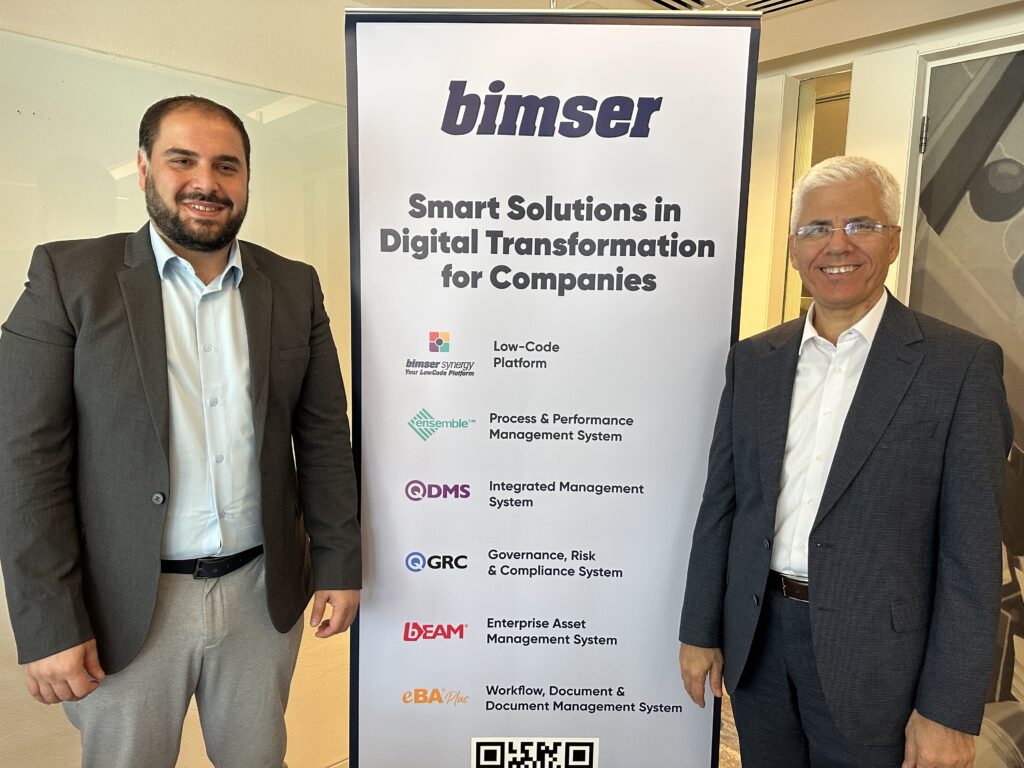
Synergy is our flagship low-code/no-code development platform. It empowers professional developers and “citizen developers”—business users with little or no coding experience—to build digital solutions. This dual capability is what makes Synergy special.
There are two primary approaches in the low-code market. One improves developer productivity by reducing time-to-market. The other allows non-developers to build applications using drag-and-drop interfaces. Synergy does both. It gives professional teams a faster, more efficient toolkit while enabling business teams to create the necessary solutions.
How many customers are currently using Synergy?
We have onboarded over 1,000 customers to Synergy alone, including multinational enterprises and local firms trying to modernise legacy systems. The beauty of low-code is its scalability—it works just as well for a two-person startup as it does for a 20,000-person corporation, ensuring that our solutions can grow with your business.
Aside from Synergy, what other solutions do you offer?
We offer several core platforms. The next major is our Quality Management System (QMS), which includes over 40 integrated modules. These cover quality assurance and documentation management, carbon footprint tracking, health and safety, compliance audits, and more. It is ideal for construction, oil and gas, energy, and manufacturing.
That is quite comprehensive. What is the implementation process like?
It is straightforward. Clients can adopt only the modules they need. We provide comprehensive training and support during onboarding, ensuring that most companies can be fully operational quickly. QMS’s plug-and-play nature makes it a perfect fit for organisations with limited IT resources or tight compliance timelines.
We have implemented QMS with over 1,500 domestic and global clients. Like our other platforms, it integrates well with major enterprise systems.
Do you also have an offering named Beam?
Yes, Beam is our Enterprise Asset and Maintenance Management platform. It is a CMMS (Computerised Maintenance Management System) that supports industries where asset management and uptime are critical—think manufacturing plants, hospitals, shopping malls, hospitality, and even municipalities.
We currently serve over 6,600 customers with Beam, one of our most widely deployed products because of its versatility. It supports predictive maintenance, asset lifecycle management, inventory, and spare part tracking—and again, it is fully integrable with systems like SAP, Oracle, Microsoft Dynamics, and NetSuite.
Why do you place a strong emphasis on integration?
Building a great application in isolation is not enough. Our clients typically use 4–10 different enterprise systems. So we ensure all our platforms offer deep integration capabilities, including support for REST APIs, SOAP, and custom connectors. That is also why more than 70% of SAP clients in Turkey currently work with us.
Let us talk about Ensemble, one of your best-selling products. What makes it different?
Ensemble is our performance and strategy management tool. It uses KPI-based dashboards, balanced scorecards, and business process modelling to help organisations align daily operations with long-term strategic goals. It supports BPMN, allowing companies to design and simulate workflows visually.
It is not just about tracking numbers but about making those numbers actionable. Ensemble helps leaders make data-driven decisions by giving them clear insight into what works and what does not.
Do you also offer a governance and compliance product?
It is called QRC GRC, which is our Governance, Risk, and Compliance solution. It handles everything from regulatory compliance to internal controls, audit trails, and operational risk management. It is especially popular with organisations operating across multiple regions with varying legal requirements.
Think of QRC as the final layer that ensures efficiency, accountability, and transparency in executing digital transformation.
How large is your team, and where are your operations based?
We have over 200 employees across five offices: three in Turkey, one in the United States, and one newly opened in the UAE. The US office has been operational for over five years, and we have built a solid customer base there. Our newest step into the GCC region is part of our broader globalisation strategy.

You have painted a picture of a company that is not only profoundly technical but also very human in its approach to business. What is next for Bimser?
Our focus is on scaling with purpose. We will continue to invest in AI-driven automation, expand our cloud-native offerings, and build out industry-specific modules for Synergy, QMS, Beam, and Ensemble. At the same time, we will keep listening to our customers because our job is to solve their problems—not just sell software.
What is one lesson you have learned leading Bimser through global expansion?
Flexibility is everything. No matter how strong your product is, if you are not flexible in delivering it, you will not survive. The secret to scaling globally is listening, adapting, and respecting local cultures and business habits.
Hero image: Murat Atıcı, CEO of Bimser. Credit: Arnold Pinto