
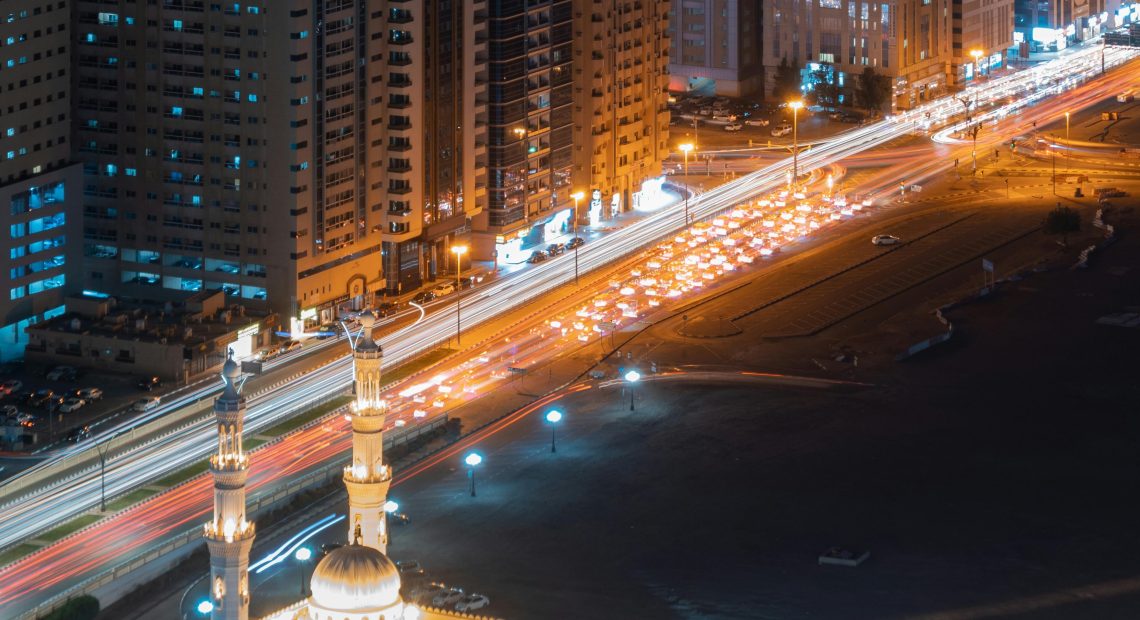
When making the daily commute
The daily commute between Sharjah and Dubai remains one of the most congested routes in the UAE, with peak-hour traffic often resulting in delays that extend for more than an hour. For thousands of residents who live in Sharjah and work in Dubai, the traffic challenge is part of everyday life.
Recent data from the UAE’s Ministry of Interior indicate that road congestion during weekday mornings, between 6:30 and 9:30, and evenings, between 5:00 and 8:00, contributes to some of the longest travel times in the country.
Despite continuous infrastructure development, including the widening of key roads such as Sheikh Mohammed bin Zayed Road (E311) and Emirates Road (E611), the bottlenecks continue. Traffic worsens particularly at key junctions, including Al Ittihad Road and the Al Nahda area.
Urban mobility experts say the increasing reliance on private vehicles, coupled with population growth in Sharjah, has outpaced the capacity of existing road infrastructure. The Sharjah Urban Planning Council forecasts a 12 per cent population growth by 2027, which could further strain traffic corridors unless commuting patterns change.
Time shifts
One effective method to avoid traffic on the Sharjah-Dubai commute is adjusting departure times. Commuters who leave before 6:00 am typically encounter far less congestion, while those departing after 9:30 am also report smoother journeys.
Transport analysts have pointed to flexitime policies as a long-term solution. A 2023 survey by the Dubai Chamber of Commerce found that 37 per cent of private sector firms now offer flexible working hours, a figure that continues to grow.
However, this remains less common in public sector roles and some private industries, leading to concentrated peak periods. Authorities in both emirates have encouraged businesses to consider hybrid work models to reduce pressure on the road network.
An alternative route via Maliha Road offers some relief, though it is longer. Nevertheless, it has been used more frequently by drivers aiming to avoid the most clogged corridors. Data from Google Maps and Waze shows that travel time via Maliha Road during morning rush hour can be up to 20 minutes shorter compared to Al Ittihad Road during heavy congestion.
Transport shift
Another approach gaining traction is public transport. Dubai’s Roads and Transport Authority reported a 14 per cent increase in intercity bus ridership in 2024. The E303, E307 and E315 buses connecting Sharjah to Dubai via Al Qiyadah and Al Nahda Metro stations are now operating at a higher frequency to accommodate rising demand.
Still, the availability of first- and last-mile transport remains a barrier. Not all residential areas in Sharjah are within walking distance of bus stations, making it difficult for many to switch from cars to public transportation. Plans for further expansion of park-and-ride facilities have been announced but are still in early development stages.
Carpooling is another method being quietly adopted. The UAE’s carpooling regulations permit shared rides through approved platforms, such as Careem and Uber, although informal carpooling remains prevalent. Authorities have periodically cracked down on unlicensed ride-sharing, but enforcement has varied.
In the long term, both Dubai and Sharjah municipalities are investing in smart mobility solutions, including AI-powered traffic light systems and real-time congestion alerts. The effectiveness of these technologies remains under observation, but early results show minor improvements in traffic flow during off-peak times.
Looking ahead
Despite efforts, most residents of Sharjah and Dubai continue to rely on personal vehicles for transportation. With fuel subsidies and low car ownership costs compared to other global cities, many commuters say the convenience outweighs delays.
Yet, if population growth in Sharjah continues at the current pace, congestion may worsen without broader behavioural change. Transportation officials have also warned that additional infrastructure alone cannot resolve congestion unless supported by shifts in commuter habits.
Analysts suggest that combining route alternatives, early departures, flexible work arrangements, and the use of public transportation can collectively ease pressure on the Sharjah-Dubai corridor. With continued investment in public infrastructure and urban planning, authorities aim to mitigate the effects of daily congestion in one of the UAE’s busiest corridors.
Here are the five ways – at a glance – to beat Sharjah-Dubai traffic during rush hour:
- Adjust departure times: Leaving before 6:00 am or after 9:30 am can significantly reduce travel time by avoiding peak congestion.
- Use alternative routes: Routes like Maliha Road offer less congested paths, even if slightly longer in distance, compared to heavily jammed corridors like Al Ittihad Road.
- Switch to public transport: Buses such as the E303, E307, and E315 connect Sharjah to Dubai and now run more frequently. Public transport use is rising and can bypass much of the traffic.
- Adopt carpooling: Legal ride-sharing options through platforms like Careem and Uber help reduce the number of vehicles on the road while lowering costs.
- Explore flexible work hours or remote work: Flexible schedules or hybrid work arrangements help avoid peak times and are increasingly being adopted by companies based in the UAE.
Image: There are practical ways to ease the burden of daily commuting between Sharjah and Dubai. Credit: Muhammad A. Alrefaei