Involving airframe upgrades
Lockheed Martin’s Sikorsky division has been awarded a $43 million contract by the US Army to begin work on a major modernisation programme for the Black Hawk helicopter, a key asset in global military operations, including across the Middle East and Africa.
The initial phase of the contract focuses on airframe upgrades and the introduction of a new digital backbone to enhance the aircraft’s future integration with unmanned aerial systems. These upgrades are part of the US military’s broader effort to improve the operational capabilities of legacy platforms in line with future warfare demands.
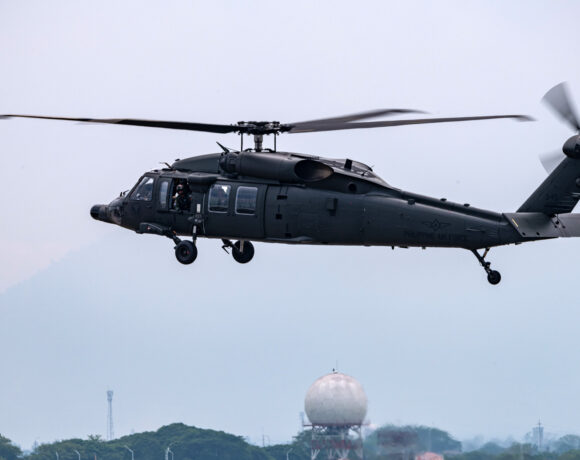
The Black Hawk helicopter, in service since the 1970s, has played a central role in US and allied operations from Iraq and Afghanistan to peacekeeping missions across Africa. The Middle East, where US forces maintain a presence in multiple countries, continues to rely on rotary-wing assets, such as the Black Hawk, for troop movement, logistics, and medical evacuation.
The new digital backbone will enable the aircraft to support a Modular Open Systems Approach (MOSA), allowing quicker insertion of new technologies as they emerge. The aim is to ensure the platform remains viable and adaptable through the 2030s and beyond, amid rising competition from near-peer adversaries and evolving threats from non-state actors.
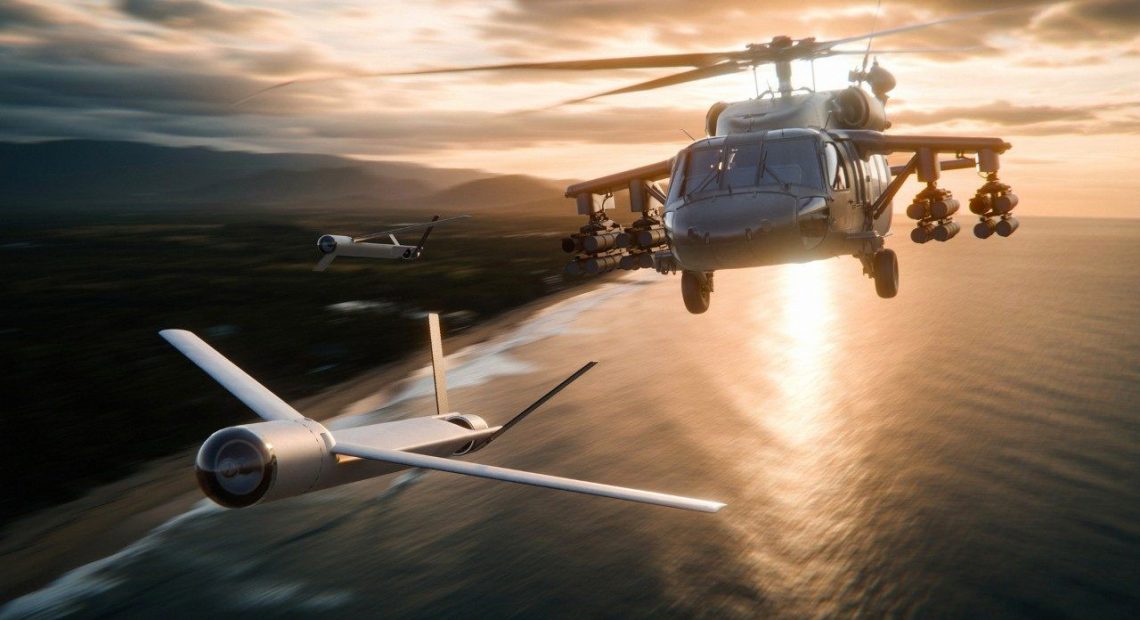
The US Army’s modernisation plan includes the integration of “launched effects,” such as small drones and sensors, that can be deployed mid-flight to support reconnaissance or offensive missions. This capability is expected to be tested and potentially operational by 2026. Lockheed Martin has been experimenting with such systems on the Black Hawk for several years.
Model-based systems engineering (MBSE) will guide the development of the aircraft’s digital systems and overall architecture. According to defence analysts, MBSE is expected to reduce design and testing time, cut costs and simplify maintenance over the life of the aircraft.
The programme also includes enhancements to the Black Hawk’s engine and fuel systems, enabling it to carry more payload over longer distances. This is particularly relevant in regions such as the Indo-Pacific and the Middle East, where mission ranges often exceed standard operational profiles due to geography and dispersed deployments.
Defence experts suggest that the upgrades may also include autonomous flight control systems and artificial intelligence features to support pilots in high-stress environments, potentially enhancing survivability and improving mission success rates.
The announcement comes amid broader US military investment in modernising rotary-wing platforms. As the Future Vertical Lift (FVL) programme progresses, legacy helicopters like the Black Hawk are expected to operate alongside next-generation aircraft into the next decade.
Data from the Stockholm International Peace Research Institute shows that the Middle East accounted for over 32 per cent of global arms imports between 2019 and 2023. The UAE, Saudi Arabia and Egypt are among the top buyers, many of whom operate variants of the Black Hawk in their air forces and ground forces.
While the new contract focuses on US Army requirements, enhancements developed under this programme could influence future export models. The UAE, for instance, has invested heavily in upgrading its aviation platforms and has expressed interest in advanced rotary-wing capabilities for joint operations and regional security missions.
Sikorsky has not disclosed whether additional international partners will be involved in the programme. However, with rising demand for modular and interoperable defence platforms in the Middle East and Africa, regional uptake of modernised systems is likely to grow.
The Black Hawk remains a central part of military aviation worldwide, with more than 4,000 helicopters delivered globally since the platform’s inception. Its continued evolution is being closely watched by defence ministries and contractors alike.
The US Department of Defence has not yet announced follow-on contracts or timelines for full-scale production and deployment of the upgraded aircraft. Further developments are expected as testing progresses over the next 18 months.
Image: The Black Hawk’s versatility enables the US Army to integrate new capabilities and meet emerging threats. Credit: Sikorsky