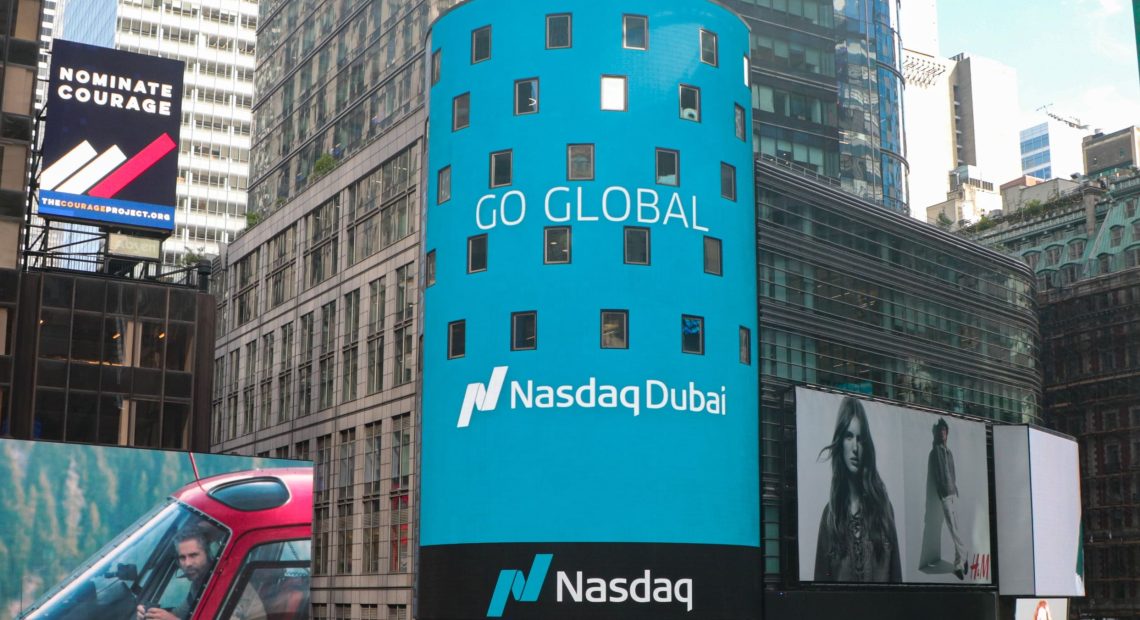
Dubai, UAE — July 2026 — Nasdaq Dubai recorded 33 new fixed income listings worth a combined $13.8 billion in the first half of 2026, with issuers ranging from sovereign entities and multilateral organizations to financial institutions and corporates.
According to the Emirates News Agency, UAE-based issuers accounted for 57 percent of the listings, while international issuers made up the remaining 43 percent. By the end of the period, the total value of fixed income instruments listed on the exchange reached $141 billion, split between $98.6 billion in sukuk and $42.4 billion in bonds. The half-year activity included 17 bond listings worth $7.83 billion and 16 sukuk listings worth $5.97 billion.
Several new financing programs were established during the period, including a $5 billion-euro medium-term note program from Mashreq and a similar $5 billion program from Arab Bank for Investment and Foreign Trade (“Al Masraf”). Mars CI Limited also launched an $8 billion sukuk program, the first such program on Nasdaq Dubai to be established by an entity linked to the Hong Kong government.
Issuer diversity grew further, with 15 new issuers entering the market in H1, including several first-time listers and the return of the Arab Petroleum Investments Corporation after several years away from the exchange. Banking sector issuers included Emirates NBD, Mashreq, Dubai Islamic Bank, ICBC’s DIFC branch, and Al Masraf, with financial institutions tapping the market through conventional bonds, green and blue sustainability bonds, Additional Tier 1 capital instruments, and native digital debt instruments.
Multilateral and supranational institutions were also prominent, headlined by the New Development Bank’s first major listing on Nasdaq Dubai, valued at $1.75 billion, alongside issuances from the Islamic Development Bank. Corporate activity remained strong across aviation and real estate, driven by deals from DAE Funding, Bin Ghatti, and Amniyat.
Innovation was a key theme as Emirates NBD listed the exchange’s first-ever native digital bond, reinforcing Nasdaq Dubai’s push to combine digital issuance with its established market infrastructure. Sustainable finance also gained momentum through new green and blue bond listings.
Meanwhile, the UAE government maintained strong momentum through its treasury bond and sukuk programs, continuing to build out the dirham-denominated yield curve and provide pricing benchmarks for corporate issuances.
A standout moment bridging the first and second halves of the year was the debut of the UAE Ministry of Finance’s retail Treasury Sukuk program, announced and subscribed during H1 2026 and listed on Nasdaq Dubai on July 2, 2026. Aimed at expanding individual investor access to government-backed financial instruments, the offering drew overwhelming demand, with subscriptions reaching nine times the targeted issuance size.
In response, the Ministry raised the final issuance size from AED 50 million to AED 100 million. The offering combined the Dubai Financial Market’s digital subscription platform with Nasdaq Dubai’s central securities depository infrastructure, attracting individual investors from 116 nationalities, including UAE nationals.
Commenting on the results, Abdul Wahed Al Fahim, Chairman of Nasdaq Dubai, said the first-half performance reflects strong issuer confidence in Nasdaq Dubai as the region’s leading fixed income listing venue, underscoring the depth of Dubai’s capital markets across sovereign, multilateral, financial institution, and corporate issuance.
Hamed Ali, CEO of Nasdaq Dubai and Dubai Financial Market, said the momentum in bond and sukuk issuance continued through the first half, driven by strong regional and international issuer participation, and noted that the second half of the year will see continued expansion of opportunities in fixed income, sustainable finance, and new market structures.
Looking ahead, Nasdaq Dubai said it will focus on further expanding access to its fixed income market, strengthening its role in Islamic capital markets, and supporting additional green, blue, and sustainability-linked bond and sukuk issuances — building on the launch of the retail treasury sukuk program to deepen individual investor participation in the UAE’s debt markets and reinforce Dubai’s position as a global hub for fixed income and Islamic finance.