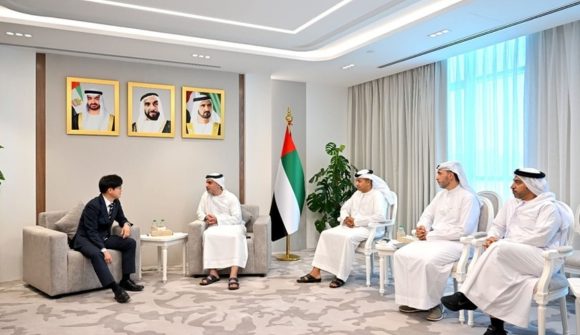
Photo Credit: WAM
ADGM Academy & Research Centre is sharpening its focus on developing future-ready Emirati talent, strengthening workforce capabilities and reinforcing Abu Dhabi’s position as a regional centre for education, executive development, applied research and innovation through 2030.
Mansoor Jaffar, CEO of ADGM Academy & Research Centre, said the academy’s strategy supports the UAE’s long-term economic ambitions by preparing national talent for emerging industries and technology-driven transformation.
“Our objective is to ensure that Emiratis are not only prepared for the jobs AI will create, but are equipped to shape them, lead them, and drive the next phase of innovation-led growth,” Jaffar told the Emirates News Agency (WAM).
He said talent development must keep pace with rapid changes across industries, adding that the academy’s role extends beyond preparing professionals for existing jobs to building capabilities that will shape the future economy.
Key areas of focus include artificial intelligence, digital finance, sustainable finance, entrepreneurship and emerging technologies.
For 2026, Jaffar said the academy is placing greater emphasis on measurable outcomes and market impact while continuing to expand its programmes and participation.
Among its major initiatives is the ADGM Academy School of AI, which aims to equip companies and professionals with Agentic AI skills designed to improve productivity and develop broader AI capabilities across the workforce.
The academy also plans to expand access to future-focused skills, encourage adoption of emerging technologies, strengthen employer engagement and deepen partnerships with international institutions.
Jaffar said additional pathways are being developed to help UAE nationals enter high-growth sectors, supporting Abu Dhabi’s ambition to become a leading destination for professional learning, innovation and excellence.
He noted that 95 percent of ADGM Academy employees have already received AI training, describing AI literacy as the starting point for a broader transition towards responsible and effective application of the technology.
The academy is expanding professional and executive-level AI programmes that combine technical expertise with strategic leadership skills required in an AI-enabled economy.
Jaffar said there is also significant potential to work with leading global technology companies and academic institutions to introduce internationally recognised AI qualifications and specialised learning pathways in the region.
Preparing Emirati talent for AI-driven transformation requires more than technical training, he said, pointing to the importance of digital fluency, analytical thinking, adaptability, sector expertise and leadership capabilities.
As a result, AI and emerging technologies are being integrated across the academy’s national development programmes, helping learners understand how new technologies can be used responsibly to improve productivity, decision-making and innovation.
Jaffar said AI offers significant opportunities for UAE nationals as new career paths emerge across finance, technology, data, sustainability and entrepreneurship.
Professionals who combine national ambition with future-focused skills will be well positioned to lead transformation within their organisations and contribute to the UAE’s long-term economic priorities, he added.
Financial services are expected to remain one of the main sectors requiring national talent in the coming years, particularly as asset and wealth management, fintech, sustainable finance and financial regulation continue to expand.
Strong demand is also expected in AI, cybersecurity, advanced technologies, entrepreneurship and the wider digital economy.
Jaffar said future workforce demand will increasingly centre on hybrid skillsets, with employers seeking professionals able to combine expertise across finance, technology, innovation and sustainability rather than working within traditional disciplines.
He added that rapid changes in the financial sector, including digital assets, tokenisation, blockchain-enabled finance, sustainable investing and climate-related risk, require professional development programmes to evolve at the same pace.
These areas are becoming essential competencies across the financial ecosystem, making practical application and market relevance increasingly important in professional education.
Jaffar highlighted the ADGM Academy Tech Centre as a key platform for innovation and applied research, connecting academic programmes with real industry challenges and emerging technologies.
The academy also works closely with regulators, industry leaders and international partners to ensure its learning programmes remain aligned with changing market requirements.
Jaffar said interest from leading universities, professional organisations and technology companies in partnering with ADGM Academy continues to grow.
The partnerships are aimed at bringing international expertise, specialised research, thought leadership and professional development opportunities to the UAE while ensuring global knowledge and qualifications remain aligned with local market priorities.
On entrepreneurship, Jaffar said programmes introduced by the academy in 2025 delivered encouraging results and reflected a growing entrepreneurial mindset across the UAE.
The next phase will focus on developing a stronger pipeline of founders capable of building scalable and investment-ready businesses, supporting the SME sector as an important pillar of economic diversification and Abu Dhabi’s long-term development agenda.