Photo Credit: WAM
Dubai Land Department (DLD) has launched a new AI-powered Initial Registration platform designed to simplify the journey for real estate developers by integrating project registration, property transaction registration and escrow account management into a single digital system.
The platform uses artificial intelligence and automated processes to improve service speed, accuracy and transparency, while supporting Dubai’s expanding real estate sector and strengthening the emirate’s position as a global property investment hub.
The initiative also aligns with a new UAE government framework announced by His Highness Sheikh Mohammed bin Rashid Al Maktoum, Vice President, Prime Minister and Ruler of Dubai, which aims to enable 50% of government sectors, services and operations to function through autonomous, self-executing Agentic AI models within two years.
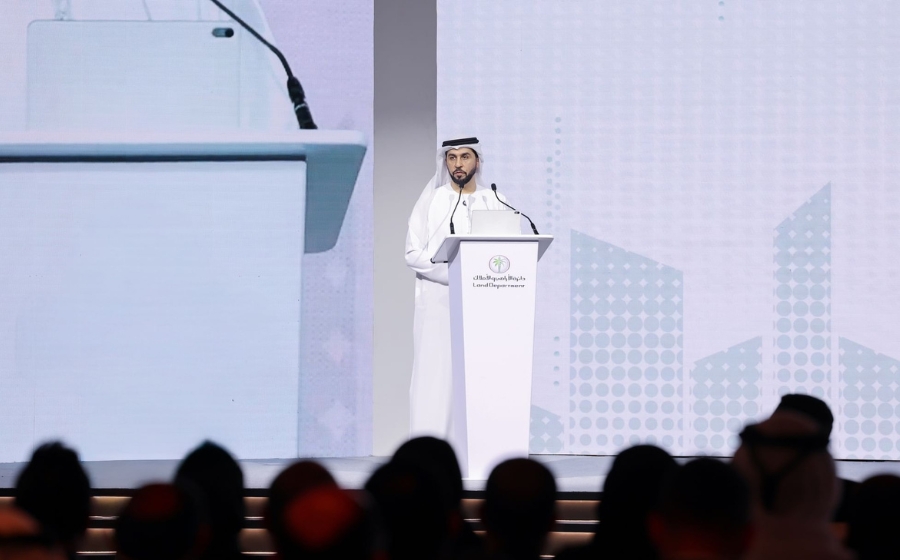
The Initial Registration platform was unveiled during a ceremony at Grand Hyatt Dubai attended by DLD’s Acting Director General, senior executives, government officials and representatives from the private sector.
During the event, DLD presented the platform’s main features, operating model and services, highlighting how it is expected to improve the developer experience and streamline real estate transactions.
By connecting developers’ main operational requirements within a single digital journey, the platform reduces repetitive data entry and document submissions while improving coordination between developers, DLD and banks responsible for managing escrow accounts.
It also provides developers with a consolidated view of their real estate projects and portfolios, allowing them to monitor activity and make decisions based on more integrated and accessible data.
Eng. Abdullah Ahmed Al Shehi, CEO of the Real Estate Regulatory Agency (RERA) at Dubai Land Department, said the platform represents an important investment in improving the efficiency and future readiness of Dubai’s property sector.
He said DLD is developing an integrated digital ecosystem that enables developers to manage projects and transactions more effectively as the market continues to expand.
According to Al Shehi, the use of artificial intelligence and stronger integration between stakeholders will improve the ease of doing business, enhance transparency and governance, strengthen investor confidence and support Dubai’s long-term competitiveness.
AI reduces registration time and manual data entry
The new platform uses artificial intelligence to read documents such as Emirates IDs, passports and sales contracts, automatically extracting relevant information and filling in required fields.
This reduces the need for manual data entry while improving the accuracy of information submitted during registration.
Standard transactions that meet required business rules can also be processed automatically, with eligible registration applications capable of receiving approval once submitted.
The system guides users to the correct procedure through a short series of questions and allows developers to provide missing information while keeping an application open.
This is expected to reduce the need to submit a new application when only minor information or documents are missing.
Mustafa Al Rifai, Senior Manager at Dubai Land Department and the official responsible for the new system, told the Emirates News Agency (WAM) that the platform can reduce data-entry operations by as much as 80%.
He added that transactions that previously required around 30 minutes to register can now be completed in less than five minutes, representing a reduction of up to 80% in transaction completion time.
Communication and transaction follow-up between developers and DLD have also been integrated into the platform, reducing the need for physical visits to government departments, telephone calls and email correspondence.
Project 360 offers integrated project oversight
Another key feature, known as Project 360, provides a unified overview of individual real estate projects.
The feature displays unit status, escrow account information, financial data and project records, while also providing early warning indicators designed to identify potential challenges and support faster intervention.
Greater visibility across procedural stages and responsibilities is also expected to improve coordination between developers, DLD and banks managing escrow accounts.
Information can be reused across connected systems, helping reduce discrepancies between sales data, escrow accounts and property ownership records while improving regulatory monitoring.
Developers can also use a single account to manage multiple companies and monitor several real estate projects.
The platform supports defined user permissions and separate roles for submitting and reviewing transactions, helping companies organise internal workflows and strengthen oversight.
More than 1,500 developers to benefit
DLD introduced the platform through phased implementation and user training to test workflows and prepare developers ahead of the full rollout.
The system aims to improve first-time application acceptance rates, reduce follow-up enquiries and minimise manual processing.
Al Rifai said more than 1,500 real estate developers are expected to benefit from the transition to the new platform.
Major developers will be onboarded first due to their higher transaction volumes and will receive practical training over a period of two to three weeks.
Other developers will then be trained and migrated in groups of between 50 and 100 through weekly phases until all developers have moved to the new platform and the previous system is retired.
Al Rifai said the current rollout represents the first phase of the platform’s development.
A second phase will include further integration with other digital systems, along with additional improvements and upgrades across related platforms.
The Initial Registration platform forms part of Dubai Land Department’s wider efforts to develop scalable digital infrastructure capable of supporting future growth in property transactions and real estate projects.
The initiative also supports the Dubai Real Estate Strategy 2033 and the Dubai Economic Agenda D33, helping strengthen a competitive property market built around innovation, efficient services and integrated data.