In global catch-up
A proposed regulation in the United States allowing drones to fly beyond visual line of sight (BVLOS) without individual flight waivers could mark a significant shift in global drone delivery standards, with potential implications for the Middle East and Africa’s emerging logistics sector.
The rule, announced recently by the Trump administration, would establish formal roles for flight operations and oversight, including requirements for operations supervisors and flight coordinators.
If approved, the regulation would remove existing waiver-based restrictions that currently limit drone deployment at scale across the US, a market valued at $191 billion for parcel delivery, according to data from IBISWorld.
Arrive AI, a drone delivery technology company based in Indiana, US, and listed on the Nasdaq, has welcomed the regulatory proposal. The company claims its system provides secure, contactless deliveries using drones, ground robots, or human drivers, all coordinated through AI-powered delivery points.
Its founder, Dan O’Toole, described the regulatory change as “a watershed moment” that would help align the US with countries where drone deliveries are already operational.
O’Toole said that regulatory delays had previously hindered drone adoption in the US, even as other countries — including India and the UAE — moved ahead with pilot schemes and commercial operations.
US Transportation Secretary Sean Duffy said the rule would help cement American leadership in drone technology, but its impact is likely to extend beyond North America. FAA Administrator Bryan Bedford noted that integrating BVLOS operations into everyday logistics is key to unlocking the economic and societal value of drones globally.
Drone manufacturers and logistics operators are closely watching the move in the Gulf region and wider Africa, where governments are exploring how uncrewed aerial vehicles can support last-mile delivery in healthcare, rural infrastructure, and smart city initiatives.
While Arrive AI is currently focused on the US market, it has already begun collaborating internationally. Arrive AI is working with Skye Air Mobility, a leading Indian drone logistics firm currently completing 6,000 deliveries per day in the New Delhi suburbs. Their joint plans include installing 500 AI-powered delivery hubs — or “Arrive Points” — across Skye Air’s service areas, aiming to serve more than 33 million people.
The announcement from Washington is expected to influence broader international regulatory frameworks, particularly in countries where civil aviation authorities are still determining how best to integrate unmanned aircraft systems into national airspace.
In the UAE, where Dubai and Abu Dhabi have both trialled drone delivery schemes, a clearer regulatory precedent from the US could provide a framework for scaling operations. The UAE General Civil Aviation Authority has previously signalled its intent to expand commercial drone usage beyond surveillance and photography, with a focus on logistics, medical supply chains, and emergency response.
According to PwC Middle East, drone-powered solutions could generate up to $2.2 billion in cost savings across the GCC by 2030. The potential for unmanned delivery services is particularly significant in remote desert areas, construction zones, and during high-demand events such as Expo or the Hajj season.
While Arrive AI promotes its delivery network as a secure and autonomous solution, analysts suggest the regulatory development could spur competition among drone delivery firms in both developed and emerging markets, especially as AI integration in logistics infrastructure continues to expand.
Africa, where road access remains a barrier to consistent parcel delivery in many countries, could also benefit from advances in autonomous air logistics. Rwanda and Ghana have already deployed drone technology in healthcare, and further regulatory clarity could accelerate similar programmes in Nigeria, Kenya, and Egypt.
Drone delivery remains a niche segment, but the new rule could provide a blueprint for nations aiming to reduce dependence on traditional logistics infrastructure, cut carbon emissions, and improve delivery times, particularly in underserved areas.
As US regulators move towards normalising drone flights, companies in the UAE and Africa are expected to assess how similar rules could be adapted to local frameworks. This development may bring autonomous delivery closer to daily life across the region.
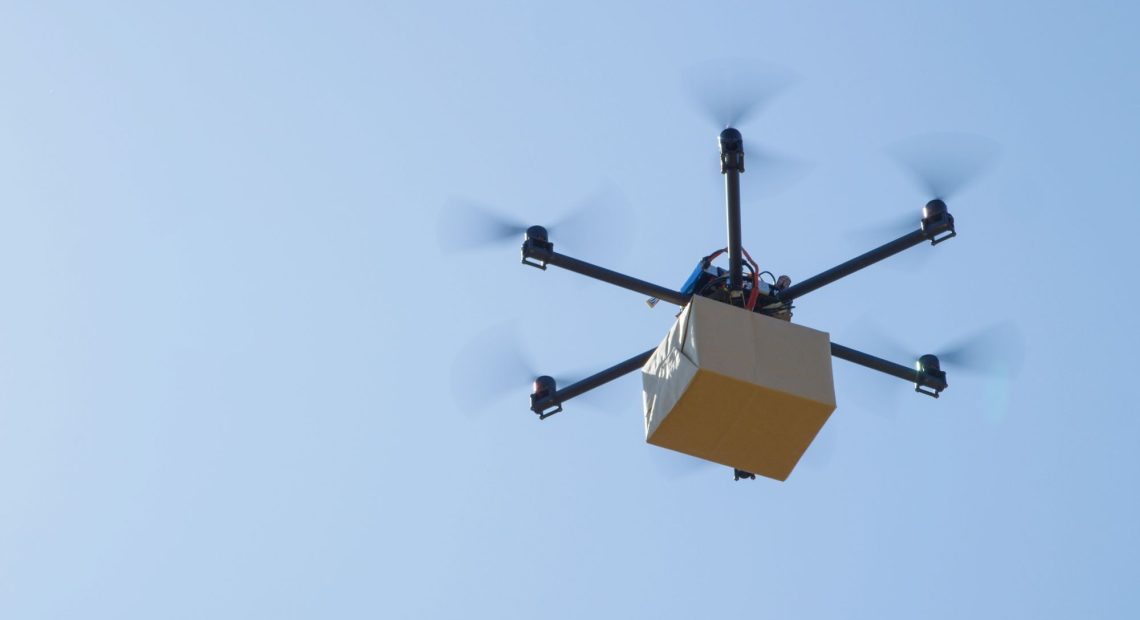
Image: Drone-powered solutions could generate up to $2.2 billion in cost savings across the GCC by 2030. Credit: Arrive AI