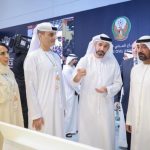
Crown Dubai Prince Commissions a New Specialized Arm of Dubai Hospital Worth $48 Million :
Dubai’s Crown Prince, Hamdan bin Mohammed Al Maktoum, recently inaugurated a new specialized arm of Dubai Hospital to cater to outpatients. The project, worth $48 million (Dh 177 million), aims to boost the hospital’s capabilities by 200 percent. The project is also instrumental in helping Dubai realize its long-term health goals and vision.
What is the rationale behind the Dubai Hospital Commission?
According to Crown Prince, the new arm got inspiration from the vision to provide top-notch healthcare services through technology, high-quality medical services, and qualified healthcare practitioners. He further stated that prioritizing the health care sector aims to see to society’s health, longevity, and well-being.
The dedication to this healthcare project stems from the foresight of the Prime Minister and Ruler of Dubai, Mohammed Bin Rashid Al Maktoum, to see Dubai leading the pace of health care and medical innovation worldwide. For a tourist center with a rapidly developing population, the Crown Prince hopes that the inauguration of a specialized arm will be the first of the many interventions to ensure that Dubai has the equipment to meet the population’s health needs.
Crown Prince expressed his commitment to Dubai’s health care goals by taking a personal tour of the new arm to access the quality of equipment and services. The prince also promised to engage in similar healthcare projects in the future to set Dubai apart as the forerunner in the global healthcare race.
Here is all you need to know about the Specialized Arm
The new specialized arm is for outpatient services and consists of 128 specialized clinics that can serve as many as 254 patients per hour. The facility is a 32,000-square-metre building that houses five floors, all designated for different specialists, although only three floors are currently in use. The aesthetics of the building is premium, with particular attention given to incorporating modern techniques and technology.
Each of these floors have separate areas examination rooms, prayer rooms, gender-separate waiting rooms, reception rooms, and consultation areas. The main floor of the facility also has high-tech equipment with laboratories and radiology rooms. The first floor has 37 fully equipped specialized clinics. There are 43 specialized clinics on the second floor, and finally, the third floor houses 48 state-of-the-art clinics. The specialized clinics on these floors range from orthopaedics, cardiology, oncology, surgery, obstetrics and gynaecology, immunology, haematology, urology, ophthalmology, internal medicine, etc.
With the facility having several specialized clinics and advanced technology, it would have to take extra care to abide by the green building codes and cannons. Likewise, such actions will help fast-track Dubai’s development of other arms of the current hospital and more to meet the population’s demands by 2040.
Conclusion
The Dubai Health Authority plans to include another floor with functioning services in addition to the three floors in use. Undoubtedly, the inauguration of a new specialized arm is a bold move on Dubai’s part, but it might just be what it needs to stand out as a beacon of light for the health care sector globally.