Photo Credit : WAM
Egypt has uncovered a newly discovered funerary unit at the Tell Quesna archaeological cemetery in Menoufia Governorate in the Nile Delta, revealing important evidence about burial customs, religious beliefs and international trade during the Late and Greco-Roman periods.
The discovery was made by an Egyptian archaeological mission working under the Supreme Council of Antiquities, the Ministry of Tourism and Antiquities announced.
Sherif Fathi Attia, Egypt’s Minister of Tourism and Antiquities, said the latest excavation provides valuable insights into the religious and economic life of ancient Egypt during the period.
Archaeologists found a funerary complex comprising a main hall and several burial chambers with vaulted entrances. Human remains were discovered arranged in traditional Osirian burial positions, alongside a collection of funerary artefacts.
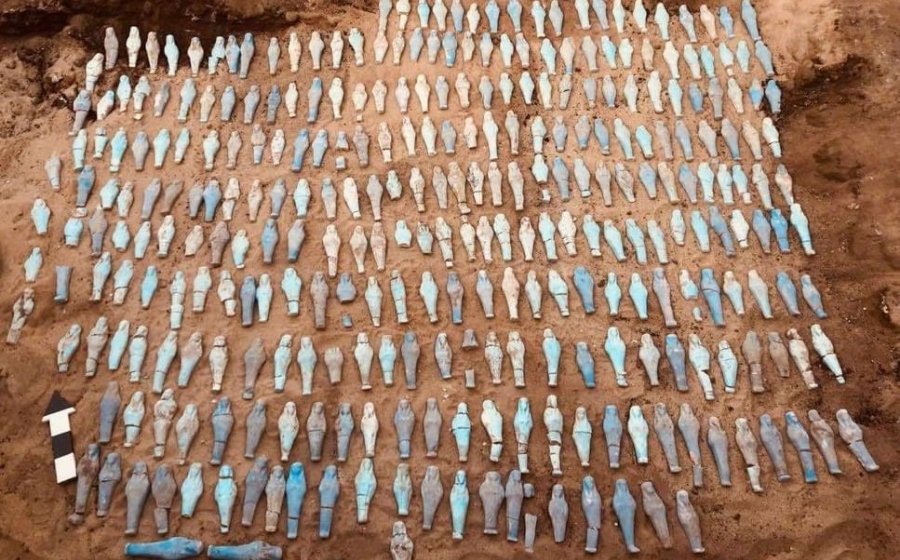
Among the most significant finds were two groups of ushabti figurines, totalling 560 pieces. Several of the figurines feature inscriptions from the Book of the Dead, while researchers also recovered protective amulets, faience beads and pottery vessels. One vessel contained residues believed to be associated with mummification or funerary rituals.
The excavation also uncovered imported pottery originating from the Greek island of Rhodes, providing further evidence of trade links between ancient Egypt and the wider Mediterranean region during the Late and Greco-Roman eras.
In addition, archaeologists documented several unusual burial features that remain under study. Officials said the discoveries are expected to deepen understanding of funerary traditions and the cultural development of the Tell Quesna site.
As excavations continue, researchers hope the latest findings will reveal more about the social, religious and commercial connections that shaped life in Egypt’s Nile Delta centuries ago.