Amid rising hybrid demand
Chinese automaker Great Wall Motor (GWM) has officially opened its new manufacturing facility in Brazil, marking a key development in China’s automotive expansion into Latin America.
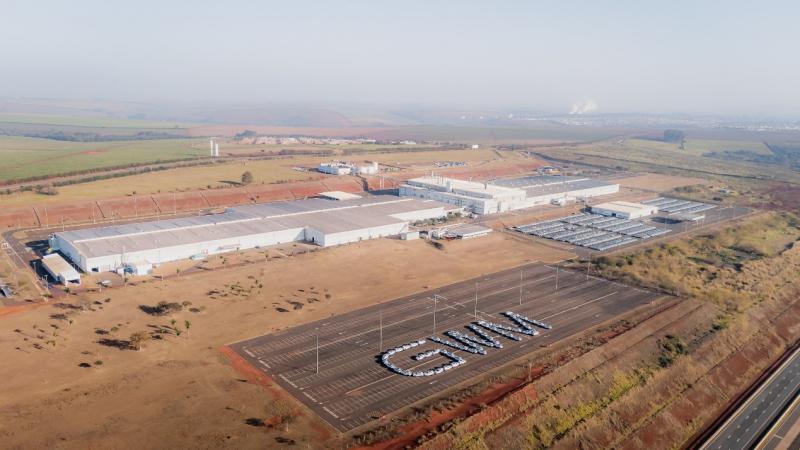
The plant, located in Iracemápolis in São Paulo state, began operations on August 16, 2025, with the production of the Haval H6 GT, the first model to roll off its upgraded assembly line.
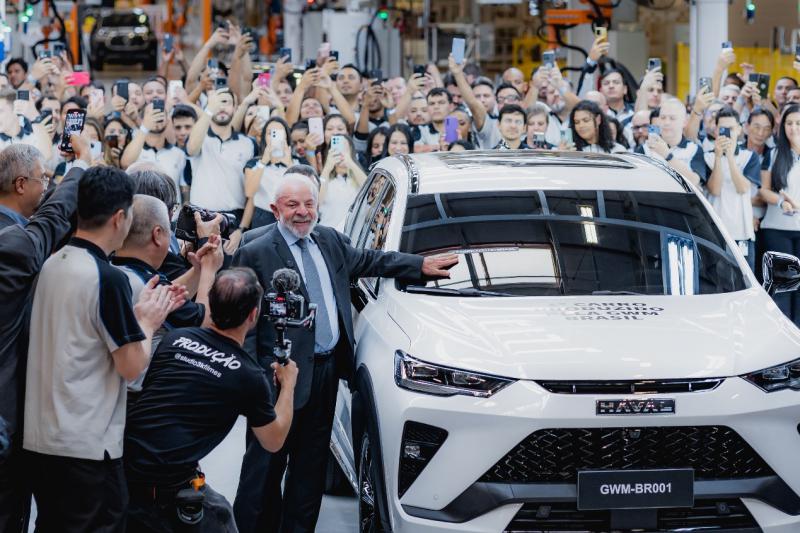
The new facility, acquired from Daimler Group, becomes GWM’s third overseas full-process manufacturing plant and will serve as a hub for vehicle production across Latin America.
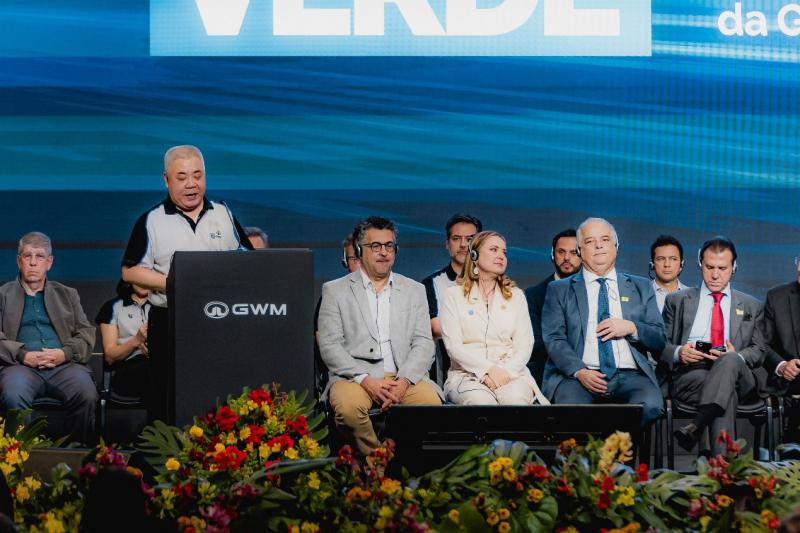
Brazilian President Luiz Inácio Lula da Silva attended the opening ceremony alongside other high-ranking Brazilian officials, including Vice President Geraldo Alckmin, Labour Minister Luiz Marinho, and Chinese Ambassador Zhu Qingqiao.
Strategic expansion
During the event, President Lula described the project as a significant development for the country’s industrial sector. “The GWM plant proves Brazil can absorb advanced technology and produce vehicles that compete globally. This means jobs, income, and professional development,” he said.
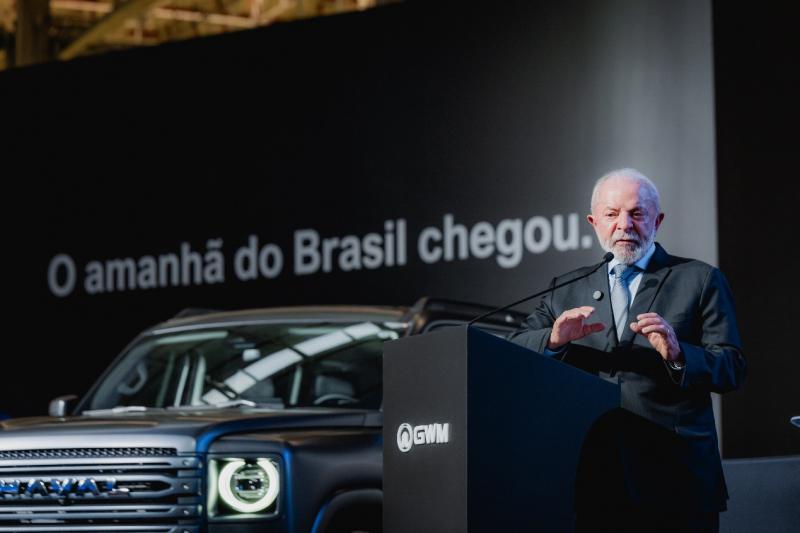
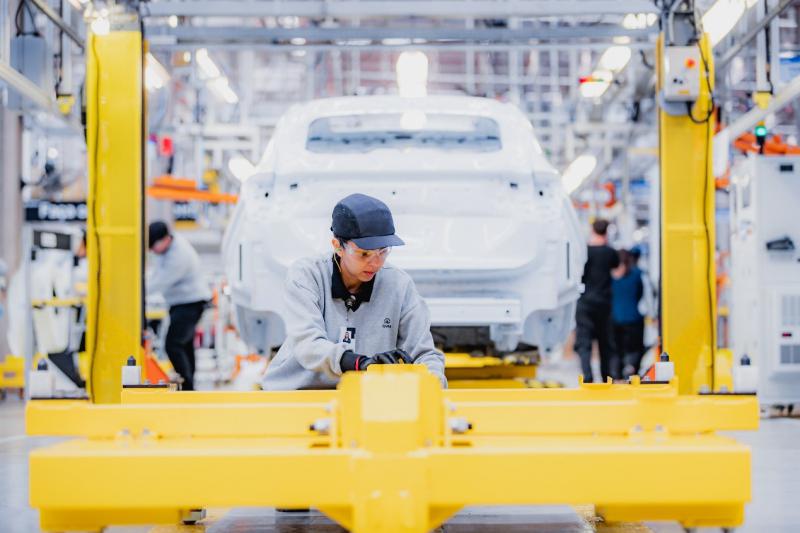
The plant has an initial annual production capacity of 50,000 vehicles and is expected to create over 1,000 direct jobs by the end of 2025. Production will focus on a mix of internal combustion engine (ICE) and new energy vehicles (NEVs), including hybrid and plug-in hybrid (PHEV) models.
The Haval H9 and POER P30 models are set to launch in the Brazilian market in September 2025.
GWM President Mu Feng said the Brazil facility would follow international quality standards while contributing to regional supply chain integration. The company plans to scale production further as demand grows across Latin America.
China-Brazil ties
China and Brazil established diplomatic ties over five decades ago. Their relationship has since expanded into infrastructure, energy, and now, high-tech manufacturing. According to Chinese Ambassador to Brazil Zhu Qingqiao, the new GWM plant reflects “Chinese smart manufacturing” combined with “Brazilian localisation,” pointing to it as a model for industrial cooperation.
China is Brazil’s largest trading partner, with total trade reaching $157.5 billion in 2023, according to Chinese customs data. Chinese firms have ramped up investments in Brazilian sectors ranging from lithium mining to electric bus production. The GWM project adds to this growing list of industrial linkages.
For Chinese carmakers, Brazil is a strategic gateway into broader South American markets. The region’s growing middle class and rising interest in hybrid vehicles present opportunities amid slowing sales in saturated Asian markets.
Sales momentum
GWM’s entry into Brazil dates back to 2021. In just three years, the company has sold 29,000 vehicles, placing it 14th in the national market. In the first half of 2025, GWM reported 15,700 sales in Brazil, representing a 19.8% increase from the same period last year—outpacing the industry average by 17 percentage points.
Globally, GWM reported sales of 104,372 vehicles in July, a 14.3% year-on-year rise. Of those, 34,593 units were NEVs—up 43.2% from 2024. The company also recorded 41,088 units in overseas sales for the month, with hybrid models leading performance in multiple regions.
This trend reflects a broader shift toward energy-efficient vehicles. According to the China Association of Automobile Manufacturers, PHEV exports rose 177% in the first half of 2025. Demand is robust in emerging markets such as Southeast Asia, Africa, and Latin America, where infrastructure constraints still limit the adoption of fully electric vehicles.
Hybrid focus
GWM has positioned its Hi4 platform—a hybrid system combining electric and fuel-powered components—as the backbone of its global NEV strategy. The company says this platform is well-suited to markets where range anxiety and charging infrastructure remain concerns.
Unlike other Chinese automakers that focus on low-cost EVs, GWM’s strategy centres on higher-end models with four-wheel-drive performance. In July 2025, vehicles priced above RMB 200,000 accounted for over 33,000 of its global sales.
This value-focused approach is gaining traction in regions such as the Middle East and Africa, where the company is steadily building its presence. GWM has over 1,400 overseas sales outlets and more than 15 million global users, with a presence in markets including the UAE, South Africa, and Saudi Arabia.
Regional relevance
Middle Eastern nations, particularly the Gulf states, are actively diversifying their economies and investing in green mobility. The UAE has introduced incentives for hybrid and electric vehicles, while Saudi Arabia has launched Neom, a futuristic city project with sustainability at its core. Chinese carmakers, including GWM, Exeed, Geely, etc., are targeting the region’s early adopters with hybrid SUVs and off-road-capable models.
GWM’s growth in Latin America offers a playbook for similar expansion in Africa. In South Africa, GWM received multiple dealer satisfaction and performance awards in 2025. As African countries build automotive infrastructure, hybrid solutions like GWM’s Hi4 could gain popularity.
GWM’s participation in regional events such as the BRICS Summit has also reinforced its diplomatic and commercial outreach. During the 2025 summit in Brazil, the company was the only Chinese automaker to attend a high-level roundtable on industrial cooperation.
Global outlook
The new Brazil facility is part of GWM’s broader “ONE GWM” strategy, which aims to integrate research, manufacturing, supply chains, and after-sales services across global markets. This holistic approach is being closely watched by competitors, particularly as the company rolls out more Hi4-based models in Europe, Southeast Asia, and the Middle East.
In recent months, the Tank 300 and Tank 500 SUVs have debuted in key markets, including Thailand and Peru. Meanwhile, the Ora 03 electric hatchback was launched in Indonesia, targeting urban drivers.
As the global automotive industry transitions from combustion engines to electric and hybrid technologies, GWM’s expansion underscores a larger trend: China’s automakers are no longer just low-cost competitors. They are shaping new standards in manufacturing, performance, and regional integration.
With its Brazil plant now online and localisation strategies deepening, GWM appears positioned to expand its global market share. The company’s success may offer lessons for Middle East countries looking to develop their own automotive sectors in the transition to cleaner transport.
Hero image: GWM’s new Brazil plant officially begins production with the first Haval H6 GT rolling off the line. Credit: GWM