Photo Credit: Reuters
Dubai, UAE — June 2026 —The ongoing conflict in the Middle East is weighing heavily on the world economy, with global growth forecast to slow to 2.5 percent in 2026, the weakest pace since the COVID-19 pandemic upended economic activity six years ago.
According to the World Bank Group’s latest Global Economic Prospects report, the figure marks a sharp decline from 2.9 percent growth recorded in 2025, and forecasts for two-thirds of economies worldwide have been downgraded since January.
While the World Bank expects a partial recovery to 2.8 percent growth in 2027, that would still leave the global economy running 0.4 percentage points below its average pace during the 2010s.
“Developing countries have faced a series of challenges over the last decade,” said World Bank Group President Ajay Banga. “The impact differs by country, but the basic test is the same: protect people and preserve stability today, without giving up on growth and jobs tomorrow.”
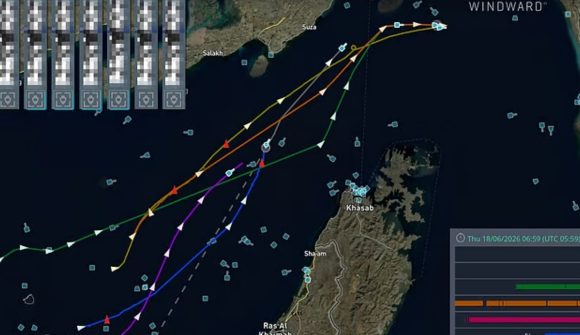
The closure of the Strait of Hormuz has sent shockwaves through global energy markets. Brent crude oil prices are now projected to average $94 a barrel in 2026, a 36 percent jump above 2025 levels, assuming the worst disruptions ease by July.
Fertilizer prices are also rising sharply, feeding through to higher food costs and compounding inflation pressures that were already proving stubborn.
Global inflation is expected to climb to 4 percent this year, up from 3.3 percent in 2025.
The downside risks are stark. If energy disruptions prove deeper or longer-lasting and trigger significant financial stress, the World Bank warns global growth could collapse to just 1.3 percent in 2026, with inflation climbing even higher to 4.4 percent.
Emerging and developing economies are facing their worst growth since the pandemic, with the rate expected to drop to 3.6 percent in 2026 from 4.4 percent in 2025.
Gulf economies caught directly in the crossfire are feeling the sharpest pain, growth there is projected to fall from 3.9 percent in 2025 to near zero this year, before rebounding to around 5 percent in 2027 and 2028 as trade stabilizes and reconstruction spending begins.
The long-term picture for developing nations beyond China and India is particularly sobering. By 2028, those economies will have spent nearly a decade making no progress in closing the per capita income gap with advanced economies.
Sub-Saharan Africa is also under pressure, with inflation, particularly surging food prices driven by fertilizer shortages, squeezing households and governments alike. Even South Asia, forecast to be the world’s fastest-growing region this year, is slowing considerably, from 7 percent growth in 2025 to 6.3 percent in 2026.