Internal layout was also restructured
Bugatti has unveiled new technical details of its Tourbillon hypercar, signalling a major shift in the brand’s engineering approach as it moves beyond the era defined by the W16-powered Chiron.
The French carmaker, now part of the Bugatti Rimac joint venture, is focusing on innovative packaging, aerodynamics and integration to produce what it claims is a fundamentally rethought hypercar.
At the centre of the redesign is a newly developed V16 engine, which replaces the wider W16 found in previous Bugatti models. The new unit is longer and narrower, and mounted at an angle. This configuration enables extended underbody Venturi tunnels, which play a crucial role in generating aerodynamic downforce from beneath the vehicle, rather than relying on external wings.
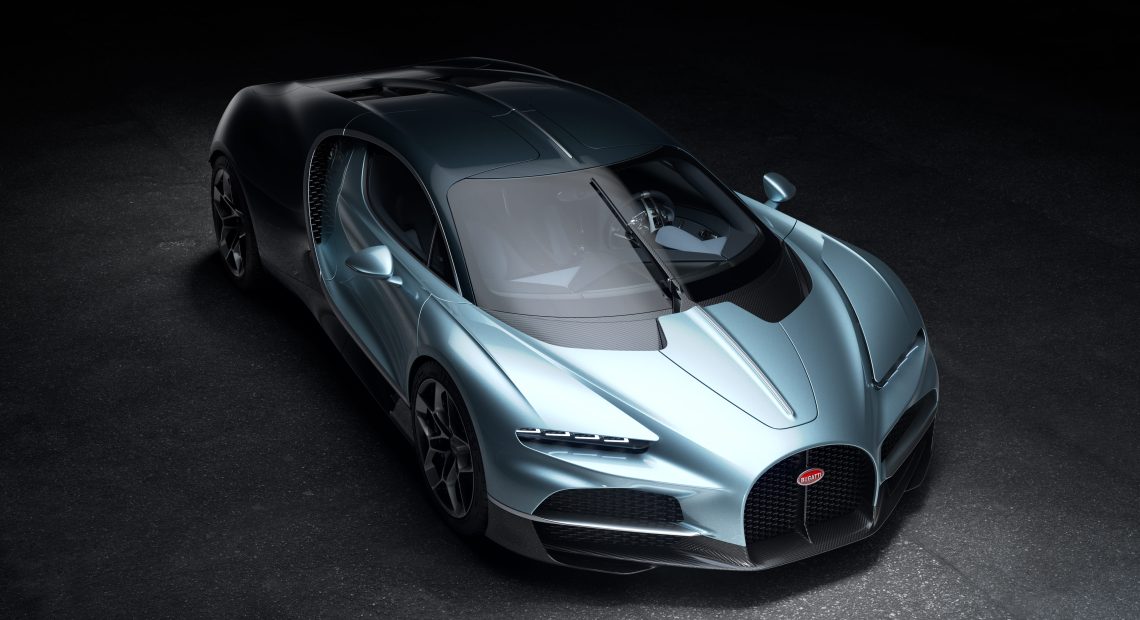
By maximising ground effect, the Tourbillon can maintain high-speed stability with less aerodynamic drag, enabling it to reach top speeds without deploying its rear wing. This approach marks a shift away from traditional high-downforce solutions and could place the Tourbillon among the most aerodynamically efficient vehicles in its class.
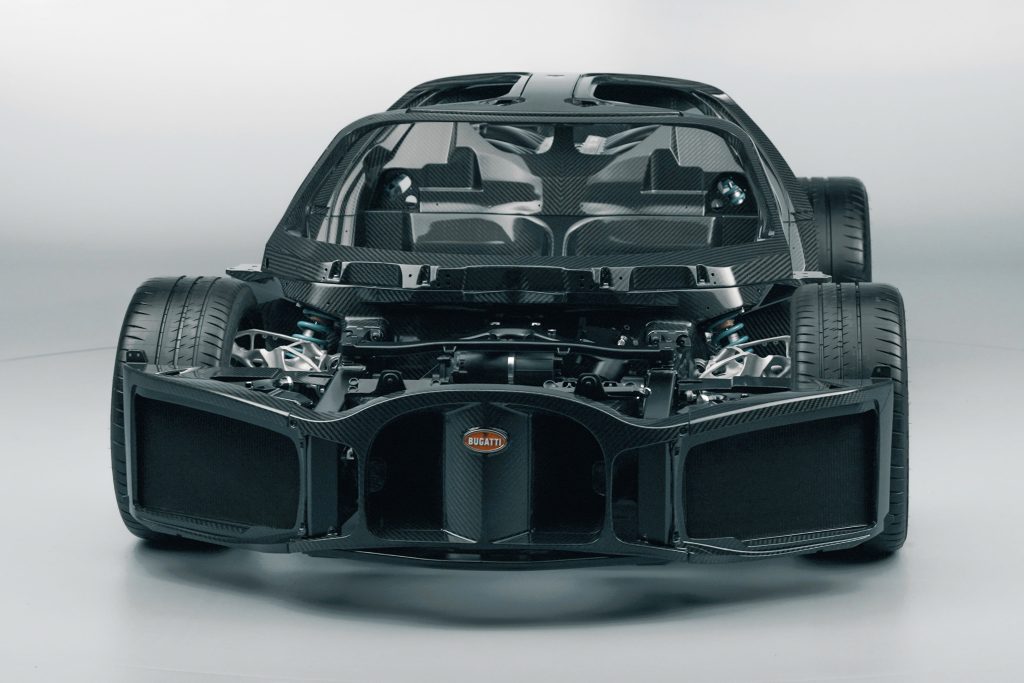
The internal layout of the car has also been restructured. The gearbox, traditionally mounted in front of the engine, has been relocated behind it. The front axle is powered entirely by dual electric motors, independent of the combustion engine. Between the two power sources sits a compact battery, positioned centrally to balance weight distribution and conserve space.

This reconfiguration has enabled the reduction of the vehicle’s frontal area, which is crucial for decreasing total drag. Mate Rimac, CEO of Bugatti Rimac, stated that reducing the frontal area was essential for any car targeting extreme speeds, as overall dynamic resistance is a function of both the drag coefficient and frontal size.
Cooling and structural systems have been integrated into the design in a similar manner. Air enters through Bugatti’s distinctive horseshoe grille, passing through the luggage space before cooling the electric axle, battery and braking components. Cooling for the V16 engine is directed through additional channels flanking the grille.
In place of a traditional crash beam, the rear of the car uses a large diffuser structure that incorporates 3D-printed metal components designed to absorb impact forces. This dual-function design allows for crash protection without compromising aerodynamic performance.

The Tourbillon also features a suspension system built with aerodynamics in mind. Exposed wishbone components are shaped like airfoils to minimise turbulence and optimise airflow beneath the car.
Bugatti engineers utilised artificial intelligence and generative design techniques to eliminate unnecessary material from suspension parts, retaining only the structural elements necessary for strength and stability. These techniques have yielded lightweight, organic shapes that enhance both performance and efficiency.
This highly integrated approach reflects Bugatti’s new philosophy, where individual components are developed not in isolation but as part of a complete system. Every aspect, from engine placement to the shape of suspension arms, has been engineered to serve multiple functions, including weight reduction, space optimisation and aerodynamic performance.
The Tourbillon is not yet approved under EU fuel efficiency or emissions standards. No official performance figures have been released, but Bugatti has indicated it expects the car to exceed the Chiron’s benchmarks.
The model is likely to attract strong interest in the Arabian Gulf region, where ultra-luxury and performance vehicles continue to see demand, particularly in markets such as the UAE and Saudi Arabia.
Bugatti has not confirmed a release date or price. However, with the Tourbillon, the brand appears focused on redefining what a hypercar can be — not just in terms of speed or power, but in how technology and structure can be integrated to deliver performance through innovation.
Hero image: By maximising ground effect, the Tourbillon can maintain high-speed stability with less aerodynamic drag, enabling it to reach top speeds without deploying its rear wing. Credit: Bugatti