
UN’s Global Road Safety Week begins
As the 8th UN Global Road Safety Week begins, the World Health Organization (WHO) has launched a new initiative urging governments to make walking and cycling safer. The campaign under the theme “Make walking and cycling safe” is a global push to reduce road deaths and promote sustainable mobility.
Each year, an estimated 1.2 million people die in road traffic crashes. According to WHO, more than a quarter of these are pedestrians and cyclists. The figures are stark, especially in the face of rising urbanisation and the global shift towards cleaner, more active modes of transport.
Currently, just 0.2 per cent of roads worldwide have dedicated cycle lanes. Many communities, particularly in low—and middle-income countries, lack the most basic pedestrian infrastructure, such as pavements and safe crossings. This lack of investment costs lives and puts road safety goals beyond reach.
Dr Tedros Adhanom Ghebreyesus, WHO Director-General, said that walking and cycling are critical not just for individual health but for the sustainability of cities. “Walking and cycling improve health and make cities more sustainable. Every step and every ride helps to cut congestion, air pollution and disease,” he said. “But we must make walking and cycling safe, so more people choose these healthier, greener options.”
New WHO toolkit targets policy gaps
In response to this growing public health concern, the WHO has introduced a new toolkit to guide countries in creating safer environments for active transport. It offers practical, evidence-based recommendations for policymakers, city planners, and civil society groups.
The toolkit calls for coordinated action across sectors, encouraging the integration of walking and cycling into transport, health, environmental, and education policies. It recommends investing in protected infrastructure such as cycle lanes, pavements, and pedestrian crossings and aligning speed limits with international best practices.
There is also a strong emphasis on public engagement. The toolkit urges governments to launch awareness campaigns to shift public attitudes and encourage safer road behaviour. It also recommends using financial incentives to promote active mobility, making walking and cycling more attractive and accessible.
Despite widespread recognition of the health and environmental benefits of walking and cycling, fewer than a third of countries currently have national strategies to support them. WHO hopes this new guidance will close that gap and help drive meaningful progress in road safety and active transport.
Regional data shows alarming trends
Although global data suggests some positive developments, such as a slight drop in pedestrian fatalities and a plateau in cyclist deaths between 2011 and 2021, regional figures tell a more troubling story.
In Southeast Asia, pedestrian deaths increased by 42 per cent during the same period. In Europe, cyclist deaths surged by 50 per cent. The Western Pacific region recorded the most dramatic rise, with cyclist fatalities soaring by 88 per cent.
These numbers highlight the urgent need for targeted, localised interventions. WHO says governments must take a data-driven approach to road safety, tailoring strategies to regional and national trends.
The toolkit encourages countries to set measurable targets and track their progress in reducing injuries and deaths among vulnerable road users.
Global support for safer streets
This week, the WHO collaborates with a broad coalition of partners to mark UN Global Road Safety Week. The Global Alliance of NGOS for Road Safety, a network of over 400 member organisations in 100 countries, actively supports the campaign.
Events are happening worldwide to raise awareness and push for more decisive government action. From local workshops to national policy roundtables, campaigners use the week to demand bold commitments to safer walking and cycling.
Etienne Krug, Director of WHO’s Department for the Social Determinants of Health, stressed the importance of cross-sectoral cooperation. “It is urgent to make what should be our most natural means of transport safer. This is paramount for road safety, health, equity and climate,” he said.
“We’re calling on all sectors – transport, health, education and beyond – to make walking and cycling safe and accessible for everyone,” Krug added.
Health, equity and climate at stake
Experts argue that safer, active travel reduces road deaths, improves public health, environmental sustainability, and social equity.
Active mobility reduces the risk of chronic diseases like heart disease and diabetes. It also cuts greenhouse gas emissions and improves air quality. For lower-income populations, walking and cycling offer an affordable means of transport, often the only available option.
With urban populations continuing to rise, cities are under pressure to provide cleaner, safer and more efficient transport systems. The WHO believes that making roads safer for walkers and cyclists is one of the most effective ways to meet these challenges.
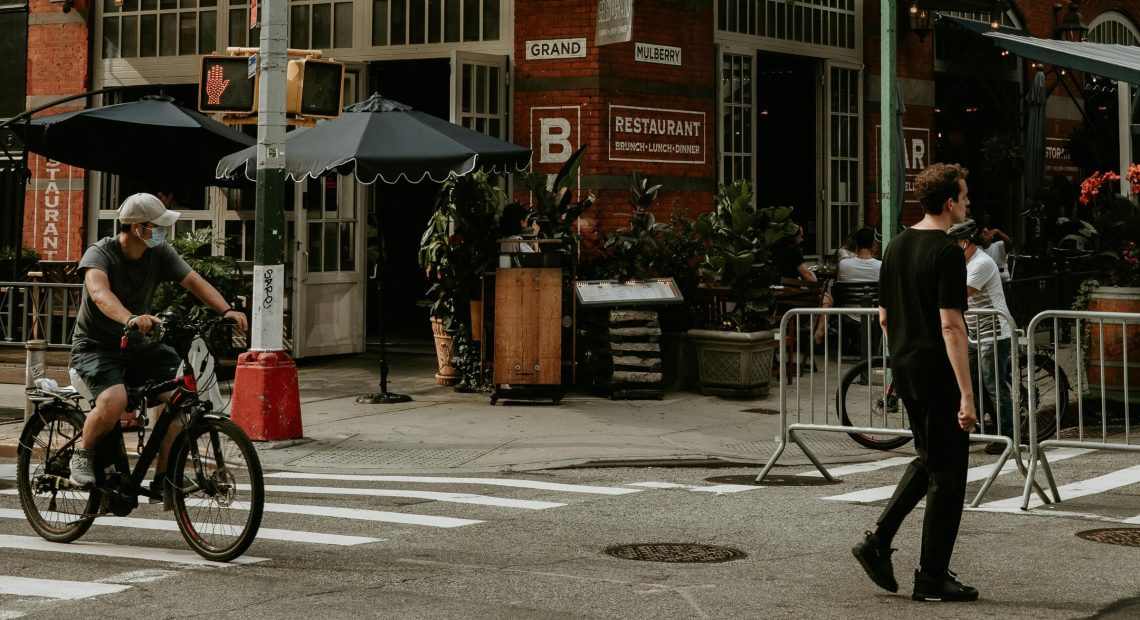
Image: Despite widespread recognition of the health and environmental benefits of walking and cycling, fewer than a third of countries currently have national strategies to support them. Credit: Dylan Splanger