
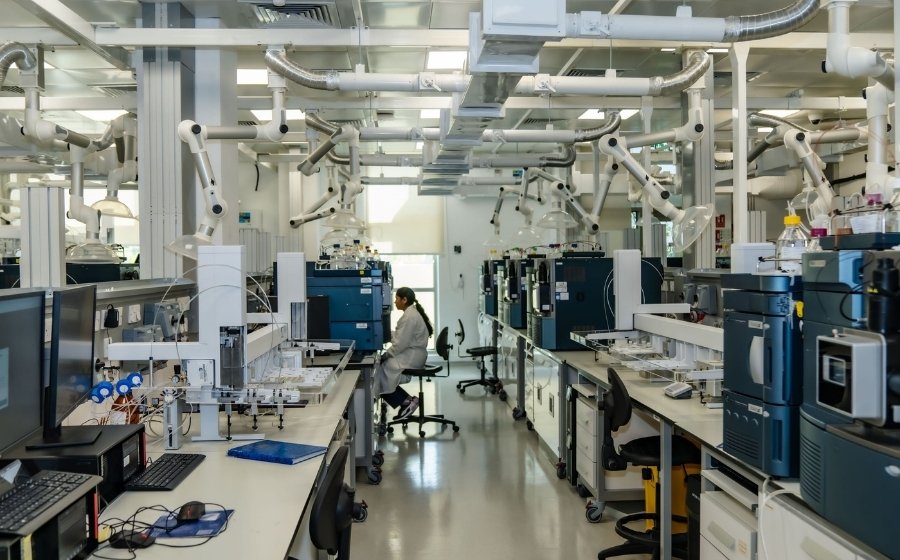
Photo Credit: WAM
The Reference and Surveillance Intelligence Department (RASID) at the Central Testing Laboratory of the Abu Dhabi Quality and Conformity Council, in collaboration with global health company M42, has detected and isolated a rare genetic clade of the antifungal-resistant pathogen Candida auris through Abu Dhabi’s wastewater surveillance programme.
The research, published in Communications Medicine, part of the Nature Portfolio, reported what researchers described as the first known regional detection of Candida auris Clade VI through wastewater environmental surveillance based on information available during the study.
The findings are expected to expand scientific understanding of the pathogen’s genetic diversity while demonstrating how wastewater surveillance can complement clinical and public health monitoring systems.
Researchers analysed more than 23,000 wastewater samples collected systematically across the surveillance programme. The team successfully isolated the fungus directly from wastewater samples and confirmed its identity through laboratory testing, rather than relying solely on the detection of genetic material.
The study used a range of advanced scientific techniques, including isolate identification, Whole Genome Sequencing (WGS), genomic and phylogenetic analysis, antifungal susceptibility testing and assessment of genetic markers linked to antifungal resistance.
The analysis identified several genetic clades of Candida auris, including Clade VI, while also revealing genetic markers and differing patterns associated with resistance to certain antifungal treatments.
Candida auris has become a major global health concern because of its ability to develop resistance to multiple antifungal drugs and its potential to create challenges in healthcare environments. The World Health Organisation has classified the fungus within its Critical Priority Group of fungal pathogens.
Samara Bin Salem, Director of RASID, said the achievement demonstrates how environmental surveillance can identify emerging health indicators and patterns of drug resistance and convert them into information that can be scientifically evaluated.
She said combining laboratory isolation, whole genome sequencing and antifungal susceptibility testing enabled researchers to identify Clade VI and develop a clearer understanding of its genomic characteristics and resistance patterns.
Bin Salem added that RASID is working to develop a scientific surveillance system capable of going beyond identifying organisms in individual samples to understanding broader population-level changes, emerging risks and indicators that could require early preparedness.
Dr. Bhuvanesh Shanmugam, Senior Microbiologist and Laboratory Manager at M42 and one of the principal researchers involved in the study, said the identification of Clade VI adds to scientific knowledge surrounding the genetic diversity of Candida auris and its presence outside traditional clinical environments.
He said integrating genomic information with antifungal susceptibility testing can provide deeper insight into resistance-related factors and support monitoring of emerging genetic patterns that could become significant in the future.
Dr. Grzegorz Brudecki, Associate Director of Environmental Sciences at M42 and a researcher involved in the study, said continuous surveillance makes it possible to identify changes, trends and unusual signals over time.
He added that combining routine monitoring with advanced genomic analysis increases the scientific value of environmental data and supports closer examination of changes in pathogens, genetic characteristics and resistance indicators.
Sumaya Al Mansoori, another principal researcher involved in the project, said integrating sample collection, continuous monitoring, fungal isolation, genome sequencing and antifungal susceptibility testing allowed researchers to classify isolates and assess resistance patterns with greater precision.
She said the findings demonstrate the potential of wastewater surveillance to provide valuable information about genetic diversity, antimicrobial resistance indicators and emerging public health risks.
The study also reflects RASID’s continued development from conventional laboratory testing towards a broader surveillance model combining environmental monitoring, genomic sciences, data analysis, early warning systems and emerging-risk assessment.
These capabilities support Abu Dhabi’s wider public health framework, led by the Department of Health – Abu Dhabi and the Abu Dhabi Public Health Centre, by providing environmental and scientific information that can complement clinical data, strengthen preparedness and support risk assessment and response planning.