Due to terror threats, weak immigration controls
US President Donald Trump has signed a proclamation significantly expanding restrictions on immigration from 19 countries, claiming the measures are essential to protect national security and public safety. The move follows an updated security review and marks a return to one of Trump’s most controversial first-term policies.
The proclamation, signed on June 4, fully suspends entry to the United States for nationals from 12 countries, including Afghanistan, Burma, Chad, Republic of the Congo, Equatorial Guinea, Eritrea, Haiti, Iran, Libya, Somalia, Sudan, and Yemen.
Seven other nations — Burundi, Cuba, Laos, Sierra Leone, Togo, Turkmenistan, and Venezuela — face partial restrictions, mainly affecting business and tourist visas, as well as student and exchange programmes.
Watch the video here:
The White House stated that the measures were based on an interagency assessment conducted under Executive Order 14161, issued in January 2025. The order mandated a comprehensive review of countries’ compliance with US security requirements, including their ability to verify identities, provide criminal and terrorism records, and cooperate with repatriation requests.
President Trump, invoking section 212(f) of the Immigration and Nationality Act — a statute upheld by the US Supreme Court in 2018 — said the restrictions were designed to encourage foreign governments to enhance their security cooperation with the United States.
“These actions are necessary to protect the American people from foreign nationals who pose a threat to our homeland,” Trump said in a statement.
“We will not allow radical Islamic terrorists or other enemies of the United States to use our immigration system as a gateway to violence. We cannot have open migration from any country where we cannot safely and reliably vet and screen. That is why today I am signing a new executive order placing travel restrictions on countries including Yemen, Somalia, Haiti, Libya, and numerous others,” Trump added.
Full entry ban
Among the nations hit with a full entry ban are several experiencing internal instability or conflict. Afghanistan, now governed by the Taliban, was cited for lacking a functioning authority to issue secure documentation.
Somalia and Yemen were designated as terrorist safe havens. Iran and Cuba were labelled state sponsors of terrorism.
The Trump administration stated that some countries, such as Eritrea, Haiti, and Sudan, have failed to screen their citizens or provide basic law enforcement information adequately. Others, including Chad and the Republic of the Congo, recorded what Washington called “unacceptable” visa overstay rates.
Chad, for instance, had an overstay rate of 49.54 per cent for B1/B2 visitor visas and a rate of 55.64 per cent for student and exchange visas. Burma posted even higher figures, with a 42.17 per cent overstay rate for students and a 27.07 per cent rate for business travellers.
The partial bans apply to seven additional countries whose nationals are considered less of a threat but still present serious concerns. These restrictions affect the issuance of non-immigrant visas and apply to citizens of Burundi, Cuba, Laos, Sierra Leone, Togo, Turkmenistan and Venezuela.
Cuba and Venezuela were singled out for their poor cooperation on security matters and their historic refusal to accept deported nationals. Laos and Sierra Leone had high overstay rates and also lacked adequate identity verification systems, according to the Department of Homeland Security.
Critics have condemned the sweeping nature of the travel bans as discriminatory and politically motivated. Immigration advocacy groups said the policy unfairly targets low-income and conflict-affected countries, many of which are in Africa or the Middle East.
“This blanket ban penalises entire nations based on flawed data and sweeping generalisations,” said one rights advocate based in Washington. “It will separate families, block access to higher education, and damage America’s image as a haven for refugees.”
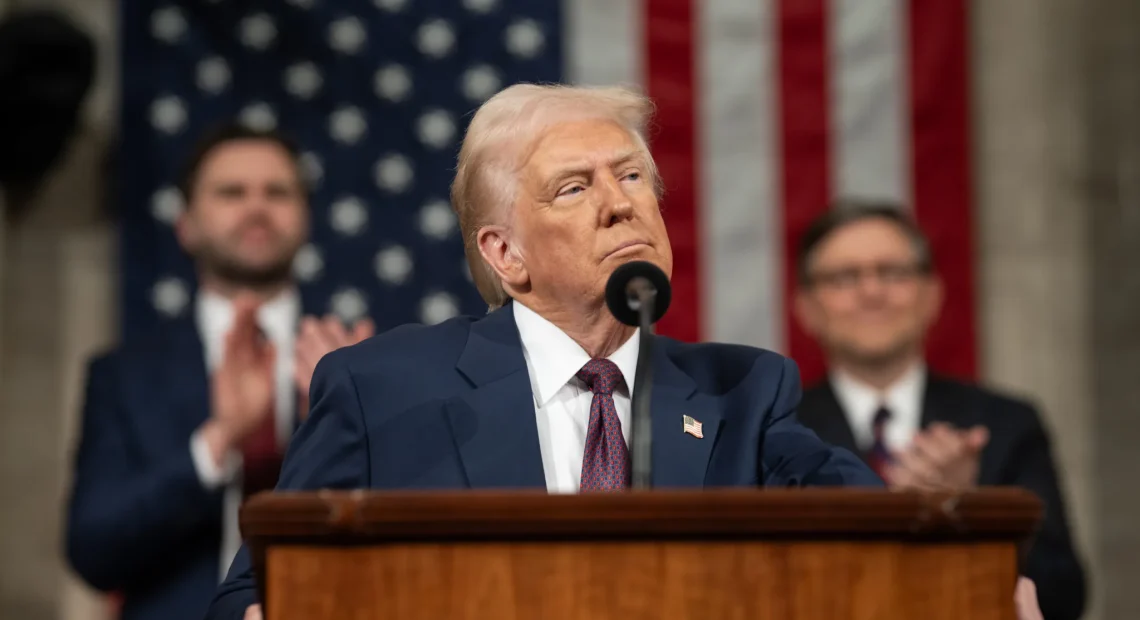
Hero image: Undated file photo of US President Donald Trump addressing a joint session of Congress. Credit: White House