
In phased rollout
WhatsApp is introducing paid subscriptions, promoted channels, and advertising within its Updates tab, marking a significant expansion of the platform’s business model while keeping private messaging untouched.
The new features will appear only in the Updates tab, which houses both Status posts and Channels. The company stated that the changes are designed to help users discover new content and enable businesses and creators to build visibility while maintaining the privacy of personal chats, which remain end-to-end encrypted.
Meta-owned WhatsApp, used by over 1.5 billion people daily, said the Updates tab has become a central place for people to engage with both individual posts and public broadcasts.
Phased rollout
The changes will be rolled out gradually over the coming months. WhatsApp did not provide specific launch dates for different markets.
Analysts say the move positions WhatsApp to compete more directly with platforms such as Telegram, which already offers subscription-based services and promotional tools.
In the Middle East, where WhatsApp dominates digital communication in countries such as the United Arab Emirates, Saudi Arabia and Qatar, the new tools could significantly change how regional businesses reach customers through the platform.
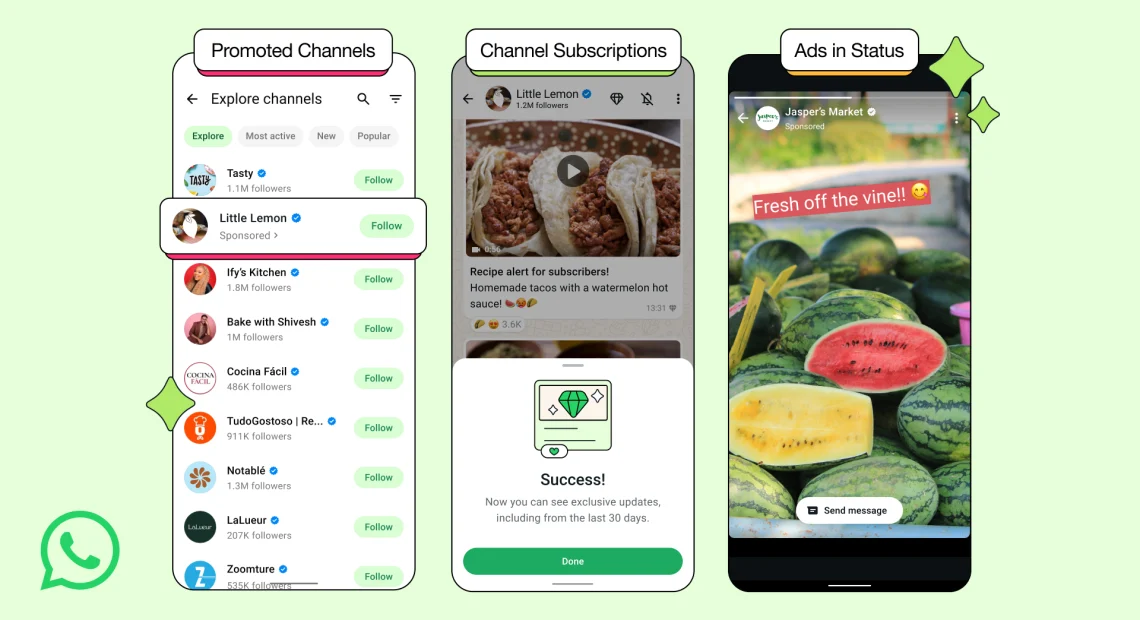
The first major addition is channel subscriptions. Users can now pay a monthly fee to receive exclusive updates from a channel, such as a news outlet, sports team, or influencer, directly in the app.
Monetising content
WhatsApp said this gives administrators a new way to monetise content while offering followers more tailored updates. The subscription fee structure and availability will vary by region.
Additionally, promoted channels will start appearing in the directory within the Updates tab. This feature is designed to help users discover new content and enable organisations to expand their audience. It also marks WhatsApp’s entry into algorithm-based promotion, a feature common to other Meta platforms.
WhatsApp is also launching advertising in Status posts, the app’s version of ephemeral stories, similar to those found on Instagram and Snapchat. The ads will enable users to connect directly with businesses by tapping on promoted content, opening a new revenue stream for WhatsApp while preserving the separation from encrypted personal messaging.
The app said all new commercial content will be displayed solely within the Updates tab and will not interfere with private conversations, which will continue to be encrypted end-to-end. The company stressed that personal messages, group chats, and voice or video calls will not be used to target ads.
Meta said the data used to personalise the ads will be limited. It will draw on users’ general location, language settings, channel subscriptions, and interactions with previous content. For those who link WhatsApp to Meta’s Accounts Centre, ad preferences and cross-platform behaviour may also be used. However, phone numbers and private communication will not be shared with advertisers.
Middle East
In the Middle East region, where WhatsApp is a key communication tool for both individuals and small to medium-sized enterprises (SMEs), the updates could lead to increased use of the app for e-commerce and brand engagement.
Regional digital marketing agencies are likely to monitor the rollout closely. Many brands in the Middle East currently rely on Instagram and TikTok for paid social media exposure. The introduction of commercial features on WhatsApp adds a new option, particularly in markets where WhatsApp enjoys high levels of user trust and penetration.
However, privacy advocates may scrutinise the changes. While WhatsApp insists the platform remains secure, the introduction of ads and promotional content aligns it more closely with the rest of Meta’s ad-driven business model.
Meta has repeatedly said WhatsApp’s monetisation strategy is built with privacy in mind. The company claims it will not sell user data and that advertising will be limited in scope and visibility.
The announcement reflects WhatsApp’s ongoing effort to shift from a communication-only app to a broader platform that includes content, commerce and community features. The strategy aligns with Meta’s long-term goal of turning its messaging platforms into revenue-generating tools without compromising user privacy.
As mobile usage continues to grow across the Middle East, the evolution of WhatsApp could reshape digital marketing trends and content consumption habits in the region. With over 80 per cent of Gulf consumers using WhatsApp daily, the impact of these changes is likely to be swift and wide-reaching.
Facebook, now Meta, acquired WhatsApp in 2014 for $19 billion, its largest acquisition to date. WhatsApp was founded by Jan Koum and Brian Acton, who had spent a combined 20 years at Yahoo.
Image: WhatsApp users can now pay a monthly fee to receive exclusive updates from a channel. Credit: Meta